
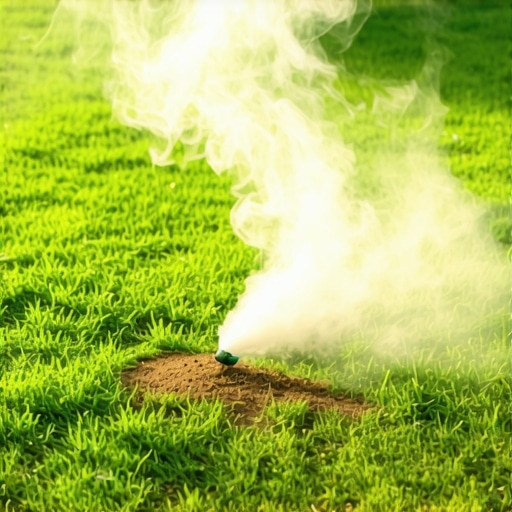
The Forensic Autopsy of a Failing 2026 Lawn
The visual signature of a lawn in crisis is unmistakable to any professional who has spent decades in the dirt. You see the brown patch as a series of necrotic, circular lesions ranging from a few inches to several feet in diameter, often characterized by a dark, smoky ring of mycelium around the edges in the early morning. These patches are not just dry grass; they represent a structural collapse of the plant cuticle under fungal pressure from Rhizoctonia solani.
A homeowner called me in a panic after they completely torched their front lawn by applying a high-dose liquid urea during a humid spell in July. They thought they were being smart, skipping the big-box granular for a fast-acting liquid nitrogen fix. Instead, they provided a high-octane fuel source for the fungus. When you dump nitrogen on a lawn during a brown patch outbreak, you are essentially feeding the monster. The nitrogen forces rapid, succulent leaf growth. This new tissue is thin-walled and lacks the lignin necessary to resist fungal penetration. Within 48 hours, their $15,000 turf was a graveyard of yellowing blades and rotting crowns. This is the Chemical Nightmare I see every season: homeowners treating symptoms without understanding the soil microbiology or the NPK ratios required for stasis.
How to fix 2026 lawn brown patch with liquid nitrogen
Fixing 2026 brown patch requires immediate cessation of fast-release nitrogen, followed by soil testing to determine the pH level and the application of a targeted fungicide like Azoxystrobin or Flutolanil. You must then transition to a slow-release liquid nitrogen program only after the fungus is dormant, ensuring irrigation occurs only at 4:00 AM to minimize leaf wetness duration.
“Rhizoctonia solani thrives when nitrogen levels are high and night temperatures exceed 65 degrees Fahrenheit, particularly in fescue and bentgrass varieties.” – Penn State Extension Office
Why Liquid Nitrogen is a Double-Edged Sword
Liquid nitrogen, specifically in the form of Urea (46-0-0), is highly volatile. If applied when the ambient temperature is above 85 degrees, you lose half your investment to volatilization (gassing off) before it even hits the roots. More importantly, liquid nitrogen is immediately available to the plant and the fungus. In a 2026 lawn scenario, we prefer Methylene Urea or Nitrogen polymer coatings that break down via microbial activity rather than water solubility. This prevents the ‘spike and crash’ cycle that weakens the turf’s immune system. If you are dealing with a sod install, the risk is even higher. Fresh sod is already stressed from being cut and moved. If you hit it with liquid nitrogen during a heat wave, the salt index alone will desiccate the new root initials.
| Fertilizer Type | Release Mechanism | Brown Patch Risk | Microbial Impact |
|---|---|---|---|
| Liquid Urea | Water Solubility | Critical | Minimal |
| Ammonium Sulfate | Ion Exchange | High | Acidifying |
| Polymer Coated Urea | Temperature/Moisture | Low | Moderate |
| Organic Compost Tea | Biological Decay | Very Low | High |
How much liquid nitrogen should I use for brown patch?
You should use zero liquid nitrogen during an active brown patch outbreak. Once the disease is suppressed, the application rate should not exceed 0.1 to 0.25 pounds of actual nitrogen per 1,000 square feet in a liquid form. This low-dose approach, often called spoon-feeding, allows the plant to recover without triggering a secondary fungal bloom. Using a calibrated sprayer with a flat fan nozzle is mandatory to ensure even distribution and prevent hot spots that lead to chemical burn.
Will liquid nitrogen kill lawn fungus?
No, liquid nitrogen will not kill lawn fungus; it will actually accelerate its growth. Fungus requires carbon and nitrogen to build its cellular structure. By applying liquid nitrogen to an infected lawn, you are providing the Rhizoctonia with the essential building blocks to expand its mycelium network across your yard. Fungicides are the only way to kill the pathogen, while yard cleanup and thatch removal reduce the spore count in the soil profile.
The Remediation Protocol: From Death to Recovery
The first step in a professional landscaping recovery plan is a forensic yard cleanup. We remove the thatch layer, which acts as a nursery for fungal spores. If the thatch is thicker than half an inch, the fungus has a protected environment where it can survive even the harshest winters. We use power rakes to pull up this organic debris, followed by deep core aeration. Aeration is critical because it introduces oxygen into the root zone. Rhizoctonia is often an anaerobic-leaning pathogen; it loves stagnant, compacted soil. By pulling 3-inch cores, we break the surface tension and allow the soil to breathe. It will rot if you don’t. Don’t skip this.
The Irrigation Adjustment
Your irrigation schedule is likely your biggest enemy. Most homeowners water in the evening, which is a death sentence. This leaves the grass blades wet for 10 to 12 hours overnight, creating a perfect incubator for brown patch. We set our clients’ systems to run in the pre-dawn hours. This ensures the water reaches the roots but the morning sun quickly dries the blades. We look for 1 inch of water per week, delivered in two deep sessions rather than daily light mists. Deep watering forces the roots to chase the moisture down, increasing the plant’s drought resistance and overall structural integrity.
- Test soil pH (Target 6.5)
- Apply prophylactic fungicide in late spring
- Switch to slow-release nitrogen sources
- Mow at a height of 3.5 to 4 inches
- Sharpen mower blades every 10 hours of use
“A saturated soil profile lacks the oxygen required for aerobic root respiration, leading to opportunistic fungal infection and root rot.” – Texas A&M Agronomy Manual
In cases where the damage is too severe for recovery, a full sod install is the only option. But don’t just lay grass over the old problems. We excavate the top 2 inches of infected soil, bring in a sandy loam topsoil, and grade the area to ensure positive drainage away from the house. If you don’t fix the soil grading first, every plant you put in the ground is just expensive compost. We see this with hardscaping too. A patio sinks not because of the pavers, but because the hydrostatic pressure wasn’t managed with a proper French drain or modified gravel base. The same logic applies to your turf. Drainage is the foundation of health.
Long-Term Maintenance Schedule
Once the brown patch is gone, the maintenance doesn’t stop. You must monitor the nitrogen cycle. In 2026, we utilize soil sensors to track moisture and nutrient levels in real-time. If the sensors show a nitrogen deficiency, we use a chelated liquid iron supplement instead of nitrogen to get that deep green color without the growth surge. This tricks the eye into thinking the lawn is ‘fed’ while keeping the fungal pathogens starving. It’s a game of microbiology and engineering. You are managing an ecosystem, not a carpet. Stop treating it like a hobby and start treating it like a science. Keep the yard cleanup consistent, keep the irrigation calibrated, and never, ever trust a cheap bag of fertilizer from a warehouse store. Your soil deserves better.