
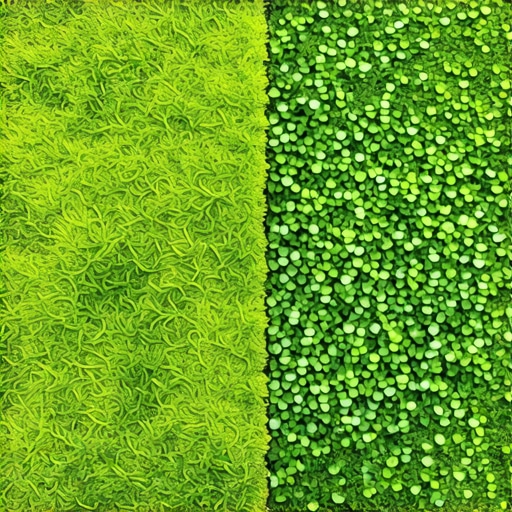
The Foundation of Shade: Why Soil Grading Dictates Your 2026 Success
I always drill into my new crew members: if you don’t fix the soil grading first, every plant you put in the ground is just expensive compost. Most homeowners looking at a shady yard see a design challenge, but I see a hydraulic and biological puzzle. If your yard has a five-degree slope toward the foundation, it does not matter if you plant moss or micro-clover; the hydrostatic pressure will eventually force water into your crawlspace and rot the root systems of your groundcover. Real landscaping starts with a transit level and a shovel, not a seed bag. You have to understand how water moves through your specific soil texture, whether it is heavy clay or silty loam, before you commit to a 2026 planting schedule.
Choosing Between Moss and Micro-Clover for Shady Landscapes
Deciding between moss and micro-clover requires evaluating soil pH, moisture retention, and foot traffic levels within your specific micro-climate. Moss requires acidic environments (pH 5.0 to 5.5) and consistent moisture, whereas micro-clover (Trifolium repens ‘Pipolina’) thrives in neutral soils and provides nitrogen fixation through symbiotic bacteria. Any successful sod install or groundcover transition must begin with a comprehensive soil test to determine which biological path your site can actually support. You cannot fight chemistry.
“Mosses are non-vascular plants, meaning they lack xylem and phloem; they absorb water and nutrients through their leaves via osmosis, making them highly sensitive to the mineral content of their water source.” – Penn State Extension Horticultural Manual
The Biology of Moss: A Bryophyte Deep Dive
Moss is not a weed. It is a bryophyte, a complex organism that has survived for millions of years by being tougher than your fescue. If you have a deep shade area where the sun never hits, moss is your only real 2026 option. But here is the catch: you have to prepare the site. This involves a rigorous yard cleanup to remove every single oak leaf and twig. If a leaf sits on moss for two weeks, the moss dies. It suffocates. We use a specialized irrigation setup for moss that focuses on high-frequency, low-volume misting rather than the deep-soak methods used for traditional turf. You are not watering the roots; moss doesn’t have true roots, only rhizoids for attachment. You are hydrating the tissue. If your water has a high calcium content, you will kill the moss by raising the pH. You need to know your PPM (parts per million) before you turn on the valves.
Micro-Clover: The Nitrogen Factory
Micro-clover is the darling of the eco-friendly movement, and for good reason, but it is not a silver bullet for total darkness. It needs at least four hours of dappled light. The benefit of micro-clover is its relationship with Rhizobium bacteria. It pulls nitrogen out of the air and pumps it into the soil. It is a self-fertilizing system. For a 2026 plan, I recommend a sod install alternative: over-seeding micro-clover into existing thin turf. It stays small, it does not flower as much as Dutch White Clover (which means fewer bees if you have kids running around), and it handles moderate foot traffic. However, if your yard is a swamp, clover will develop root rot. You must ensure the sub-base is permeable. We often recommend a 2-inch layer of coarse sand tilled into the top 6 inches of soil to improve aeration before seeding.
“Nitrogen fixation in clover species can contribute up to 150 pounds of nitrogen per acre per year, significantly reducing the requirement for synthetic fertilizers and improving soil microbial health.” – Texas A&M Agronomy Research
Comparing Groundcover Performance
| Feature | Moss (Bryophyta) | Micro-Clover (Pipolina) |
|---|---|---|
| Light Requirement | Full Shade to Dappled | Partial Shade (4+ hours) |
| Optimal Soil pH | 5.0 to 5.5 (Acidic) | 6.0 to 7.0 (Neutral) |
| Watering Needs | Daily Misting (High) | Weekly Deep Soak (Moderate) |
| Traffic Tolerance | Very Low | Moderate |
| Maintenance | Leaf Removal Required | Occasional Mowing |
How much modified gravel do I need for a patio base?
If you are integrating a patio into your shady yard plan, you need a minimum of 4 to 6 inches of compacted 21A or QA modified gravel. To calculate the volume, multiply your square footage by the depth in feet (e.g., 0.33 for 4 inches) and divide by 27 to get cubic yards. Do not skip the plate compactor. If the base isn’t solid, your pavers will shift within one freeze-thaw cycle.
The 2026 Installation Protocol: A Step-by-Step Guide
- Conduct a soil test: Measure pH, Nitrogen, Phosphorus, and Potassium levels.
- Perform yard cleanup: Remove all debris, invasive weeds, and old thatch.
- Grade the site: Ensure a 2 percent slope away from all structures.
- Install irrigation: Set up zones specifically for the shade requirements.
- Amend the soil: Add sulfur for moss or lime for clover based on test results.
- Planting: For moss, use the slurry method or plugs; for clover, broadcast seed at 1 pound per 1,000 square feet.
- Compaction: Use a light water-filled roller to ensure seed-to-soil or moss-to-soil contact.
Is micro-clover better than grass for shade?
Micro-clover is significantly more shade-tolerant than standard Kentucky Bluegrass, but it cannot compete with fine fescue in terms of sheer durability. In 2026, the best approach is often a hybrid. A mix of 95 percent fine fescue and 5 percent micro-clover creates a resilient, nitrogen-rich lawn that stays green even when the heat hits. Pure clover can look patchy in late winter, so the grass provides the structural backbone. If the shade is over 80 percent, stop trying to grow clover and move to moss or sedges. You cannot argue with the sun. It will win every time.
The Engineering of Drainage in Shady Areas
Shade usually means slower evaporation. Slower evaporation means a higher risk of fungal pathogens like Pythium or Rhizoctonia. This is why landscaping in the shade is actually an exercise in moisture management. If we are doing a sod install in a low-light area, I often insist on a French drain system. We dig a trench, line it with non-woven geotextile fabric, drop in a perforated 4-inch pipe, and backfill with 1-inch clean stone. This manages the subsurface water that moss loves but clover hates. If you don’t control the water, the water will control your checkbook. In 2026, we are seeing more extreme weather events; your yard needs to be able to shed 2 inches of rain in an hour without turning into a pond. That is the difference between a professional install and a DIY disaster. It must drain. Period.