
Fixing Sinking Pavers: Why Sand Alone Is Not Enough
You look out your window after a heavy rain and see it. A series of puddles sitting on your fifteen thousand dollar investment. The pavers are not flat anymore; they look like a topographical map of the Andes. You step on one and muddy water squirts up through the joints. It is a total system failure. Most homeowners think they can just dump more sand in the gaps to level it out. They are wrong. It will not work. Sand is a bedding and jointing material, not a structural foundation. To fix a sinking patio, you have to look at the physics of the soil and the engineering of the base layers. If you do not understand hydrostatic pressure and soil compaction, you are just throwing money into a hole in the dirt.
Why Your Pavers Are Sinking
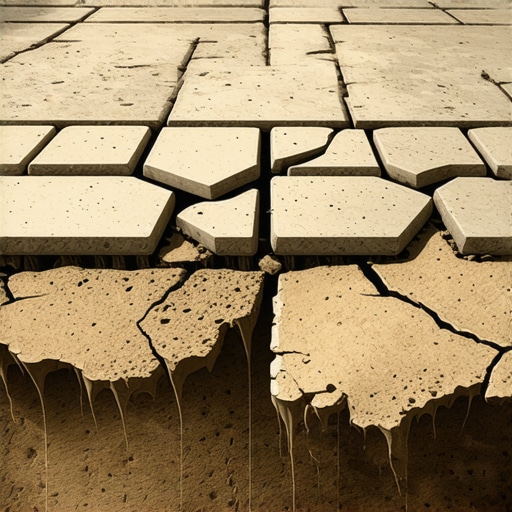
Pavers sink primarily due to subgrade failure or inadequate base compaction. When the soil beneath the patio is not excavated to the correct depth or the modified gravel base is too thin, water infiltration and soil settling cause the surface to shift. Sand is only for bedding, never for structural support. I recently got called out to tear up a $30,000 patio that was sinking because the previous contractor used stone dust as a base instead of modified gravel. Stone dust holds water like a sponge. In our climate, water freezes and expands with immense force. That expansion pushed the pavers up, then as it thawed, the dust turned to muck. The whole thing migrated three inches down into the clay. The homeowner thought they just needed more sand. I had to show them the rotting, wet mess underneath to prove that the entire foundation was compromised. We ended up excavating eight inches of garbage material just to reach a stable subgrade. If you do not fix the drainage, you are just building a very expensive bathtub.
“A retaining wall doesn’t fail because of the stone; it fails because of the water trapped behind it.” – Hardscape Engineering Axiom
How much modified gravel do I need for a patio base?
For a standard pedestrian walkway, you need a minimum of four to six inches of compacted 21A or 3/4-inch minus modified gravel. For driveways or areas with heavy equipment, you must increase this to eight or twelve inches. This gravel must be spread in two-inch lifts and compacted with a vibrating plate compactor to reach 98 percent Proctor density. If you dump six inches of gravel in a hole and run a compactor over the top once, only the top two inches get tight. The bottom four inches remain loose. Over time, those loose stones will shift and your pavers will follow them down. It is a simple law of gravity and physics. You cannot cheat the compaction process. I tell my crew every morning: the tamper should literally bounce off the ground when the base is ready. If it is still sinking into the stone, keep running the machine.
The Role of Geotextile Fabric in Hardscaping
One of the biggest mistakes hacks make is skipping the geotextile filter fabric. This fabric acts as a bridge between the raw subgrade and your expensive gravel base. Without it, the heavy gravel will eventually be pressed down into the soft soil or clay below. This is called soil migration. Once the dirt mixes with your clean gravel, the structural integrity of the base is gone. The gravel loses its ability to drain water, and the whole system starts to heave during the first frost. Use a non-woven geotextile. It allows water to pass through but keeps the soil particles out of your stone. It is a cheap insurance policy that saves a thirty thousand dollar patio.
| Material | Function | Stability Rating | Drainage Capability |
|---|---|---|---|
| Subgrade (Native Soil) | Foundation | Low (Variable) | Poor (Clay) to High (Sand) |
| Geotextile Fabric | Separation | High (Prevents Migration) | Excellent (Non-woven) |
| Modified Gravel (21A) | Structural Base | Highest | Good (When compacted) |
| Bedding Sand | Leveling Layer | Low | Moderate |
| Polymeric Sand | Joint Stabilization | Moderate | Low (Water Resistant) |
Can you just put new sand over sinking pavers?
No, you cannot just pour sand over the top. This is the hallmark of a mow-and-blow contractor who does not understand engineering. If a paver has sunk, it means the material underneath has moved. Adding sand to the top does nothing to stop the underlying movement. In fact, it often makes it worse by trapping more moisture in the joints. To fix it correctly, you must pull up the affected pavers, inspect the bedding sand, and likely excavate the base to see where the failure occurred. Often, we find a broken irrigation line or a downspout that is dumping water directly under the patio. Until you stop the water, no amount of sand will keep those stones level.
“Surface drainage must be designed to direct water away from the pavement system to prevent saturation of the subgrade and base materials.” – ICPI Tech Spec No. 2
The Engineering Checklist for a Permanent Patio
- Call 811 before you dig to mark utility lines.
- Excavate to a depth that accounts for the paver thickness, one inch of bedding sand, and at least six inches of gravel.
- Pitch the subgrade at a two percent slope (one inch of drop for every four feet of distance) away from the house.
- Install non-woven geotextile fabric over the raw dirt.
- Use modified gravel (not pea gravel or stone dust) for the base.
- Compact in two-inch increments using a plate compactor.
- Use one inch of washed concrete sand for the bedding layer. Do not compact this layer until the pavers are set.
- Install edge restraints (plastic or aluminum) to prevent the pavers from spreading outward.
- Fill joints with high-quality polymeric sand and activate with a fine mist of water.
Why Polymeric Sand is Non-Negotiable
Standard play sand or mason sand will wash away in the first thunderstorm. This leaves the edges of your pavers exposed, which leads to chipping and further shifting. We use polymeric sand, which is a mix of graded sand and binder agents. When it gets wet, it hardens like mortar but remains flexible enough to handle the natural movement of the earth. It also stops weeds from growing in the cracks and prevents ants from mining out the sand underneath your stones. If your contractor is using regular sand to save fifty bucks, fire them. They are setting you up for a yard cleanup nightmare in two years. I have seen ants move five pounds of sand out from under a patio in a single summer, causing the entire perimeter to collapse. It is a small detail that makes or breaks the job.
Addressing Irrigation and Drainage Issues
You can build the strongest patio in the world, but if your irrigation system is leaking or your downspouts are not piped away, the water will win. Hydrostatic pressure is the silent killer of hardscapes. Water builds up in the soil, cannot escape, and exerts thousands of pounds of pressure against your pavers and walls. We always install a French drain or a solid PVC drain pipe behind any retaining walls and under large patio areas if the soil is heavy clay. This gives the water a path of least resistance so it does not have to push your pavers out of the way. If you see white crusty powder on your pavers, that is efflorescence. It is a sign that water is moving through the stone and pulling salts to the surface. It is the first warning sign of a drainage problem. Fix it now or pay me to tear it all up later. It is your choice.