
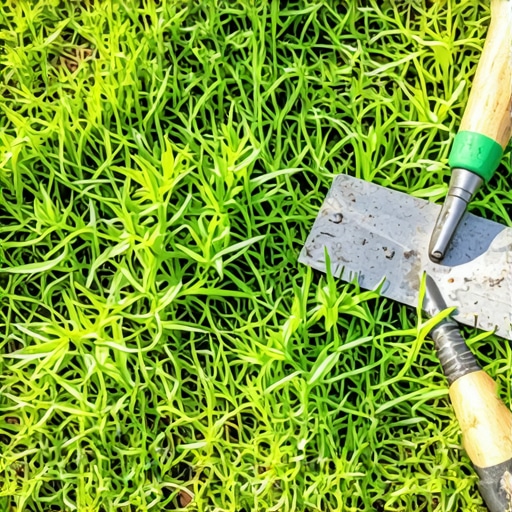
You wake up in mid-July and notice it: the lime-green, sprawling intruder that looks like a prehistoric spider crawling through your fescue. It is Digitaria sanguinalis, commonly known as crabgrass, and if you can see it, you are already months behind the battle. Most homeowners treat their landscaping like a cosmetic hobby, but turf management is a war of biological attrition. Crabgrass is a C4 species, meaning it thrives in the heat that puts your cool-season grass into dormancy. It doesn’t just grow; it colonizes. If you don’t understand the hydrostatic requirements of your soil or the nitrogen cycle of your lawn, you are just throwing money into the wind.
The Chemical Nightmare: A Cautionary Tale of Improper Soil Management
A homeowner recently called me in a total panic after they completely torched their front lawn by applying three different types of ‘weed-and-feed’ products in a single week. They thought more chemicals meant a faster kill. Instead, they spiked the soil salinity to toxic levels, causing a massive chemical burn that bypassed the weeds and nuked the root systems of their Kentucky Bluegrass. By the time I arrived, the soil pH was a catastrophic 4.5, and the only thing surviving was—you guessed it—the crabgrass. This is why a yard cleanup must be surgical, not scattershot. You cannot fix a biological problem with blind chemistry. You have to understand the soil’s cation exchange capacity before you start dumping bags of synthetic nitrogen.
How to Identify Crabgrass Before It Seeds
To identify crabgrass, look for thick, prostrate stems radiating from a central hub with wide, yellowish-green blades that possess a distinct white mid-vein. Unlike desirable turf, crabgrass grows horizontally, choking out surrounding plants and stealing moisture from your irrigation system’s reach. Identification must happen before the seed heads emerge in late summer, as a single plant can drop up to 150,000 seeds into your soil’s ‘seed bank,’ where they can remain viable for over a decade. If you see the purple-hued seed spikes, you’ve already lost this year’s primary skirmish.
“Crabgrass is a C4 summer annual grass that thrives under high light and high temperature conditions that limit the growth of C3 cool-season turfgrasses.” – University of Missouri Extension
How much water does crabgrass need to survive?
Crabgrass requires significantly less irrigation than standard turf because it utilizes a C4 photosynthetic pathway, making it highly drought-tolerant and efficient in heat. While your fescue wilts at 90 degrees, crabgrass is just hitting its stride. Shallow, frequent watering is the biggest mistake you can make. It keeps the top half-inch of soil moist, which is exactly where the crabgrass seeds are waiting to germinate. You need deep, infrequent watering—exactly 1 inch per week—to force the roots of your desirable grass to chase the water down into the lower soil horizons, leaving the surface dry and inhospitable to weed seeds.
The Forensic Diagnosis: Why Your Lawn Failed
Crabgrass is an opportunistic colonizer. It only takes over when there is a vacancy in the turf canopy. If your lawn is thin, it’s usually due to soil compaction, improper mowing height, or a lack of core aeration. When soil is compacted, the bulk density increases, and oxygen levels drop. Crabgrass can handle low-oxygen environments; your high-end sod cannot. You have to think about the pore space in your soil. Without at least 25% air space, your roots are suffocating.
| Treatment Method | Active Ingredient | Ideal Timing | Effect on New Sod |
|---|---|---|---|
| Pre-Emergent | Prodiamine | Early Spring (55°F Soil) | Prevents Rooting |
| Post-Emergent | Quinclorac | Active Growth (June/July) | Wait 4 Weeks |
| Mechanical | Core Aeration | Early Fall | Improves Rooting |
| Top Dressing | Compost/Sand | Post-Aeration | Balances pH |
When is the best time to apply crabgrass preventer?
The best time to apply a pre-emergent herbicide is in the early spring when soil temperatures consistently reach 55 degrees Fahrenheit for three consecutive days. This usually coincides with the blooming of Forsythia bushes. If you wait until the crabgrass is visible, the pre-emergent window has closed, and you are forced to use more expensive, harsher post-emergent chemicals that can stress your primary lawn. Timing is everything. One week too late and the barrier is useless.
The Professional Eradication Protocol
- Soil Testing: Do not guess. Get a lab-grade soil test to check your N-P-K levels and pH. Target a pH of 6.5 to 7.0.
- Pre-Emergent Application: Use a granular prodiamine or dithiopyr. Ensure it is watered in with 0.5 inches of water to create the chemical ‘blanket.’
- Mowing Height Adjustment: Set your mower to 3.5 or 4 inches. Tall grass shades the soil, keeping it cool and preventing sunlight from hitting the crabgrass seeds.
- Irrigation Calibration: Move to a deep-soak schedule. Water at 4:00 AM to minimize fungal growth while ensuring deep penetration.
- Fall Remediation: If the lawn is still thin, perform a yard cleanup that includes core aeration and overseeding to thicken the canopy for next year.
“The best defense against crabgrass is a dense, healthy turf, as most weeds cannot compete for space, water, and nutrients in a well-managed lawn.” – Penn State Center for Turfgrass Science
Can I plant new sod after using crabgrass killer?
You cannot perform a sod install immediately after applying most crabgrass preventers because the same chemicals that stop weed seeds from growing will also stop your new sod roots from knitting into the soil. Depending on the product’s half-life, you typically need to wait 60 to 120 days before laying new turf. If you are planning a major landscaping overhaul, time your herbicide applications to end at least three months before the sod arrives. If you skip this, the sod will simply sit on top of the soil and die because it cannot establish a root connection.
Maintaining the Integrity of the Turf
Stop thinking about weeds and start thinking about soil health. A thick lawn is a biological shield. Every time you scalp your grass or forget to water, you are opening the door for the next generation of crabgrass. It is a relentless cycle. You need to be more relentless than the plant. Don’t buy cheap big-box store fertilizers that are 50% filler. Buy professional-grade, slow-release nitrogen that feeds the grass over 8 weeks, not 8 days. Keep your blades sharp. Dull blades tear the grass, creating entry points for disease. This isn’t just lawn care; it’s engineering. Follow the schedule. Watch the soil temps. Win the war.