
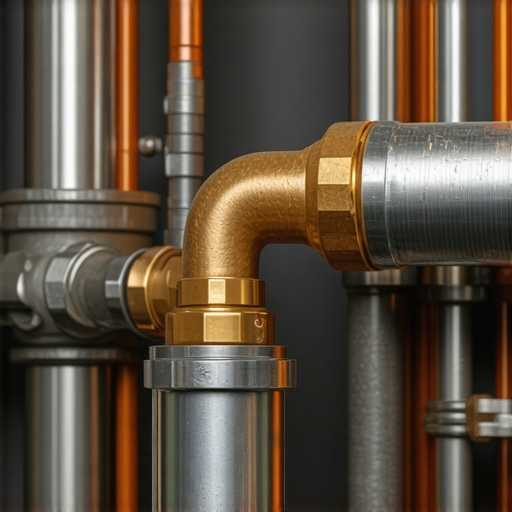
The Physics of the Bang: Why Your Irrigation System is Screaming
Water hammer in irrigation occurs when the kinetic energy of moving water is abruptly converted into a high-pressure shock wave. This happens when a solenoid valve closes too fast, sending a spike of 500+ PSI through your PVC pipes, potentially causing joints to fail or headers to burst. It is not just a noise; it is a structural threat. I recently got called out to tear up a $30,000 patio that was sinking because the previous contractor failed to realize that the irrigation main line running underneath it was suffering from massive hydrostatic shock. Every time zone three shut off, the pipe hammered against a buried rock. Over three years, that vibration rubbed a hole into the PVC. It wasn’t a geyser; it was a slow, pressurized mist that turned the sub-base into a slurry. The pavers didn’t ‘settle’—they drowned. Fix the pressure. Save the pipe. Don’t skip this. Landscaping is 10% aesthetics and 90% civil engineering. When we talk about a sod install or a general yard cleanup, we often find that homeowners ignore the subterranean violence happening every time their timer hits ‘off.’ You can have the greenest grass in the county, but if your irrigation manifold sounds like a sledgehammer hitting a dumpster, your system is on a countdown to catastrophic failure.
“Velocity should be limited to 5 feet per second to prevent surge pressure from exceeding the working pressure of the pipe.” – Irrigation Association Technical Manual
How much modified gravel do I need for a patio base?
While this seems unrelated, the water hammer issue is the primary killer of hardscape foundations. For a standard landscaping project, you need 6 inches of compacted 21A or 3/4-inch modified gravel. However, if an irrigation line running through that base is vibrating due to hammer, it will eventually loosen the compaction of that gravel, leading to pavers that shift and crack regardless of how much stone you used.
Diagnosing the Mechanical Failure
The irrigation system is a pressurized loop. When that loop is interrupted by a fast-closing valve, the water has nowhere to go. It bounces back. This is known as a pressure surge. In a residential setting, most irrigation systems operate between 40 and 60 PSI. During a hammer event, that pressure can instantaneously quadruple.
“A retaining wall doesn’t fail because of the stone; it fails because of the water trapped behind it.” – Hardscape Engineering Axiom
This same logic applies to your pipes. The failure isn’t the PVC; it’s the energy management. If you are doing a yard cleanup and notice wet spots near your valve box that don’t go away, you likely have a hairline fracture caused by years of hammer. We see this constantly during a sod install where the high frequency of watering—sometimes four times a day to keep the new turf saturated—accelerates the wear on the fittings. You must check your static pressure. If your house pressure is over 80 PSI, you are asking for trouble. Install a pressure-reducing valve (PRV) before the irrigation manifold. It is cheaper than excavating a finished lawn.
Why do my pipes bang when the sprinkler turns off?
Your pipes bang because the water’s momentum is stopped instantly by the electric solenoid valve. This creates a shockwave that travels backward through the plumbing. In older systems, air chambers were used to cushion this, but those chambers eventually waterlog and fail. Modern solutions require water hammer arrestors which use a piston and a nitrogen charge to absorb the energy. If you hear this noise, your velocity is too high. You might have too many heads on one zone, or your pipe diameter is too small for the GPM (gallons per minute) you’re pushing. Science doesn’t care about your budget. It will break.
| Material | Max Velocity (FPS) | Recommended PSI | Burst Strength (PSI) |
|---|---|---|---|
| Schedule 40 PVC (1″) | 5.0 | 45-60 | 450 |
| Class 200 PVC | 5.0 | 40-50 | 200 |
| Copper Type L | 8.0 | 50-80 | 1000+ |
Remediation and Structural Support
To stop the noise, you must address the three variables: velocity, pressure, and closure speed. First, install slow-closing valves. Brands like Rain Bird and Hunter manufacture valves specifically designed to close over 2-5 seconds rather than 1/10th of a second. Second, look at your irrigation layout. If you have a long run of 3/4-inch pipe, the friction loss and velocity are likely out of spec. Third, secure your pipes. A pipe that is properly bedded in sand and strapped won’t move, even if there is a minor surge. During a yard cleanup, I often see pipes exposed by erosion. If they can move, they will break. Every landscaping professional knows that a loose pipe is a dead pipe. Use sod install periods to inspect the trenches. If you see ‘jumping’ pipes when the system cycles, you have a hammer problem that needs an arrestor immediately.
How do I install a water hammer arrestor on an irrigation line?
Installing an arrestor involves cutting into the main line before the valve manifold. You use a T-fitting to install the arrestor vertically. The water hammer arrestor contains a sealed chamber of air or gas that compresses when the pressure spike hits, acting as a shock absorber for the plumbing. This is a critical step if you are running high-flow irrigation zones for large properties.
- Check static water pressure at the hose bib using a PSI gauge.
- Replace standard solenoid valves with slow-closing residential valves.
- Install a 1-inch water hammer arrestor at the end of long pipe runs.
- Reduce flow rates by changing nozzle sizes in your sprinkler heads.
- Ensure all mainline pipes are buried at least 12-18 inches deep to utilize soil weight as a stabilizer.
The reality is that most ‘mow-and-blow’ guys won’t tell you about this. They just want to lay the sod and leave. But if you want a system that lasts 30 years, you have to respect the physics of fluid dynamics. High pressure kills systems. Vibration kills joints. Water hammer is the silent killer of the high-end landscape. Address it now or pay for it later when you have to rip up your yard to find a $2 fitting that cracked under pressure.