
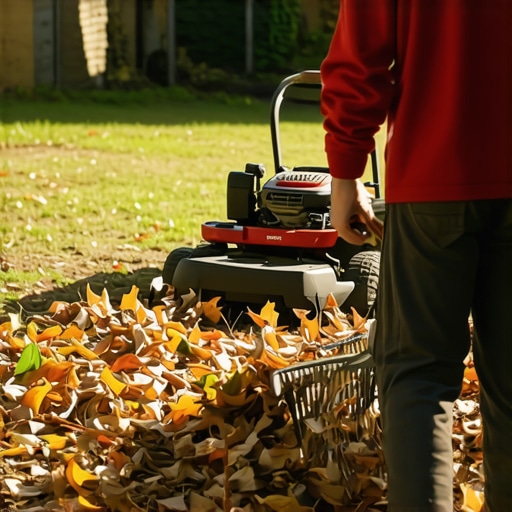
The Forensic Autopsy of a Smothered Lawn
The smell of a lawn dying under a blanket of wet leaves is unmistakable: it is the sharp, acrid scent of anaerobic decomposition. I recently walked onto a site where a homeowner had let six inches of oak leaves sit through a wet November. To fix the yellowing that occurred by spring, they threw down ten pounds of high-nitrogen fertilizer. This was Option B in the handbook of how to kill a yard. The resulting chemical burn, trapped under the damp leaf mat, turned the soil into a literal dead zone. The ammonia could not escape. The roots were cooked in their own juices. This is what happens when you treat yard cleanup as a chore rather than a biological process. When you choose between a mower and a rake, you are choosing between a nutrient-cycling system and a waste-removal process. It will rot if you leave it. You must understand the mechanics of the soil before you touch the equipment.
Is Mulching Leaves Better Than Raking?
Mulching leaves with a high-lift mower blade is statistically superior for soil microbiology and nutrient cycling compared to raking. By reducing organic matter to 0.5-inch particles, you accelerate decomposition and integrate carbon and nitrogen directly into the turf canopy without suffocating the roots. This process mimics the natural forest floor but at a pace the lawn can digest. Raking is labor-intensive and removes free nutrients. Mulching saves time and money. Do not bag them. Use a mulching kit. It is basic math. One acre of leaves can contain up to 50 pounds of potassium. Removing them is throwing away cash. You want those minerals in your soil, not in a landfill. However, timing is everything. If the leaf layer exceeds three inches, even the best mower will struggle to process the volume without leaving a clumped mess that blocks sunlight.
“Mulching leaves into the turf can provide a significant portion of the nitrogen requirement for the following season, provided particle size is sufficiently reduced to prevent shading of the grass blades.” – Michigan State University Extension
The Mechanical Reality of the Mower Blade
A standard mower blade creates a vacuum. It lifts the grass, cuts it, and spits it out. A mulching blade, specifically a gator-style blade with teeth, recirculates the leaf debris within the deck multiple times. We are talking about 18,000 feet per minute of tip speed. That speed pulverizes the cellulose. If your blades are dull, you are not cutting; you are tearing. Torn leaves are harder for soil microbes to break down. You need a clean edge. I tell my crew to sharpen blades every 10 to 12 hours of operation. No exceptions. If you see brown, frayed edges on your grass after a pass, your equipment is failing you. For heavy yard cleanup, you might need two passes. The first pass breaks the bulk. The second pass integrates the remains into the soil profile. It should look like a light dusting of pepper when you are done. If you still see leaf chunks, go again.
How do I clear leaves without damaging new sod?
Sod install projects require extreme caution during the first 60 days of leaf removal to avoid root shearing. You must avoid using heavy zero-turn mowers or aggressive raking that can lift the unestablished sod pieces, preferring instead a high-volume leaf blower to move debris to the perimeter. New sod is fragile. The roots are only 0.5 to 1 inch deep in the first few weeks. A rake tine can hook the edge of a sod strip and pull it clean off the soil. This creates air pockets. Air pockets kill roots. Use a blower on a low throttle. Move the leaves sideways. Do not point the nozzle directly at the seams. If you must use a mower, wait until the sod can pass the pull test. If you can’t lift the corner of the grass with a firm tug, it is safe to mow. Use the highest setting. 4 inches is the target.
| Method | Speed | Nutrient Retention | Equipment Cost | Physical Strain |
|---|---|---|---|---|
| Raking | Low | Zero (Removal) | $20 | High |
| Mulch Mower | High | 100% | $400 – $2,000 | Low |
| Leaf Vacuum | Medium | Low | $150 – $600 | Medium |
What is the fastest way to clean up a large yard?
The fastest way to clean up a large landscape is a multi-stage approach: use a commercial leaf blower to move debris away from irrigation heads and landscaping beds, then pulverize the remaining central mass with a mulching mower set to its highest deck height. Efficiency is about CFM, or Cubic Feet per Minute. A handheld blower is a toy. You need a backpack blower with at least 600 CFM to move wet oak leaves. Work with the wind, not against it. It sounds simple, but I see people fighting a 10 mph breeze every day. It is a waste of fuel. Establish a pattern. Blow everything to the center of the lawn where the mower can reach it. Avoid blowing leaves into your irrigation valve boxes. They will clog the solenoids and trap moisture, leading to electrical shorts. Keep your infrastructure clear.
“Excessive organic matter accumulation at the soil surface prevents gas exchange and promotes anaerobic conditions that favor fungal pathogens like snow mold.” – Agronomy Journal of Soil Science
The Biological Impact on Irrigation and Drainage
When leaves sit, they clog. They clog irrigation emitters, they clog French drains, and they clog the soil pores themselves. This leads to hydrostatic pressure issues in your yard. Water cannot penetrate a mat of wet leaves. Instead, it pools on top. This creates a playground for Pythium blight and Microdochium nivale (Snow Mold). If your sprinkler system is set to run in the fall while leaves are down, you are just accelerating the rot. Turn the system off or adjust it for the reduced evaporation rates of autumn. Wet leaves also increase the acidity of the runoff. Oak leaves are full of tannins. While the myth that they permanently change soil pH is exaggerated, they can cause temporary localized drops in pH that stress sensitive landscaping plants. Clear the area. Let the soil breathe.
- Inspect blade sharpness; dull blades tear, they don’t cut.
- Check soil moisture; never mulch wet leaves or you will create a paste.
- Calibrate mower height to 3 inches minimum to protect the crown.
- Verify leaf-to-grass ratio; more than 50% leaf cover requires removal, not mulching.
- Clear irrigation heads before starting equipment to avoid mechanical damage.
The Maintenance Schedule for Success
Don’t wait for the last leaf to fall. That is a rookie mistake. Start mulching when the trees are at 20% drop. If you stay on top of it every five to seven days, the mower can handle the load. If you wait until it is ankle-deep, you are looking at an excavation project, not a mow. You should also consider a late-season aeration. Pulling cores through a light layer of mulched leaves is the ultimate way to get organic matter into the root zone. It puts the food where the plant needs it. Use a core aerator, not a spike aerator. Spikes just cause compaction. Cores create space. Space allows for gas exchange. Your grass is a living organism. It needs oxygen just as much as it needs water. Don’t choke it with a blanket of neglect. Get the mower out. Sharpen the blades. Get to work.