
The Forensic Autopsy of a Suffocated Lawn
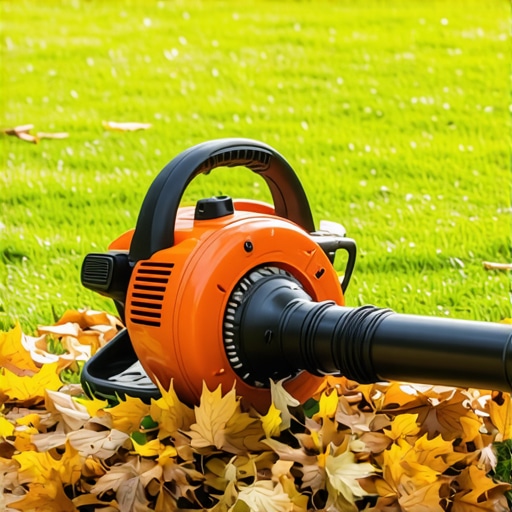
To remove thick leaf mats without a rake, professionals utilize high-lift mulching mowers, tow-behind lawn vacuums, or biological decomposition accelerators. These industrial methods eliminate anaerobic barriers that trap pathogenic moisture and prevent soil gas exchange, which are the primary causes of winter kill and root rot in domestic turf.
I have seen it a thousand times. A homeowner waits until December to address the oak leaves. By then, the rain has turned a six-inch pile into a two-inch layer of black, slimy felt. This is not just a mess; it is a biological weapon against your grass. When we peel back these mats during a yard cleanup, the grass underneath is often yellow or white. That is etiolation. The plant is literally starving for light and oxygen. If you leave that mat until spring, you are not just cleaning up leaves; you are prepping for a full sod install because the existing turf will be dead. I always drill into my new crew members: if you don’t fix the soil grading and air circulation first, every plant you put in the ground is just expensive compost. You cannot ignore the physics of the mat. It creates a waterproof seal that simultaneously starves the roots of hydration and drowns the blades in fungal spores.
“A Carbon-to-Nitrogen ratio exceeding 30:1 in surface litter significantly slows decomposition, leading to physical barrier formation over turfgrass.” – Agronomy Manual 4th Ed
The Mechanical Solution: Mulching and Airflow Physics
When dealing with heavy leaf loads, the standard mower blade is useless. You need a G6 Gator blade or a similar high-lift design. These blades are engineered with teeth that redirect the clippings back into the path of the cutting edge multiple times. You are looking for a particle size smaller than a dime. If the particles are larger, they will still bridge together and form a mat. We run our commercial zeros at high RPMs to maintain a tip speed of roughly 18,000 FPM (feet per minute). This creates the static pressure necessary to lift the wet leaves off the soil surface before the blade strikes. It is about lift, not just cutting. If the leaves stay flat, you are just scalping the mud.
How do I get rid of leaves without raking or blowing?
The most effective non-manual method is the use of a tow-behind lawn vacuum with a centrifugal impeller. These units generate 1,500 to 3,000 CFM of suction, pulling matted debris from the thatch layer without the physical impact of a rake. This preserves the crown of the grass plant while clearing the surface for UV penetration and nitrogen cycling.
| Method | Equipment Required | Labor Intensity | Soil Impact |
|---|---|---|---|
| Mulching | High-Lift Mower Blades | Low | Adds Nutrients |
| Vacuuming | Tow-Behind Lawn Vac | Medium | Maximum Airflow |
| Bio-Acceleration | Nitrogen-Rich Fertilizer | Very Low | Ph Balancing |
| Power Brushing | Walk-Behind Power Broom | High | Dethatches Soil |
The Biological Burn: Using Chemistry to Melt the Mat
If the mat is too wet to mow and too heavy to vac, we look at the C:N ratio. Leaves are high in carbon. Bacteria need nitrogen to eat that carbon. By applying a high-nitrogen liquid fertilizer, specifically something with a 24-0-0 or 32-0-0 NPK ratio, you provide the fuel the microbes need to digest the leaf tissue. We often mix this with a humic acid derivative to stimulate the soil microbiology. It doesn’t happen overnight, but you can see the mat begin to thin within 14 days. This is critical for preparing a site for a sod install in the spring. You cannot lay fresh sod over a carbon-heavy mat; the decomposition process will actually rob the new sod of the nitrogen it needs to establish roots. It is a competition you will lose every time.
“Excessive thatch and leaf accumulation can create an anaerobic environment, trapping moisture and gases that inhibit root respiration.” – University of Minnesota Extension
How much modified gravel do I need for a patio base?
While discussing landscaping infrastructure, remember that drainage impacts leaf rot. For a standard patio base, you need a minimum of 6 inches of compacted modified gravel (2A or CR6). This depth ensures proper hydrostatic pressure relief, preventing water from pooling in low spots where leaves naturally congregate and decay, which protects the structural integrity of your hardscape and turf edges.
The Yard Cleanup Checklist: Post-Leaf Protocol
- Check irrigation sensors for debris blockage.
- Clear all area drains and French drain outlets.
- Apply a pelletized lime if the rotting leaves have spiked soil acidity.
- Core aerate if the mats were heavy enough to cause soil compaction.
- Monitor for snow mold in the early spring thaw.
Landscape maintenance is not a suggestion. It is a requirement for plant survival. If you skip the leaf removal, you are inviting Pythium and Fusarium into your soil. These pathogens don’t just go away when the sun comes out. They stay in the soil, waiting for the next period of high humidity to kill your lawn. Use the right tools. Keep the airflow moving. Don’t let a layer of maple leaves destroy a ten thousand dollar landscaping investment. It will rot. Don’t skip this.