
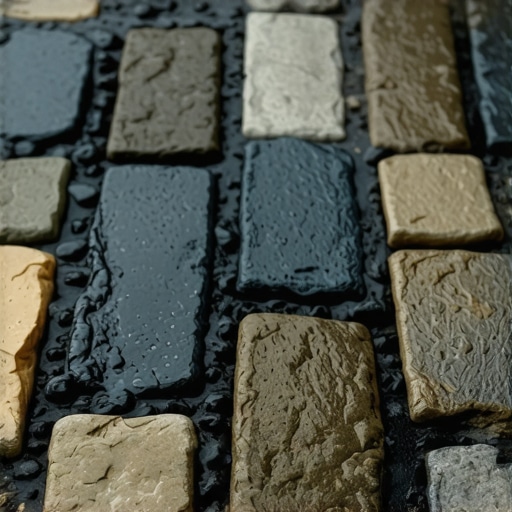
You walk out to your patio after a heavy spring rain and see it: gritty, grey sludge smeared across your pavers and deep, empty voids where the joints used to be. It is frustrating, expensive, and entirely preventable. Most homeowners, and unfortunately many ‘mow-and-blow’ contractors, treat polymeric sand like regular play sand you just sweep into cracks. It isn’t. It is a sophisticated chemical compound designed to create a semi-rigid, water-resistant bond. When it fails, it is almost always a failure of physics or preparation, not the product itself. The joints are the glue of your hardscape; when the glue dissolves, the structure follows.
The $30,000 Hardscape Autopsy
I recently got called out to tear up a $30,000 patio that was sinking because the previous contractor ignored the fundamental laws of drainage. The homeowner complained that the polymeric sand had ‘washed away’ within three months. Upon excavation, I didn’t find a sand problem; I found a swamp. The contractor had installed the pavers over a base of stone dust—a cardinal sin in hardscaping—which trapped water like a sponge. This saturated the polymeric sand from the bottom up, never allowing it to fully cure. Every time it rained, the hydrostatic pressure from the trapped water pushed the sand right out of the joints. We had to rip the entire project out, haul away 40 tons of wet stone dust, and replace it with a proper open-graded aggregate base. It was a brutal lesson in why the stuff you can’t see matters more than the stuff you can.
Why Polymeric Sand Fails to Stay in Joints
Polymeric sand washes out primarily due to improper joint depth, inadequate compaction, or excessive moisture during the curing phase. When the sand isn’t consolidated to the bottom of the paver joint using mechanical vibration, it lacks the structural integrity to resist hydraulic pressure from rain or irrigation systems. If the sand is only a thin ‘crust’ on top, it will flake and peel away within one season.
| Failure Symptom | Primary Cause | Engineering Fix |
|---|---|---|
| Cracking/Heaving | Poor Base Compaction | Excavate and use ASTM D2940 modified gravel |
| Sand Washout | Shallow Joints / No Vibration | Re-fill joints to full depth and use plate compactor |
| White Haze (Efflorescence) | Excessive Wetting during Install | Acid wash and proper activation technique |
| Weed Growth in Joints | Contaminated Sand/Incomplete Seal | Pressure wash, dry, and re-sand with high-polymer mix |
“A retaining wall doesn’t fail because of the stone; it fails because of the water trapped behind it. The same logic applies to paver joints; if water cannot escape the base, the joint material is doomed.” – Hardscape Engineering Axiom
How much modified gravel do I need for a patio base?
For a standard pedestrian patio, you need a minimum of 4 to 6 inches of compacted 21A or 3/4-inch modified gravel. If you are dealing with heavy clay soil, you must increase this to 8 inches to account for the lack of natural percolation. Use a plate compactor every 2 inches of ‘lift’ to ensure the base is rock-solid. Do not skip the geotextile fabric between the soil and the gravel; it prevents the stone from migrating into the dirt.
The Role of Compaction in Joint Integrity
If you just sweep the sand in with a broom, you are leaving massive air pockets. These pockets are where failure begins. You must use a vibratory plate compactor with a protective mat. The vibration ‘liquefies’ the sand for a split second, allowing it to settle into every nook and cranny of the paver. Without this, the sand sits on top like a lid on an empty jar. Once a heavy irrigation cycle or rainstorm hits, that lid collapses. I tell my crew: if the tamper doesn’t bounce off the surface, the base isn’t ready. This applies to landscaping projects of all scales.
Can I put new polymeric sand over old sand?
Never install new polymeric sand over old, failing sand because the new layer will not bond to the old material, leading to immediate delamination. You must remove at least 1.5 inches of the old material—or the full depth of the paver—using a pressure washer. Ensure the joints are 100% dry before reapplying. Putting new sand over old is like painting over peeling lead paint; the foundation is already gone.
The Science of the Curing Process
Polymeric sand is activated by water. But there is a ‘Goldilocks’ zone. Too little water, and the polymers don’t link up. Too much water, and you wash the polymers out of the sand before they can bond. Most ‘hacks’ simply spray the hose over the patio and walk away. You need to mist the surface, wait, then shower it until the water starts to reject from the joint. Then—and this is the part everyone misses—you must use a leaf blower to remove every single drop of standing water from the paver surface. If you leave puddles, you get white stains that are a nightmare to remove during yard cleanup.
- Step 1: Clean the joints. Use a pressure washer to remove all organic debris and old sand.
- Step 2: Dry the site. The pavers must be bone-dry for at least 24 hours. Any moisture will cause the sand to stick to the top of the stone.
- Step 3: Sweep and Vibrate. Fill joints, run the plate compactor, and refill. Repeat until the sand is 1/8th inch below the chamfer (the beveled edge).
- Step 4: Blow off the dust. Use a leaf blower on low idle to remove all fine particles from the surface.
- Step 5: Activate. Mist the joints in sections. Do not let the water pool.
“Proper jointing in segmental pavement systems requires the use of sand meeting ASTM C144 specifications to ensure interlock and load transfer.” – ICPI Tech Spec 2
The Connection to Your Lawn and Drainage
Your patio doesn’t exist in a vacuum. If your sod install was done improperly and the grass sits higher than the patio edge, water will back up onto your pavers. This ‘ponding’ is the silent killer of polymeric sand. Your landscaping must be graded to move water away at a rate of at least 1/4 inch per foot. If your yard isn’t draining, your pavers will never stay put. Fix the dirt before you fix the stone. It’s a fundamental rule of civil engineering that many contractors ignore to save time.