
Dormant Seeding Secrets: Engineering a Professional Lawn Before the Thaw
Most homeowners wait until the first robin appears to think about their turf, but by then, the best window for a professional-grade lawn has already slammed shut. As a landscaper with two decades in the trenches, I see the same mistakes every year. People buy bags of cheap, nitrogen-heavy ‘miracle’ mixes from big-box retailers and dump them on hard, cold ground in April, then wonder why their yard looks like a patchy mess by June. The secret isn’t more water or more fertilizer; it is biology and timing. Dormant seeding is the strategic application of turfgrass seed while the ground is cold enough to prevent germination but active enough to incorporate the seed into the soil through mechanical action. It is about working with the winter, not against it.
The Mechanics of Winter Soil Integration
Dormant seeding relies on the natural freeze-thaw cycle to achieve maximum seed-to-soil contact without the need for heavy machinery or immediate irrigation. When the ground freezes and thaws repeatedly, it creates micro-fissures in the soil structure that effectively ‘plant’ the grass seed at the perfect depth for spring germination. I always drill into my new crew members: if you don’t fix the soil grading first, every plant you put in the ground is just expensive compost. It is the same with seeding. If your yard cleanup did not remove the thatch layer, those expensive seeds are just bird food. You need that seed touching actual mineral soil. If it is sitting on a bed of dead oak leaves or thick moss, you are wasting my time and your money. We look for a specific window where the air temperature is consistently low, but the ground is not yet a solid block of ice, or alternatively, applying during a mid-winter thaw. This isn’t ‘mow-and-blow’ logic; it is agronomy. According to the Penn State Extension office, ‘Dormant seeding is most effective when the soil is dry enough to allow for some soil-to-seed contact, yet cold enough that the seed does not germinate until the following spring.’ This is the cornerstone of high-end turf management.
“Dormant seeding success hinges on the seed remaining dormant until soil temperatures consistently reach 50 to 55 degrees Fahrenheit in the spring.” – Agronomy Extension Standards
How much seed do I need for dormant seeding?
For a standard overseeding application during the dormant phase, you should aim for 4 to 6 pounds of high-quality turfgrass seed per 1,000 square feet. If you are dealing with bare dirt or a new sod install alternative, you must increase that rate to 8 or 10 pounds to ensure compaction and coverage are achieved before weed competition begins in the spring.
The Engineering of the Seed Coat
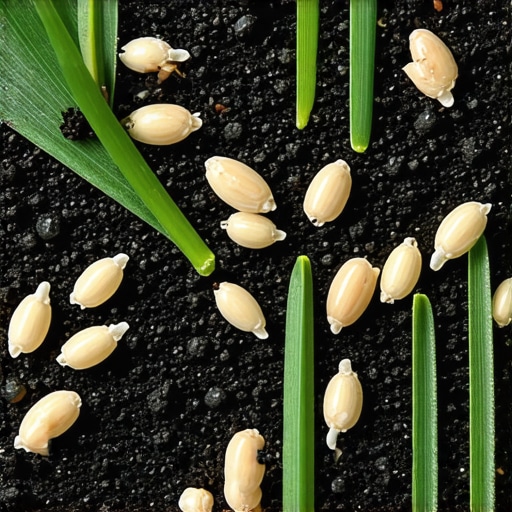
When we talk about ‘secrets,’ we are really talking about the microscopic reality of the endosperm and the protective husk. Not all seeds are created equal. A cheap bag of seed is loaded with ‘Inert Matter’ and ‘Crop Seed,’ which is just a fancy way of saying weeds and dirt. I only use certified cultivars that have been tested for drought resistance and fungal pathogens. When the seed sits in the frozen ground, it undergoes a process called stratification. The cold moisture softens the seed coat just enough so that when the soil hits 55 degrees, the radicle can punch through instantly. This gives your grass a three-week head start over crabgrass. If you wait until spring to seed, you’re fighting a losing battle against the pre-emergent chemicals you need to stop the weeds. With dormant seeding, the grass is already established by the time the weed seeds even wake up. It is a tactical advantage that separates a professional landscape from a DIY disaster.
| Seed Type | Germination Temp | Drought Tolerance | Dormant Success Rate |
|---|---|---|---|
| Kentucky Bluegrass | 50-55 F | Moderate | High (Needs time) |
| Tall Fescue | 55-60 F | High | Excellent |
| Perennial Ryegrass | 45-50 F | Low | Moderate (Fast start) |
| Fine Fescue | 50-55 F | High (Shade) | Good |
The Crucial Role of Yard Cleanup and Preparation
You cannot just throw seed onto a messy lawn and expect results. A proper yard cleanup is the mandatory precursor to any seeding operation. This means more than just blowing leaves. We use power rakes to scarify the surface. We are looking to expose the soil. If there is a thick layer of thatch, the seed will hang up in the organic matter and dry out. It will rot. I have seen guys try to skip this step to save an hour of labor, and they end up losing the entire job. You also need to look at your irrigation system. Even though you aren’t watering in December, you need to ensure the soil moisture levels are consistent. A bone-dry soil won’t heave, and a saturated, swampy soil will cause the seed to succumb to fungal pathogens before it ever has a chance to sprout. We check the pH levels too. If your soil is sitting at a 5.5, it doesn’t matter how much you seed; the acidity will lock up the nutrients and the grass will starve. We aim for a 6.5 to 7.0 range for optimal nutrient uptake.
Can I dormant seed over existing grass?
Yes, dormant seeding is the most effective way to thicken an existing lawn without the hydrostatic pressure of heavy spring rains washing the seed away. By broadcasting seed over thin turf in late winter, you allow the natural frost-heaving of the soil to integrate the new cultivars into the established root zones of the old grass.
- Conduct a soil test to check NPK and pH levels before the first hard freeze.
- Mow the existing grass down to 1.5 inches to minimize shade and maximize soil access.
- Remove all leaf debris and pine needles that can create acidic barriers.
- Use a broadcast spreader calibrated for the specific density of your seed blend.
- Avoid using any ‘weed and feed’ products that contain pre-emergent herbicides.
“A landscape is only as stable as its foundation; whether it is a retaining wall or a blade of grass, the soil physics dictate the outcome.” – Hardscape Engineering Axiom
The Sod Install Comparison
People often ask me if they should just do a sod install in the spring instead. Sod is great for instant gratification, but it is expensive and often fails because people treat it like carpet rather than a living organism. If you don’t prep the base layer—exactly like you’d prep for a hardscape patio—the sod will never knit into the native soil. Dormant seeding, on the other hand, allows the grass to develop a deep, vertical root system from day one. These roots chase the receding moisture line deep into the ground during the summer. Sod roots are often ‘lazy’ because they come from a farm where they were pampered with daily irrigation. When they hit your tough, compacted backyard soil, they give up. A dormant-seeded lawn is a hardened lawn. It is a veteran of the freeze-thaw cycle before it even sees its first mower blade. That resilience is what keeps a lawn green when the July heat waves hit and the municipal water restrictions kick in. Don’t be the person paying for sod every three years. Build a foundation with dormant seeding and let the winter do the heavy lifting for you.