
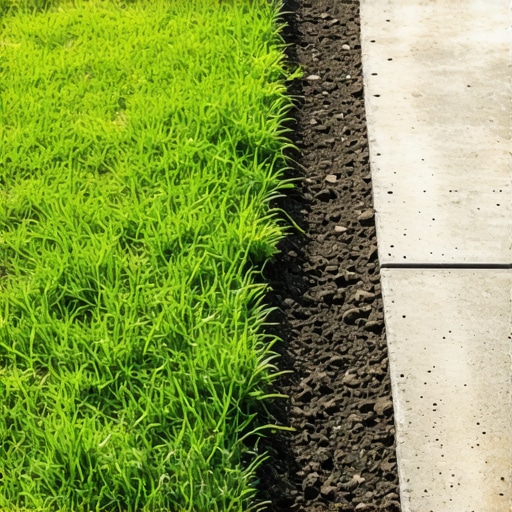
The Core Objective of Professional Edging
To edge your lawn like a professional, you must create a clean vertical 90-degree cut at least 3 inches deep using a half-moon edger or a power edger, ensuring a clear separation between turfgrass and mulch beds to prevent rhizome encroachment and maintain soil structural integrity.
I always drill into my new crew members: if you don’t fix the soil grading first, every plant you put in the ground is just expensive compost. This applies to your edges too. Most amateurs think edging is a cosmetic finish. It is not. It is a biological boundary. A professional edge serves as a structural barrier that prevents the lateral migration of stolons and rhizomes, specifically in aggressive species like Kentucky Bluegrass or Bermuda grass. When I walk a property, I am not looking for pretty lines; I am looking for the depth of the trench and the angle of the shoulder. If that shoulder is not cut at a precise 90-degree angle to the horizon, you are inviting hydrostatic pressure to collapse your bed lines during the first heavy rain. This is not about aesthetics; it is about civil engineering on a micro-scale.
“The primary goal of edging is to create a physical gap that disrupts the root systems of invasive turf species while providing a defined drainage channel for surface runoff.” – Penn State Department of Plant Science
The Mechanics of the Vertical Cut
Professional edging requires an understanding of soil bulk density and compaction levels. When you drive a blade into the earth, you are displacing mass. If the soil is too dry, you create micro-fissures that lead to edge crumbling. If it is too wet, you smear the soil pores, causing anaerobic conditions at the root zone. You want the moisture level to be at field capacity. This allows the blade to slice through the crown of the grass without tearing the vascular tissue. A clean cut heals faster, reducing the risk of fungal pathogens like Pythium or Rhizoctonia from colonizing the fresh wound.
How deep should a lawn edge be?
A professional lawn edge should be between 3 and 4 inches deep. This depth is critical because it exceeds the standard 2-inch root zone where most turfgrass rhizomes travel, effectively stopping them from invading garden beds or cracking adjacent hardscapes like pavers or asphalt.
| Edging Method | Durability | Installation Difficulty | Maintenance Frequency |
|---|---|---|---|
| Spade Cut (Natural) | Moderate | High | Every 4-6 weeks |
| 14-Gauge Steel | Extremely High | Medium | Annual Inspection |
| Plastic/Composite | Low | Low | Bi-annual repair |
| Concrete Curbing | Permanent | Professional Only | Minimal |
The Tool Arsenal: Why Quality Metallurgy Matters
Stop buying tools at big-box retail chains. Their steel is soft, and their handles are designed for homeowners who work two hours a year. A professional-grade half-moon edger uses high-carbon heat-treated steel that holds a sharpened edge. This is vital because a dull blade does not cut; it crushes. When you crush the stems of your turf, you create a “brown-out” effect along the edge. We use gas-powered vertical edgers for long runs of driveway, but for the garden beds, nothing beats the precision of a hand-operated spade. It allows you to feel the resistance of the soil and adjust for hidden irrigation lines or tree roots.
- Half-Moon Edger: For precision radius work and bed definition.
- Long-Handle Square Spade: For establishing the initial deep trench.
- Manual Rotary Edger: For maintaining the grass-to-pavement interface.
- Hand Shears: For the final detailed trim around delicate perennials.
- Steel Rake: To pull back the excess soil and define the shoulder.
The Horticultural Impact of Edging on Yard Cleanup
Proper edging is the backbone of efficient yard cleanup. When you have a defined trench, organic debris like fallen leaves and spent mulch collects in the gap rather than blowing across the lawn. This makes the leaf blower’s job five times faster. Furthermore, a deep edge prevents mulch from washing onto the turf during irrigation cycles. Mulch on grass is a death sentence; it traps heat and moisture, leading to crown rot. By maintaining a 3-inch drop, you ensure that the mulch stays in the bed where it can decompose and provide nutrients to the plants without suffocating the grass.
What is the best tool for edging a driveway?
The best tool for edging a driveway is a gas-powered walk-behind edger equipped with a tri-tip blade. This setup provides the necessary torque to cut through accumulated soil and overgrown sod that has crept over the concrete, leaving a crisp, permanent-looking gap that improves drainage.
“Maintaining a clear gap between turf and hardscape prevents the ‘heaving’ effect caused by root expansion, which can lead to structural failure in patios and walkways.” – ICPI Hardscape Standards Manual
Integrating Irrigation and Sod Install Logic
When you are performing a sod install, the edge is your most vulnerable point. The cut edges of the sod rolls dry out faster than the center. Professionals compensate for this by “tucking” the edge. We cut the soil slightly deeper at the perimeter and roll the sod over the lip, pinning it down. This hides the brown edges of the sod and forces the roots into immediate contact with the moist soil of the trench wall. If you are running an irrigation system, your heads must be placed precisely 2 inches back from the edge. If they are too close, the mechanical vibration of the edger will eventually crack the PVC risers. If they are too far, the edge will brown out from lack of water.
The Sensory Check of a Compacted Base
When you finish your cut, the soil at the base of the trench should be firm. Use your boot or a hand tamper. The tamper should literally bounce off the compacted base. If it feels spongy, you have air pockets that will cause the edge to collapse within weeks. This is the difference between a hack job and a professional installation. We don’t just cut; we consolidate. This prevents hydrostatic pressure from pushing the soil into the lawn, maintaining that clean line for an entire season. It will rot if you leave loose soil in the trench. Don’t skip the compaction step. [image_1]