
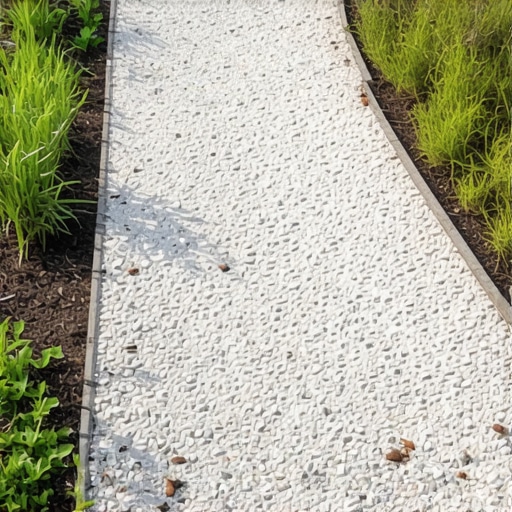
The Frustrating Reality of Invasive Growth in Hardscapes
The best way to kill weeds in gravel walkways is a two-pronged strategy involving the application of high-concentration systemic herbicides and the physical remediation of the underlying silt layer. To achieve permanent results, you must address the organic ‘fines’ that accumulate between stones, which serve as a germination bed for wind-blown seeds. Professionals use a combination of glyphosate for deep-root eradication and pre-emergents to prevent the next season’s growth cycle.
The Hardscape Autopsy: Why Your Path is Failing
I recently got called out to tear up a $30,000 patio and walkway system that was sinking and overrun with thistles and crabgrass. The homeowner was baffled because they had ‘weed fabric’ installed. When we pulled back the river rock, the autopsy revealed the truth: the previous contractor used a cheap, non-woven landscape fabric that had become clogged with fine sediment. This silt created a perfect 1-inch thick layer of ‘pseudo-soil’ on top of the fabric but under the rocks. The weeds weren’t coming from the ground; they were growing in the debris that washed into the gravel over three years. If you don’t manage the sediment and the drainage, you are just gardening in a rock bed. It is a structural failure, not a gardening one. Don’t skip the excavation depth. You need 4 inches of compacted stone to even stand a chance.
The Chemical Engine: How to Kill What is Currently Growing
Effective chemical weed control in gravel relies on using the right surfactant to ensure the herbicide sticks to the waxy cuticle of the leaf. For gravel areas where you want zero vegetation, a non-selective systemic herbicide like glyphosate is the industry standard because it translocates to the root system, killing the plant’s ability to process proteins. If you prefer an organic route, 30% industrial-strength acetic acid (vinegar) will desiccate the foliage on contact, but it often requires multiple applications for taproot perennials like dandelions. It is a matter of chemistry. You are either starving the plant or burning it at a cellular level.
“Effective weed management in non-crop areas relies on the depletion of the seed bank and the elimination of the recruitment niche through proper drainage and material selection.” – Agricultural Extension Standards
How do I stop weeds from growing back in my gravel?
To prevent regrowth, you must apply a pre-emergent herbicide such as Prodiamine or Oryzalin in early spring and late fall. These chemicals create a ‘vapor barrier’ in the top inch of the gravel substrate that inhibits the enzyme responsible for root cell division in germinating seeds. If the seed cannot send out a radical, it dies before you ever see green. This is the difference between a maintenance crew and a ‘mow-and-blow’ hack. We plan for the seeds you can’t see yet. It is about timing. If you wait until you see the weed, you’ve already lost the battle for that season.
Thermal and Mechanical Eradication Methods
Thermal weed control for gravel paths involves using a propane torch to induce cellular rupture within the weed’s leaf structure. You do not need to turn the weed into ash; you simply need to apply enough heat (approximately 2000 degrees Fahrenheit at the nozzle) to boil the water inside the plant cells. This causes the cell walls to shatter. It is highly effective for gravel because there is no risk of setting mulch on fire, and it leaves no chemical residue. However, it will not kill the deep taproots of established perennials in one pass. It is a war of attrition.
Will vinegar kill weeds in rocks permanently?
Vinegar will not kill weeds permanently in rocks because it is a contact herbicide that only affects the green tissue it touches. While it is effective for small annuals, it does nothing to stop the ‘seed rain’ falling from neighboring yards or the deep roots of invasive grasses. To get permanent results with vinegar, you must increase the concentration to 20 or 30 percent and add a surfactant like dish soap to break the surface tension of the water. Without a surfactant, the vinegar just beads off the leaf like rain on a waxed car. It is useless. Use a heavy hand.
Engineering the ‘Clean’ Walkway: A Comparison of Methods
| Method | Effectiveness | Longevity | Required Tools |
|---|---|---|---|
| Systemic Herbicide | 95% | 6 to 8 Weeks | Pump Sprayer, PPE |
| Propane Torching | 70% | 2 to 4 Weeks | Propane Tank, Torch Wand |
| Pre-emergent Granules | 90% (Seeds only) | 4 to 6 Months | Broadcast Spreader |
| Steam Sterilization | 85% | 3 to 5 Weeks | Industrial Steamer |
The Professional Installation Checklist for Weed-Free Gravel
- Excavate the path to a minimum depth of 4 inches to allow for proper stone volume.
- Install a heavy-duty, woven geotextile fabric (min 4oz weight) to separate the subgrade from the gravel.
- Ensure a 2% cross-slope for drainage to wash silt out of the gravel rather than letting it settle.
- Use ‘clean’ stone (like #57 or #8) rather than ‘crusher run’ which contains stone dust that weeds love.
- Apply a pre-emergent barrier immediately after the first rainfall following installation.
“A gravel path is only as good as the sub-base compaction; if water pools, silt gathers, and life follows.” – ICPI Hardscape Engineering Axiom
The Maintenance Schedule: Year-Round Defense
You cannot walk away from a gravel path and expect it to stay clean. In the spring, blow off any organic debris like oak tassels or maple ‘helicopters.’ If these rot in your gravel, they become compost. Use a leaf blower on a low setting. In the summer, spot-treat any breakthroughs with a 2% glyphosate solution. In the fall, apply your second round of pre-emergent. If you see a weed, pull it before it goes to seed. One mature pigweed can drop 100,000 seeds. Do the math. You can’t win against those numbers if you are lazy. Maintenance is a discipline. It is not a chore. Keep the edges trimmed to prevent stoloniferous grasses like Bermuda from creeping over the border. If the grass touches the gravel, it will find a way in. It is inevitable.