
The Forensic Autopsy of a Failed Lawn Treatment
Last spring, I walked onto a property that looked like a chemical burn ward. The homeowner, a DIY enthusiast who spent too much time on forums and not enough time checking his soil temperature, had applied a high-nitrogen starter fertilizer and a triple-dose of pre-emergent during a late-February warm spell. By May, his lawn was a skeletal remains of fescue, choked out by the very Digitaria (crabgrass) he tried to prevent. He had effectively torched his root system through ammonia toxicity while the pre-emergent barrier washed away during the spring rains before the first seed even thought about germinating. It was a $4,000 mistake that required a full yard cleanup and sod install to remediate. This is what happens when you treat your lawn like a hobby instead of a biological system.
The Critical Window for Pre-Emergent Application
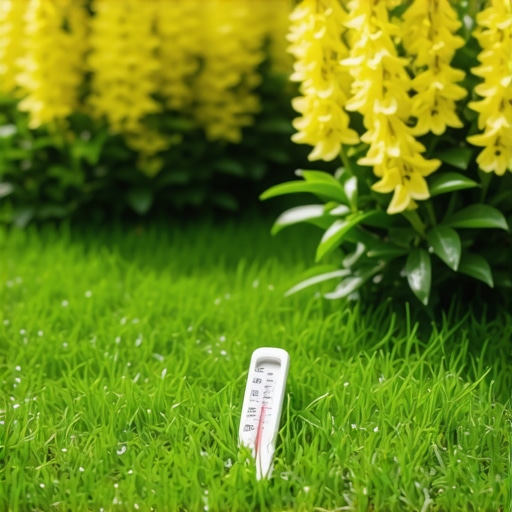
To achieve maximum crabgrass control, you must apply pre-emergent herbicides when soil temperatures consistently hit 55 degrees Fahrenheit for three consecutive days at a 2-inch depth. This timing ensures the chemical barrier is active exactly when crabgrass seeds begin their metabolic germination process, preventing the first root from ever breaking the surface. Don’t guess. Use a probe.
“A pre-emergent herbicide is only as effective as the uniformity of the chemical barrier it creates in the top 0.5 to 1.0 inch of soil.” – Penn State Center for Turfgrass Science
When is the best time to apply crabgrass preventer in the spring?
The optimal window usually falls between March 15th and April 15th for transition zones, but the calendar is a liar. You must track Growing Degree Days (GDD). Specifically, you are looking for the period between the blooming of the Forsythia bushes and the dropping of their yellow petals. If you see the petals hitting the pavement, your window is closing fast. Crabgrass is an opportunistic survivor; it waits for 10 hours of daylight and warm soil to explode. If your irrigation system isn’t calibrated to water the product in with exactly 0.5 inches of water within 24 hours, the UV rays will degrade the active ingredients (usually Prodiamine or Dithiopyr) and leave you defenseless.
The Engineering of a Chemical Barrier
Pre-emergent isn’t a poison that kills a growing plant; it is a micro-thin vapor barrier. If you disturb the soil after application—by heavy raking, landscaping renovations, or even your dog digging—the barrier is broken. Once breached, the seeds underneath have a clear path to sunlight. This is why I tell my crews that yard cleanup must happen 14 days before the spreader touches the grass. You cannot apply this product over a layer of oak leaves and expect it to work. It must reach the soil surface.
| Active Ingredient | Trade Name | Residual Length | Can Seed After? |
|---|---|---|---|
| Prodiamine | Barricade | 4-6 Months | No (Wait 4 months) |
| Dithiopyr | Dimension | 3-4 Months | No (Wait 3 months) |
| Mesotrione | Tenacity | 3-4 Weeks | Yes (At seeding) |
Can I put down grass seed and pre-emergent at the same time?
For most standard products, the answer is an absolute no. Most pre-emergents are non-selective regarding the type of seed they stop; they will kill your $100 bag of high-quality fescue just as fast as the crabgrass. The only exception is Mesotrione, which is specifically engineered for use during a sod install or overseeding project. However, it has a shorter residual window. If you aren’t seeding, stick to Prodiamine for the long-term 120-day protection. It is a heavier hammer for a harder nail.
The 7-Step Protocol for Professional Results
- Step 1: Calibration. Ensure your spreader is throwing the exact weight specified on the label. Usually 3.5 to 4 lbs per 1,000 sq ft.
- Step 2: Soil Temp Check. Use a digital thermometer. 55°F is the trigger.
- Step 3: Perimeter Pass. Do the edges first to ensure 100% coverage near hot pavement edges where crabgrass loves to start.
- Step 4: The Main Grid. Apply in a cross-hatch pattern (north-south, then east-west) to eliminate “skips.”
- Step 5: Blow Back. Use a leaf blower to get granules off the driveway and back onto the lawn. This prevents runoff into local sewers.
- Step 6: Irrigation. Activate your irrigation zones for 20 minutes per zone to set the barrier.
- Step 7: The Lockout. Do not aerate or power-rake for the next 4 months.
Irrigation and Hydrostatic Reality
Water is both your best friend and your worst enemy in landscaping. Too little water and the pre-emergent sits on the blade of the grass, doing nothing but wasting money. Too much water—say a 3-inch spring deluge—and the chemical is pushed 4 inches deep into the soil. This is too deep. The crabgrass seeds are in the top 0.5 inches. If your chemicals are at 4 inches, the seeds will germinate above the barrier. You need 0.5 inches of water. Precisely. No more, no less. This forces the chemical to bond with the soil particles in the germination zone.
“Effective weed management in turfgrass systems requires an integrated approach that combines cultural practices with timely chemical intervention.” – Texas A&M Agrilife Extension
The Maintenance Schedule for the Survivor
If you missed your window and the crabgrass has already hit the “two-tiller” stage, stop. Don’t waste your Barricade now. You need a post-emergent with Quinclorac. But be warned: post-emergent treatments are hard on the turf. It’s like chemotherapy for your yard. The goal of a pro is to never need the post-emergent. You want that lawn so thick and the barrier so tight that the crabgrass never stands a chance. If your soil pH is below 6.0, your pre-emergent will be less effective. Most homeowners ignore lime, but if you don’t fix the acidity, you’re throwing money into the wind. Test your soil. Measure your temperatures. Water it in. That is how you keep a lawn, and that is how you keep your sanity. It won’t be easy, but nothing worth doing is.