
The Forensic Autopsy: Why High-Pressure Cleaning is a Structural Liability
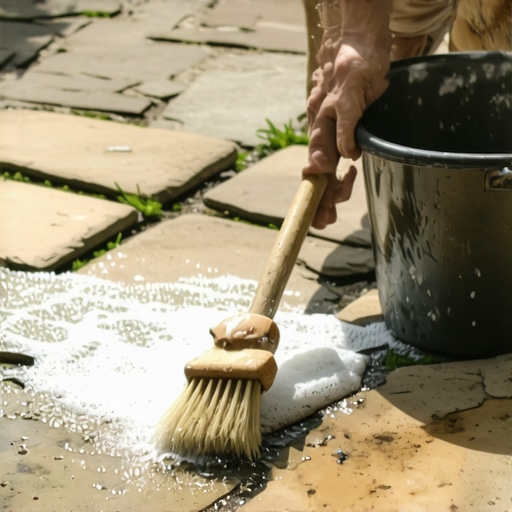
To clean a patio without a pressure washer, use a sodium percarbonate solution (oxygen bleach) mixed at 8 ounces per gallon of warm water. Apply with a stiff-bristle deck brush, let dwell for 15 minutes without drying, and rinse with a high-flow garden hose. This method preserves polymeric sand joints and prevents stone surface etching.
I recently got called out to tear up a $30,000 patio that was sinking because the previous contractor—or rather, a hack with a truck—decided to ‘deep clean’ it with a 4000 PSI pressure washer. He didn’t just remove the dirt; he excavated the polymeric sand right out of the joints and forced gallons of water directly into the 2A modified gravel base. This saturated the subgrade, turned the clay underneath into a slurry, and within three months, the entire southwest corner had settled two inches. The homeowner thought they were getting a ‘vivid’ clean; what they got was a total structural failure. When you blast a paver, you are literally opening the pores of the concrete or natural stone, making it a more hospitable home for the next round of lichen and algae. You are increasing the surface area for biological growth. Don’t do it. Real hardscape maintenance is about chemistry and manual agitation, not raw mechanical force.
“A retaining wall doesn’t fail because of the stone; it fails because of the water trapped behind it. The same logic applies to your patio surface: integrity depends on managing moisture and joint stability.” – Hardscape Engineering Axiom
The Chemical Reality of Biofilm and Carbon Saturation
Cleaning a patio is an exercise in applied chemistry. Most of what you see—the black streaks, the green slime—is a combination of Gloeocapsa magma (a hardy cyanobacteria) and environmental carbon. If you have limestone or travertine, these are calcium carbonate-based stones. Using an acidic cleaner like undiluted vinegar or harsh muriatic acid will cause an immediate chemical reaction, etching the surface and causing permanent ‘whitening’ or ‘dusting.’ We use alkaline-based cleaners or oxygen-bleach because they break the organic bonds of the biofilm without reacting with the mineral structure of the stone itself. This is critical during a comprehensive yard cleanup where you are also managing organic debris that can leach tannins into your hardscape.
| Material Type | Recommended Cleaner | Recommended Tool | Risk Factor |
|---|---|---|---|
| Concrete Pavers | Sodium Percarbonate | Stiff Synthetic Brush | High PSI Etching |
| Limestone/Travertine | PH Neutral Soap | Soft Natural Bristle | Acid Sensitivity |
| Flagstone (Siliceous) | Sodium Hypochlorite (Diluted) | Steel Brush (Sparingly) | Iron Oxidation (Rust) |
| Brick/Clay | Oxygen Bleach | Medium Bristle | Efflorescence |
The Step-by-Step Professional Scrub Protocol
Before you even touch the patio, look at your irrigation system. Over-spraying onto the stone is often the root cause of repeated algae growth. Adjust your heads to ensure they are hitting the lawn, not the pavers. If you have a recent sod install, the high nitrogen runoff from the initial fertilization will feed the algae on your patio like a laboratory petri dish. Clear the perimeter. Use a leaf blower to remove every speck of organic material. If leaves sit and rot, they produce humic acid which stains. Next, wet the entire surface with a standard garden hose. Never apply cleaners to a dry, hot stone; the chemical will flash-dry and leave a film that is nearly impossible to remove.
How much modified gravel do I need for a patio base?
For a standard pedestrian patio, you need a minimum of 4 to 6 inches of compacted 2A modified gravel base. To calculate this, multiply the square footage of the area by the depth in feet (e.g., 0.5 feet for 6 inches), then divide by 27 to get cubic yards. Add a 10 percent compaction factor to your order. Without this mechanical base, no amount of cleaning will keep your patio level. Proper landscaping starts six inches below the surface. If the base isn’t right, the surface is irrelevant.
Can I use vinegar to clean my pavers?
You should avoid using vinegar on any cement-based paver or natural stone like limestone. Vinegar is acetic acid, which reacts with the calcium carbonate in the pavers. This reaction dissolves the binder that holds the aggregate together, leading to a pitted, rough texture that traps more dirt in the long run. Stick to pH-neutral cleaners or oxygenated bleaches that target organic matter without dissolving your investment. Professional-grade surfactants are designed to lift the dirt out of the stone’s pores so it can be rinsed away with low-pressure water.
- Check the Weather: Aim for a cloudy day with temperatures between 50 and 75 degrees.
- Pre-Wet Vegetation: Heavily water any nearby plants or grass to prevent chemical burn.
- Mix the Solution: Use warm water to dissolve the sodium percarbonate powder completely.
- Dwell Time: Let the solution sit for at least 15 to 20 minutes. It must stay wet.
- Agitation: Scrub in circular motions. Focus on the centers of the stones, not just the joints.
- Rinse: Use a high-volume, low-pressure nozzle. The goal is to flush, not blast.
- Inspect Joints: If sand is missing, wait for the patio to dry completely before installing new polymeric sand.
“Soil compaction and proper grading are the only defenses against hydrostatic pressure and subsequent hardscape displacement.” – Penn State Agricultural Extension
Biological Management and Preventative Landscaping
Once the patio is clean, your job isn’t done. The surrounding landscaping plays a massive role in how fast that patio gets dirty again. If you have mulch beds sloping toward the patio, every rainstorm will wash tannins and fungi onto the stone. Re-grading those beds or installing a small Belgian block border can stop the migration of organic material. Furthermore, if your irrigation schedule is set to ‘daily’ for short bursts, you are creating a high-humidity microclimate at the soil surface. This is a disaster. Shift to deep, infrequent watering. This forces your grass roots to go deep, improving the health of your sod install, while allowing the patio surface to dry out completely between cycles. Dry stone doesn’t grow moss. It is that simple. Don’t skip the maintenance. Do the work manually. Your patio will last fifty years instead of five.