
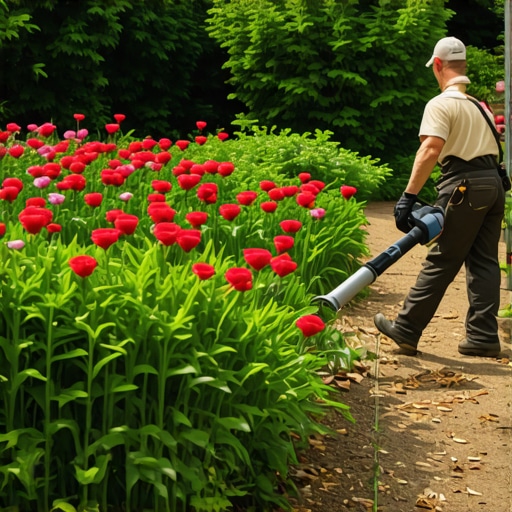
The Forensic Autopsy of a Dying Landscape
I always drill into my new crew members: if you don’t fix the soil grading first, every plant you put in the ground is just expensive compost. I have walked onto hundreds of properties where the homeowner is baffled by their wilting Hydrangeas or yellowing Hostas, only to find that the local ‘mow-and-blow’ crew has effectively strangled the life out of the root zone. You see a tidy yard; I see a biological crime scene. Landscaping is not a cosmetic service; it is the management of living organisms within a localized ecosystem. When a crew prioritizes speed over horticultural science, the damage starts at the microscopic level, affecting the xylem and phloem transport systems within your perennials. A proper yard cleanup requires an understanding of soil bulk density and the specific dormancy cycles of local flora. Without this, your investment is literally rotting in the ground.
Sign 1: The ‘Mulch Volcano’ and Crown Rot
The mulch volcano is a hallmark of amateur landscaping where mulch is piled high against the base of perennials and trees, trapping moisture and heat. This practice leads to crown rot and stem girdling, as the excess organic material prevents the plant from ‘breathing’ at the soil line. Perennials need oxygen exchange at the root flare to survive. Most ‘mow-and-blow’ outfits think more is better. It is not. I have seen $5,000 worth of Peonies and Salvia wiped out in a single season because a crew dumped four inches of undyed hardwood mulch directly onto the crowns. This creates a perfect breeding ground for opportunistic fungi like Pythium. The moisture trapped against the soft tissue of the perennial causes the cellular walls to collapse. If you cannot see the actual base of the plant where the stems meet the roots, your crew is killing your garden. They are prioritizing a ‘uniform’ look over the biological necessity of the plant.
How deep should mulch actually be in a perennial bed?
For most perennial applications, a layer of two inches is the maximum. Any deeper and you begin to impede the gas exchange between the soil and the atmosphere. We use a coarse-textured mulch to ensure that water can actually penetrate to the root zone rather than shedding off like a thatched roof. If your irrigation system is running but the soil under the mulch is bone-dry, you have a mulch problem. We often see this in new sod install projects where the transition between the grass and the flower bed is poorly graded, leading to water pooling or complete runoff.
Sign 2: Indiscriminate Shearing and the Destruction of Terminal Buds
Most yard cleanup crews use power shears on everything because it is fast, but this destroys the natural architecture of perennials and removes next season’s flower buds. Proper pruning requires selective thinning to allow for light penetration and airflow, which are critical for preventing powdery mildew and other foliar diseases. When you shear a perennial into a tight ball, you force a flush of weak, succulent growth on the exterior while the interior of the plant becomes a dead zone of leafless twigs. This stress depletes the plant’s carbohydrate reserves stored in the roots. If they hit your Lavender or Russian Sage with gas-powered hedge trimmers in late autumn, they are likely cutting off the very wood the plant needs to survive the winter. It is a death sentence by a thousand cuts.
“A retaining wall doesn’t fail because of the stone; it fails because of the water trapped behind it.” – Hardscape Engineering Axiom
Sign 3: Soil Compaction from Foot Traffic and Heavy Machinery
Repeatedly walking through perennial beds or using heavy machinery during a cleanup compresses the soil pore space, which is essential for oxygen and water movement. High bulk density in soil prevents root expansion and leads to anaerobic conditions that favor root-rotting pathogens. I have seen crews drag 50-gallon debris tubs across wet garden beds, effectively tamping the soil down to the consistency of concrete. Roots cannot penetrate compacted soil. They hit a wall and begin to circle, leading to a condition known as root girdling. This is especially dangerous in areas with heavy clay soils where the drainage is already marginal. If your crew does not use ‘stepping stones’ or plywood paths during a cleanup, they are destroying your soil structure. Soil is a living matrix, not just dirt to be stood upon. Once you lose that porosity, you lose the plant.
Professional vs. Amateur Cleanup Comparison
| Feature | The ‘Hired Hand’ Approach | The Professional Horticulturist Approach |
|---|---|---|
| Pruning Tool | Gas-powered hedge shears | Bypass pruners and Japanese weeding sickles |
| Mulch Application | Piled against the stems (Volcano) | Tapered away from the crown (Donut) |
| Soil Management | Heavy foot traffic on wet soil | Use of designated pathways and boards |
| Debris Removal | High-velocity blowers (strips topsoil) | Hand-raking and targeted vacuuming |
Sign 4: Mismanaged Irrigation and Hydrostatic Stress
Inconsistent or poorly aimed irrigation during and after a cleanup often leads to localized drought or drowning of perennials, especially those recently planted. Many crews accidentally kick or move drip emitters or knock spray heads out of alignment while raking, leading to ‘dead zones’ in the landscape. I have audited systems where the cleanup crew moved the emitters six inches away from the root ball of a new sod install edge. Within a week, the perennials were parched. Furthermore, the use of high-powered leaf blowers can actually desiccate the tender foliage of certain perennials and blow away the fine ‘fines’ of the soil, which hold the most nutrients. If your crew is not checking your irrigation coverage after they finish their ‘cleaning,’ they aren’t finished. They’ve just set a timer on your plants’ demise.
“Soil compaction is the single most overlooked factor in urban plant mortality, often reducing root systems by up to 70% in high-traffic areas.” – Agricultural Extension Standards
How much modified gravel do I need for a patio base?
While this seems unrelated to perennials, the drainage from your hardscape dictates the health of your garden. You typically need 4 to 6 inches of compacted 21A or 411 modified gravel for a standard pedestrian patio. If your crew didn’t calculate the hydrostatic pressure and drainage slope correctly, that water is dumping directly into your perennial beds, drowning the roots. I’ve had to excavate entire yards because the patio was built like a dam, holding water in the flower beds until the soil turned into a septic mess. Everything is connected. The engineering of the hardscape and the biology of the plants are two sides of the same coin.
What is the best time for perennial yard cleanup?
The best time is late winter or early spring, just before the new growth emerges, to protect the crowns from frost during the coldest months. Many homeowners want a ‘clean’ look in November, but leaving the spent foliage provides a natural insulation layer and habitat for beneficial insects. Cutting everything to the ground in the fall exposes the crown to freeze-thaw cycles that can heave the plants right out of the soil. If your crew is pushing for a ‘scalped’ look in October, they are looking for a quick paycheck, not the long-term health of your perennials.
The Restoration Protocol
If your yard has been victimized by a hack crew, the remediation must be immediate and clinical. First, pull back all mulch from the base of every plant. If the soil is compacted, we use an air-spade or a hand-cultivator to gently fracture the surface without severing the structural roots. We then top-dress with high-quality compost to reintroduce the biology that the blowers and chemicals have stripped away. Do not skip the soil test. You need to know your pH and NPK levels before you add a single drop of fertilizer. Most ‘weed and feed’ products are too high in nitrogen for perennials, leading to leggy, weak growth that attracts aphids like a magnet. We focus on building the soil, not just feeding the plant. It is a slow process, but it is the only way to reverse the damage of years of ‘maintenance’ by people who don’t know the difference between a weed and a dormant perennial.
- Check for exposed root flares on all woody perennials.
- Verify that irrigation emitters are placed at the drip line, not the trunk.
- Test soil drainage by digging a 12-inch hole and filling it with water; it should drain within 4 hours.
- Remove any ‘volcano’ mulch immediately.
- Identify and prune out any ‘crossed’ or rubbing branches that cause bark inclusions.
Remember, a healthy yard doesn’t happen by accident. It happens through the rigorous application of horticultural standards. Stop hiring people who only own a mower and a blower. Start hiring people who own a soil probe and a copy of the USDA Hardiness Zone map. Your perennials will thank you by actually living past their first season.
Comments are closed.