
The Forensic Autopsy of a Shrub Dying in Secret
The first sign of an aphid infestation isn’t usually the bug itself; it is the glistening, sticky residue known as honeydew coating the upper surfaces of the leaves or the black, soot-like fungus that begins to colonize that sugar. I recently walked onto a property where a homeowner had spent $12,000 on a privacy hedge of skip laurels only to see them yellowing and dropping leaves at an alarming rate. They had already blasted the shrubs with a generic, high-nitrogen liquid fertilizer, thinking the plants were hungry. That was their fatal mistake. By spiking the nitrogen, they essentially turned the shrubs into a high-octane buffet for the Aphis gossypii. The new growth was so soft and sap-heavy that the aphids were reproducing at a rate that outpaced any natural predator. The shrubs weren’t hungry; they were being bled dry by thousands of microscopic piercing-sucking mouthparts. If you see curled leaf margins or a sudden influx of ants climbing your stems, you are looking at a structural failure of your plant’s defense system. You must act before the phloem pressure drops so low the plant enters a permanent wilt state.
Why Natural Aphid Control is the Only Professional Choice
Natural aphid control focuses on breaking the reproductive cycle of the Aphis species without destroying the beneficial predatory insect populations that provide long-term protection. Unlike broad-spectrum neurotoxins, biological and mechanical controls target the pest’s physical biology, preventing chemical resistance and protecting the soil microbiome essential for shrub health. A natural approach ensures your landscaping remains a functional ecosystem rather than a sterile, chemically dependent zone.
“Integrated Pest Management (IPM) is a sustainable approach to managing pests by combining biological, cultural, physical, and chemical tools in a way that minimizes economic, health, and environmental risks.” – University of California Statewide IPM Program
The Mechanical Flush: Using Irrigation as a Weapon
Most homeowners underestimate the power of 40 to 60 PSI. Before you reach for a bottle of anything, you need to engage in mechanical displacement. Aphids are soft-bodied and relatively sedentary. A focused, high-pressure stream of water from a quality nozzle is often enough to dislodge the colonies. Once they are knocked off the plant and into the mulch or soil, they rarely have the energy to climb back up before a ground beetle or spider finds them. This isn’t just ‘watering’ your plants; it is a tactical strike. You must hit the undersides of the leaves specifically. This is where the irrigation system’s role becomes nuanced. If your irrigation heads are hitting the foliage every night at 2 AM, you are actually encouraging the sooty mold that follows an aphid infestation. Shift your watering to early morning and keep the water at the root flare, using the hose manually for pest control.
The Chemical Nightmare of Over-Fertilization
I always tell my crew: high nitrogen is aphid fuel. When you perform a sod install, the high-nitrogen runoff often leaches into nearby shrub beds. The grass looks great, but your viburnums suddenly explode with pests. This happens because aphids thrive on the amino acids found in rapidly growing, succulent plant tissue. Professional landscaping requires a balanced approach to soil chemistry. If your soil pH is off, or if you are dumping 10-10-10 on a plant that doesn’t need it, you are inviting the infestation. You should be testing your soil every two years to ensure you aren’t creating a ‘soft’ plant that cannot defend itself. Real health comes from cellular density, not just height.
| Control Method | Action Mechanism | Persistence | Ideal Conditions |
|---|---|---|---|
| High-Pressure Water | Mechanical Displacement | Zero | Early morning, low humidity |
| Insecticidal Soap | Cellular Membrane Rupture | Low (Contact only) | Overcast days, temps below 85°F |
| Neem Oil | Hormonal Growth Interruption | Medium (3-7 days) | Evening application to protect bees |
| Beneficial Insects | Predation/Parasitism | High (If habitat exists) | Spring/Summer when prey is active |
How often should I spray neem oil on shrubs?
Professional application of neem oil should occur every 7 to 14 days during an active infestation. Neem oil contains azadirachtin, which interferes with the molting process of the aphid. It also acts as an anti-feedant. However, you must avoid application when temperatures exceed 90 degrees Fahrenheit. If you spray in the midday sun, the oil will act as a magnifying glass and cause phytotoxicity—literally cooking the leaf tissue. I’ve seen $5,000 Japanese Maples defoliated in 48 hours because a ‘pro’ sprayed oil in the Georgia heat. Don’t be that person. Spray at dusk.
Will a strong hose spray kill aphids?
A strong hose spray will not necessarily kill the aphid on contact, but it removes them from their food source. An aphid separated from the leaf phloem is a dead aphid. Their survival depends on constant access to the sap of the host plant. By disrupting their attachment, you expose them to desiccation and ground-based predators. During a yard cleanup, ensure you are also removing leaf litter where aphid eggs might overwinter, as this is the primary source of next year’s outbreak.
“A retaining wall doesn’t fail because of the stone; it fails because of the water trapped behind it. Similarly, a plant doesn’t fail because of the bug; it fails because of the stress making it vulnerable.” – Hardscape Engineering Axiom (Adapted)
The Biological Infantry: Recruiting Predators
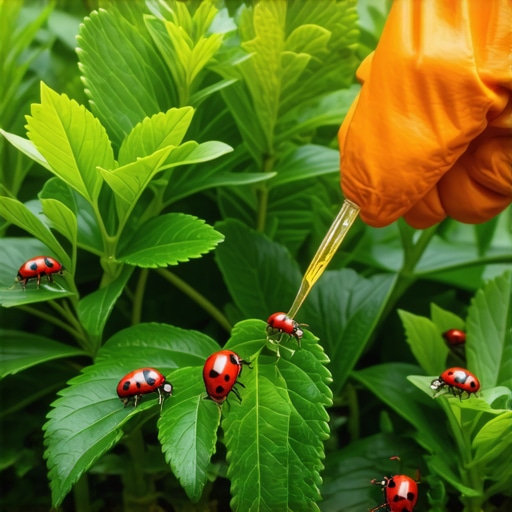
If you want to stop aphids for good, you have to stop killing the things that eat them. Ladybugs (Hippodamia convergens) and Lacewings are the frontline soldiers. One lacewing larva, often called an ‘aphid lion,’ can consume 200 aphids a week. When you use heavy pyrethroids, you kill these beneficials instantly, but the aphids, with their rapid reproductive cycles, bounce back in days. You’ve created a vacuum that only the pests can fill. Instead, plant Alyssum or Yarrow near your shrubs to provide nectar for adult lacewings. This is landscaping with a biological purpose.
- Inspect weekly: Focus on the terminal buds and new growth.
- Manage the ants: Ants ‘farm’ aphids for their honeydew and will defend them against ladybugs. Use a sticky barrier around the base of the shrub trunk to break the ant trail.
- Thin the canopy: Poor airflow creates the humid microclimate aphids love. Proper pruning during your yard cleanup is essential.
- Monitor irrigation: Over-saturated roots lead to plant stress, which signals aphids via chemical cues.
Ultimately, getting rid of aphids naturally is about patience and precision. It is about understanding that a few bugs are fine—they provide food for the birds and the ‘good’ insects. It is only when the balance tips that you intervene. By using mechanical sprays, horticultural soaps, and strategic pruning, you maintain the structural integrity of your landscape without poisoning the very ground you’re trying to beautify. It’s about being a steward of the dirt, not just a contractor. [{“@context”:”https://schema.org”,”@type”:”Article”,”headline”:”A Natural Way to Get Rid of Aphids on Your Shrubs”,”author”:{“@type”:”Person”,”name”:”Veteran Horticulturist”},”description”:”A professional guide to natural aphid control using integrated pest management, mechanical displacement, and biological controls.”},{“@context”:”https://schema.org”,”@type”:”FAQPage”,”mainEntity”:[{“@type”:”Question”,”name”:”How often should I spray neem oil on shrubs?”,”acceptedAnswer”:{“@type”:”Answer”,”text”:”Spray every 7-14 days in the evening when temperatures are below 90 degrees to avoid leaf burn.”}},{“@type”:”Question”,”name”:”Will a strong hose spray kill aphids?”,”acceptedAnswer”:{“@type”:”Answer”,”text”:”It displaces them from their food source, leading to desiccation or predation, effectively controlling the population.”}}]}]