
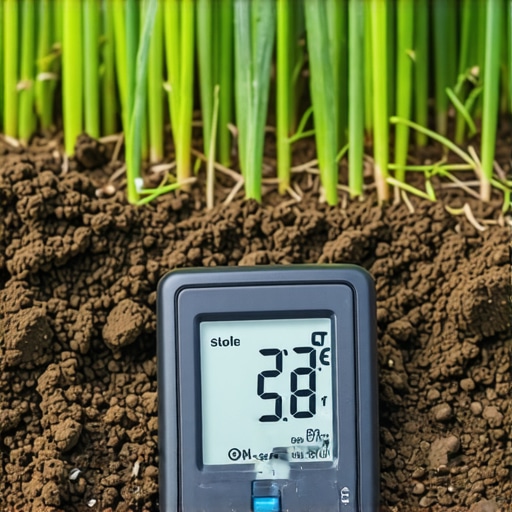
The Chemical Nightmare: Why Most Spring Lawn Treatments Fail Before They Start
A homeowner called me in a panic after they completely torched their front lawn by applying a massive dose of triple-action weed-and-feed when the ground was still a frigid 40 degrees. They saw a few warm days in February and panicked, thinking they were late. Instead of preventing weeds, they essentially salt-cured their dormant root systems. By May, while the neighbors had greening turf, this client had a graveyard of brown, crispy stalks and a soil pH so skewed it took two seasons of lime and heavy aeration to recover. This is the price of guessing. Successful 2026 pre-emergent application relies exclusively on soil temperature tracking, not the calendar, to interrupt the germination cycle of invasive annual grasses.
Timing is not a suggestion; it is a biological mandate. If you miss the window, you are just throwing money into the wind. If you apply too early, the chemical barrier degrades before the seeds even wake up. If you apply too late, the crabgrass has already sprouted its first leaf, and traditional pre-emergents will do nothing to stop it. We are looking for that specific physiological trigger where the soil hits a consistent temperature. It is a game of precision, not luck. Don’t be the person who buys a bag because the big-box store put it on the front pallet. They want to move inventory; I want you to have a clean yard.
“Pre-emergence herbicides must be applied before the weeds emerge from the soil. For crabgrass, this typically occurs when soil temperatures at a 2-inch depth reach 55°F for three to four consecutive days.” – Penn State Extension, Center for Turfgrass Science
The 55-Degree Threshold: Understanding Germination Biology
To effectively block crabgrass and other annual invaders, you must establish a chemical vapor barrier in the top inch of soil before temperatures hit 55 degrees Fahrenheit at a two-inch depth. This temperature serves as the internal alarm clock for Digitaria (crabgrass) seeds that have been overwintering in your lawn. Once that threshold is crossed, the germination process is irreversible. Your goal is to have the herbicide active and bound to the soil particles 48 hours before that happens. It’s a race. You win or you lose.
How do I know when the soil hits 55 degrees?
Forget the weather app on your phone. Ambient air temperature fluctuates too wildly to be a reliable metric for soil biology. You need a dedicated soil thermometer. Push it four inches into the dirt in a spot that gets average sun exposure—not right next to the heat-sync of a concrete driveway or in the deep shade of the house. Check it at 9:00 AM every day. When you see a three-day average of 52-54 degrees with a forecast of warming, that is your trigger to pull the spreader out of the shed. It is that simple. It is that technical.
| Weed Species | Germination Soil Temp | Optimal Control Window |
|---|---|---|
| Crabgrass | 55°F – 60°F | Early Spring (Pre-55°) |
| Goosegrass | 60°F – 65°F | Late Spring |
| Poa Annua | Below 70°F (Falling) | Late Summer/Fall |
| Foxtail | 60°F+ | Mid-Spring |
The Physics of the Barrier: Prodiamine vs. Dithiopyr
Choosing the right active ingredient for your 2026 application depends on your specific lawn history and whether you missed the initial soil temperature window. Most professionals rely on Prodiamine because of its incredible