
The Forensic Autopsy of a $30,000 Hardscape Failure
Oxygen bleach cleaning for concrete walkways involves using sodium percarbonate to lift organic stains and atmospheric pollutants without damaging the structural integrity of the landscaping or irrigation components. This method is preferred over chlorine because it is non-toxic to sod installs and maintains the alkaline balance of the surrounding soil. I recently got called out to tear up a $30,000 patio that was sinking because the previous contractor used high-pressure washing combined with acidic cleaners that ate through the polymeric sand and undermined the base layer. The homeowner thought they were just doing a standard yard cleanup, but they were actually liquefying the sub-grade. By the time I arrived, the structural integrity of the modified gravel base was compromised. It was a disaster that could have been avoided with proper chemical knowledge. Concrete isn’t just a rock; it is a porous, breathable sponge that reacts to every chemical you pour on it. If you treat it like a kitchen counter, you’re going to fail.
“A retaining wall doesn’t fail because of the stone; it fails because of the water trapped behind it.” – Hardscape Engineering Axiom
The Microscopic Reality of Your Walkway
Concrete is comprised of a complex matrix of Calcium Silicate Hydrate (C-S-H) gel and capillary pores. When you see black or green stains, you aren’t looking at dirt. You are looking at a biological infestation of Gloeocapsa magma or various lichen species. These organisms root themselves into the pores of the concrete. Most homeowners reach for the chlorine bleach (sodium hypochlorite), which is a massive mistake. Chlorine is a surface-level killer; it turns the top of the algae white so it looks clean, but the sodium salts remain in the pores, attracting moisture and leading to sub-surface spalling. More importantly, the runoff from chlorine will decimate your sod install and wreck the microbial life in your topsoil. Oxygen bleach works differently. It releases a massive burst of oxygen that physically lifts the organic matter out of the pores through effervescence. It is the difference between painting over a moldy wall and actually removing the mold.
How much oxygen bleach do I need for a 100 sq ft walkway?
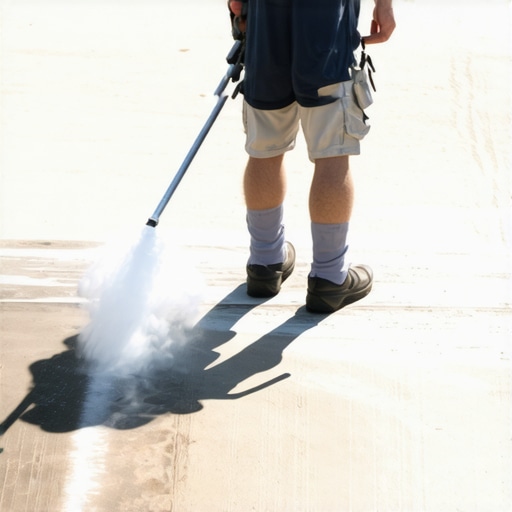
To clean a standard 100 square foot concrete area, you need one pound of technical-grade sodium percarbonate mixed with one gallon of warm water to ensure full dissolution. This oxygen bleach mix should be applied with a low-pressure sprayer to avoid forcing water too deep into the expansion joints where it can damage the irrigation lines or the compacted base. You must allow a dwell time of at least 20 minutes. If the mixture dries, the chemical reaction stops. Keep it wet. Use a stiff-bristled brush, not a power washer. A power washer at 4000 PSI will strip the cream coat off your concrete, exposing the aggregate and making it more susceptible to future staining. Professionalism is about restraint, not just raw power. [image_placeholder_1]
The Chemical Synergy Table: Oxygen Bleach vs. Traditional Cleaners
| Feature | Oxygen Bleach (Sodium Percarbonate) | Chlorine Bleach (Sodium Hypochlorite) | Muriatic Acid (Hydrochloric) |
|---|---|---|---|
| Action | Oxidative lifting | Surface bleaching | Etching/Burning |
| Soil Impact | Neutral/Beneficial | High Salinity/Kills Microbes | Severe pH Drop |
| Effect on Sod | Safe when diluted | Total Burn | Chemical Necrosis |
| Safety Gear | Gloves/Eye protection | Respirator/Full Skin Coverage | Full Hazmat/Acid Rated |
| Cleanup | Biodegrades to water/oxygen | Persistent toxic salts | Requires heavy neutralization |
The Step-by-Step Remediation Process
Start with a thorough yard cleanup. Remove all organic debris, leaves, and loose soil from the surface. If you leave a pile of wet leaves on the concrete while you clean, the tannins will bleed into the pores, creating a whole new stain profile. Next, pre-wet the concrete. You never apply chemicals to dry concrete because the pores will suck the cleaning solution too deep, too fast. You want the reaction to happen at the surface level. Mix your oxygen bleach in a five-gallon bucket. Use warm water; the heat acts as a catalyst for the oxygen release. Apply the solution in sections. I tell my crew to work in 5×5 foot squares. Scrub in a circular motion. This agitates the biological roots. Rinse with a garden hose. Don’t use a pressure nozzle. The volume of water is more important than the pressure. You are trying to flush the lifted solids away from the concrete matrix and into the lawn where the oxygen will actually help the soil aeration.
“Sodium percarbonate offers a high concentration of oxygen and is an effective, environmentally friendly alternative to sodium hypochlorite.” – Chemical Composition Manual for Masonry
Will oxygen bleach kill my grass and landscaping?
No, oxygen bleach will not kill your grass or landscaping because it breaks down into sodium carbonate (washing soda) and hydrogen peroxide, which further degrades into water and oxygen. In fact, many high-end irrigation specialists use dilute peroxide to oxygenate root zones in compacted soils, meaning your runoff might actually give your sod install a minor health boost. However, concentration matters. Always ensure you are rinsing the area thoroughly. High concentrations of sodium carbonate can slightly raise the pH of the soil temporarily. If you have acid-loving plants like azaleas or blueberries adjacent to the walkway, simply pre-saturate their root zones with fresh water to create a hydraulic barrier, then rinse again after the job is done. It is basic civil engineering: control the flow of the liquid and you control the outcome of the environment.
The Hardscape Maintenance Checklist
- Inspect expansion joints for failing polymeric sand or organic growth.
- Check irrigation heads for overspray that causes hard water scaling on the concrete.
- Clear all leaf litter weekly to prevent tannin staining.
- Apply a silane-siloxane sealer every 3 years after an oxygen bleach cleaning.
- Ensure soil grading pulls water away from the walkway at a 2% slope.
Hydrostatic Pressure and the Drainage Connection
Most people think concrete stains are just top-down issues. They are wrong. Many of the most stubborn stains are actually the result of hydrostatic pressure pushing moisture up from the sub-grade, carrying minerals and salts with it (efflorescence). If your landscaping doesn’t have proper drainage, that water sits under your walkway. It will rot. It will heave. It will stain. When you perform a yard cleanup, you must check your downspouts. If they are dumping water next to the walkway, no amount of oxygen bleach will keep that concrete clean. You are fighting a losing battle against physics. Fix the grade, fix the drainage, and then the chemistry of the cleaning will actually last. Don’t skip this. It’s the difference between a contractor and a hack with a bucket. 1500 PSI is my limit for concrete. Anything more and you are destroying the finish. Respect the material. Concrete is a lifetime investment, treat it like one.