
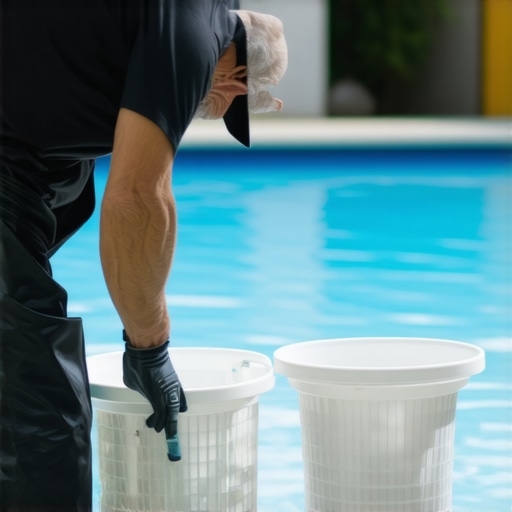
The Forensic Autopsy of a Melted Centrifugal Pump
The sound of a fifteen hundred dollar centrifugal pump grinding itself into a molten pile of copper and plastic is unmistakable. It is a high pitched, rhythmic screaming that signals the end of your irrigation system efficiency. I see it every season. Homeowners call me out when their sod install starts turning the color of a paper bag, only for me to find a skimmer basket packed tight with oak tassels and decaying organic matter. This is not just a cleaning issue; it is a structural failure of maintenance. I always drill into my new crew members: if you do not fix the irrigation intake first, every plant you put in the ground is just expensive compost. We recently pulled a pump from a property where the homeowner neglected a simple yard cleanup for three months. The basket was so impacted with pine needles that the vacuum pressure literally imploded the plastic housing. The pump was trying to pull water through a solid wall of debris. It could not breathe, it could not cool itself, and eventually, it just cooked.
The Physics of Pump Cavitation and Thermal Failure
Cleaning skimmer baskets prevents pump burn by maintaining the required NPSH (Net Positive Suction Head), ensuring that the cooling flow of water is never interrupted. When debris restricts intake, the motor generates excessive heat, leading to melted internal seals, warped impellers, and eventual motor coil burnout.
When we talk about pump burn, we are really talking about a failure of thermodynamics. Most irrigation pumps are water cooled. The very liquid they move is the same liquid that keeps the internal friction from reaching three hundred degrees Fahrenheit. When a skimmer basket is neglected during a routine yard cleanup, the flow rate drops. This causes cavitation. Cavitation is the formation of vapor bubbles within the liquid due to low pressure on the suction side. When these bubbles move to the high pressure side of the impeller, they collapse with enough force to pit stainless steel. It sounds like someone dumped a bag of marbles into the pump. It is violent, and it is preventable. If you are running a high volume system for a large sod install, you cannot afford more than a ten percent restriction in your intake line before the motor starts to labor. We measure this in PSI drop. A clean basket might show a 2 PSI resistance, while a clogged one jumps to 15 PSI. That is the difference between a system that lasts twenty years and one that dies in two.
“Cavitation occurs when the pressure in the suction line falls below the vapor pressure of the liquid, creating voids that collapse and erode internal components.” – Hydraulic Institute Standards
How often should irrigation skimmer baskets be cleaned?
Frequency depends entirely on the surrounding biomass. If you have overhanging river birches or willow oaks, you are looking at a daily check during the spring drop. In a managed landscape with minimal deciduous cover, a weekly check during the yard cleanup cycle is usually sufficient. Never wait for the flow at the heads to drop. By the time you notice the rotors are not popping up, the pump has already been running hot for hours. We use a simple visual metric: if you can see more than twenty percent of the basket floor covered in silt or leaves, it is time to pull it. I have seen guys try to use a garden hose to spray out the baskets while they are still in the housing. Do not do this. It pushes fine particulates into the impeller eye. Pull the basket, invert it, and scrub the mesh with a stiff nylon brush to remove the bio-film. This film, often overlooked, acts like a sheet of plastic when the pump is under load.
| Maintenance Level | Expected Pump Life | Average Annual Repair Cost | Impact on Sod Health |
|---|---|---|---|
| Daily/Weekly Cleaning | 15-20 Years | $50 (Seals/Lube) | Optimal Growth |
| Monthly/Seasonal | 5-7 Years | $400 (Impeller/Bearing) | Intermittent Stress |
| Neglected | 1-2 Years | $1,800 (Full Replacement) | High Failure Risk |
What are the signs of a failing irrigation pump?
Listen to the hum. A healthy induction motor has a steady, low frequency vibration. If you hear a surging sound, or a metallic rattling, you are looking at an intake restriction or bearing failure. Check the temperature of the motor housing with an infrared thermometer. Anything over one hundred forty degrees Fahrenheit is a red flag. If the pump is too hot to touch, shut it down immediately. This is usually caused by the pump cycling too fast because it cannot pull enough water to satisfy the pressure switch. We also look at the discharge side. If the water appears milky or bubbly, that is air being sucked in through a loose skimmer lid or cavitation bubbles forming due to a clogged basket. It will rot the seals if left unchecked.
The Critical Link Between Cleanup and Sod Survival
Properly cleaned skimmer baskets ensure that new sod receives the exact one inch of water per week required for deep root establishment. Without consistent pressure, the irrigation heads fail to provide head-to-head coverage, leading to localized dry spots and total turf failure in high heat.
You just spent six thousand dollars on a premium fescue or bermuda sod install. The clock is ticking. Those roots need to be forced deep into the soil profile within the first fourteen days. If your skimmer basket is clogged, your zone pressure drops from 50 PSI to 30 PSI. Suddenly, your rotors are not reaching the edges. You get brown rings. Most homeowners think they need more fertilizer. They are wrong. They need hydraulic pressure. During a yard cleanup, the most important tool is not the leaf blower; it is the brush used to clean the intake screens. We see a lot of “mow-and-blow” crews who blow clippings right into the pond or the intake vault. It is a disaster. That grass decomposes, turns into a gelatinous muck, and coats the skimmer mesh. It is a slow death for the pump. You have to be surgical about where that debris goes. We teach our crews to bag all clippings near the intake area to prevent this exact scenario.
“A retaining wall doesn’t fail because of the stone; it fails because of the water trapped behind it, just as a pump fails because of the water it cannot reach.” – Hardscape Engineering Axiom
The Step-by-Step Remediation for a Starved System
- Shut down the main power breaker to the pump controller to prevent dry-firing.
- Relieve system pressure by manually opening a zone valve or the air bleed screw.
- Remove the skimmer lid and check the O-ring for cracks or flattening; replace if it is not supple.
- Extract the basket and dump all organic matter far away from the intake source.
- Use a pressure nozzle to clear the fine mesh of algae and silt buildup.
- Inspect the intake pipe for any visible obstructions like small stones or sticks.
- Re-prime the pump housing with clean water before restarting to prevent seal burn.
- Monitor the pressure gauge for five minutes to ensure steady PSI readings.
Engineering Long-Term System Stability
The 2026 model pumps are becoming more efficient, but they are also more sensitive to flow fluctuations. Their tolerances are tighter. If you are operating in a region with heavy clay soil, the runoff during a storm can carry fine particles that settle in your baskets, creating a brick-like layer. This is why we recommend installing a secondary pre-filter if you are pulling from a pond or well. It is an upfront cost that pays for itself the first time a storm washes a load of silt into your yard. Do not trust the “self-cleaning” claims of some manufacturers. In the real world, dirt wins. You have to be smarter than the dirt. Check your baskets. Keep the water moving. Your lawn and your wallet will thank you. Skip the fluff of fancy landscaping apps and get your hands in the basket. It is the only way to know for sure. Every gallon of water that hits your grass has to pass through that screen. Make sure it can.