
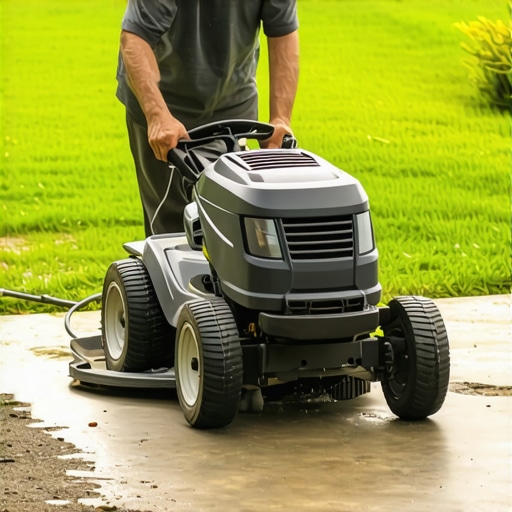
The Forensic Autopsy of a Dying Lawn
The first sign isn’t usually the color; it is the smell. When you walk across a lawn infected with Pythium blight or Brown Patch, there is a distinct, sulfurous odor of organic decay that no amount of nitrogen can mask. I recently walked onto a property where the homeowner was convinced they had a nutrient deficiency. They had dumped pounds of high-nitrogen fertilizer on the turf, hoping to ‘green it up,’ but all they did was provide a high-octane fuel source for the fungus. Upon inspection, the turf was matted, slimy, and tearing away from the soil in clumps. The culprit wasn’t the soil chemistry alone; it was their lawn mower. Underneath the deck of their 54-inch zero-turn was a two-inch thick crust of fermenting, wet grass clippings that had been there for months. This wasn’t just dirt; it was a mobile laboratory for fungal pathogens. Every time they mowed, they were literally sandblasting their healthy grass with millions of active spores. If you don’t keep that deck clean, you aren’t landscaping; you’re just spreading a plague.
The Microscopic Link Between Mower Gunk and Turf Disease
Cleaning mower decks is a critical preventative measure because the underside of a mower serves as a pressurized incubator for fungal spores like Rhizoctonia solani. When wet clippings adhere to the steel, they create a high-humidity micro-environment where pathogens thrive, eventually being discharged back into the lawn during the next cut. This build-up also disrupts the aerodynamic lift required for a clean cut, leading to jagged leaf tissue that is significantly more susceptible to infection.
“Maintaining a clean mower deck is the first line of defense in integrated pest management for turfgrass, as debris accumulation facilitates the survival and transport of pathogenic fungi across diverse micro-climates.” – Agronomy Extension Manual
How often should I clean the underside of my mower?
You should perform a mechanical cleaning of the mower deck after every three to four mows, or immediately after cutting damp grass. A thick layer of clippings reduces airflow by up to 40%, which prevents the grass blades from standing upright, resulting in a ragged, unhealthy cut that invites yard cleanup issues later.
Can lawn fungus survive on metal mower decks?
Yes, many fungal pathogens produce survival structures called sclerotia that can live in dried organic matter on metal surfaces for months. When these structures encounter the moisture of a fresh lawn, they re-activate and infect the newly cut grass blades through the open vascular wounds caused by the mower.
The Physics of Airflow: How Caked Grass Ruins Your Cut
A mower deck is designed as a high-velocity vacuum chamber. The rotation of the blades creates a low-pressure zone that pulls the grass upright before the cutting edge passes through. When a deck is gunked up with dried clippings and mud, the internal geometry is altered. This creates turbulence. Instead of a clean, vertical pull, the grass is swirled around in a chaotic pattern. The result is ‘shredding.’ A shredded blade of grass loses moisture rapidly and provides a massive surface area for spores to land and take root. This is why landscaping professionals obsess over deck cleanliness. A clean deck ensures the sod install you spent thousands on doesn’t turn into a brown wasteland within a single season.
| Accumulation Level | Airflow Efficiency | Fungal Risk Factor | Required Action |
|---|---|---|---|
| 1/8 inch (Dust) | 95% | Low | Air blow-out |
| 1/2 inch (Dried Clips) | 75% | Moderate | Scraper tool |
| 1 inch+ (Wet Gunk) | 40% | Extreme | Pressure wash & Scrape |
The Professional Deck De-Gunking Protocol
Don’t just spray it with a hose and call it a day. Adding water to a dirty deck without removing the bulk material just creates a more hospitable environment for rot. Follow this professional yard cleanup checklist to ensure your equipment isn’t a biohazard. First, disconnect the spark plug. This is non-negotiable. If that engine kicks over while your hand is in the deck, your landscaping career is over. Second, use a plastic or wooden scraper to remove the heavy ‘pancakes’ of grass. Metal scrapers can gouge the paint, leading to rust. Rust is porous, and fungus loves to hide in those pores. Third, once the bulk is gone, use a stiff wire brush to get down to the surface. Finally, consider applying a graphite-based non-stick spray. This creates a hydrophobic barrier that prevents wet grass from bonding to the metal in the future.
- Step 1: Disconnect spark plug and drain fuel or tilt mower with carburetor side up.
- Step 2: Manual excavation of heavy organic debris using a dedicated deck scraper.
- Step 3: Wire brush scrubbing of the leading edges and discharge chute.
- Step 4: Visual inspection of the mower blades for nicks or dullness.
- Step 5: Application of a dry-film lubricant to prevent future adhesion.
- Step 6: Verification of the irrigation schedule to ensure you aren’t mowing wet turf.
“A mower deck doesn’t fail because of the steel; it fails because the accumulated moisture and organic acids from rotting grass eat through the deck housing and promote pathogen spread.” – Hardscape and Equipment Engineering Axiom
Beyond the Deck: Yard Cleanup and Soil Health
If your lawn is already showing signs of fungus, cleaning the mower is only the first step. You need to look at your irrigation habits. Most homeowners water too frequently and too shallowly. This keeps the canopy wet, which is exactly what Pythium wants. You need to water deep and infrequent—aim for 1 inch of water per week, delivered in a single pre-dawn session. This allows the grass blades to dry out during the day while the roots stay hydrated. If the damage is too severe, you might be looking at a sod install. But don’t just lay new grass over old problems. You must remediate the soil first. Check your pH levels; turf grass generally thrives between 6.0 and 7.0. If your soil is too acidic, the grass is stressed and becomes an easy target for the very fungus you’re trying to avoid. Landscaping is a game of biology, not just aesthetics. Every decision, from how you clean your tools to how you grade your soil, determines if your yard thrives or rots. Stop treating the symptoms and start fixing the mechanical and biological failures that lead to lawn death. A clean mower deck is the simplest, most effective tool in your arsenal. Use it.