
The Forensic Autopsy of a Suffocated Lawn
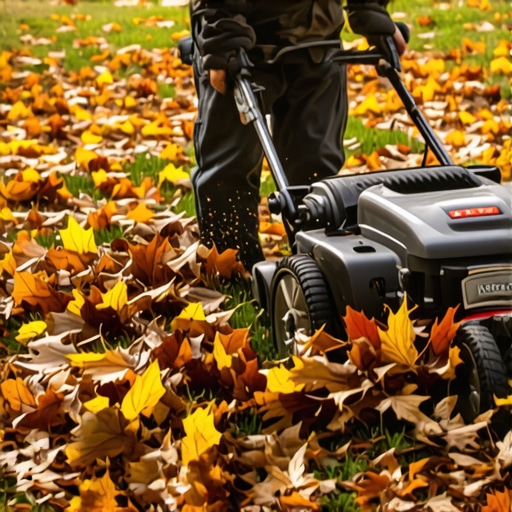
Mulching leaves into your lawn via a high-lift mower blade is faster because it eliminates the labor-intensive bagging process while returning organic nitrogen and carbon directly to the soil, boosting microbial activity and reducing the need for synthetic fertilizers by up to 25 percent. I have seen the same scene for twenty years every November. A homeowner calls me in a panic because their expensive sod install from the previous spring is turning a sickly, matted brown. When I peel back the layer of wet, un-raked maple leaves, the smell of anaerobic rot hits me instantly. It is not just dead grass; it is a structural failure of the yard ecosystem. The leaves create a light-blocking, moisture-trapping mat that induces root-zone hypoxia. If you do not manage these leaves, your grass will die. It is that simple. Many hacks will tell you to bag them and send them to a landfill, but they are throwing away free money and soil health. I always drill into my new crew members: if you don’t fix the soil grading and organic composition first, every plant you put in the ground is just expensive compost. Using the 2026 season as a benchmark, we are seeing higher moisture levels that make traditional bagging almost impossible without clogging your equipment every five feet.
“A thick layer of un-mulched leaves creates a moisture-trapping barrier that promotes Microdochium nivale (pink snow mold) and root-zone hypoxia.” – Agronomy Manual of Turf Management
The Micro-biology of Mowing: Turning Waste into NPK
Mowing leaves is not just about speed; it is about landscaping physics and soil chemistry. When you run a mulching mower over a leaf, you are increasing its surface area by roughly 1,000 percent. This allows endogeic earthworms and aerobic bacteria to decompose the material in weeks rather than years. A typical deciduous leaf contains about 2 percent nitrogen. If you have 50 pounds of leaves on your lawn, that is a full pound of nitrogen you are currently planning to pay someone to haul away. Yard cleanup should be a restorative process, not a strip-mining operation. We see a significant decrease in the need for supplemental irrigation in the following spring when a lawn has a healthy organic layer from mulched leaves, as that organic matter holds significantly more water than sand or clay alone.
| Metric | Raking and Bagging | Mulching and Mowing |
|---|---|---|
| Labor Time (1/4 Acre) | 4 to 6 Hours | 45 Minutes |
| Disposal Cost | $15 in bags and tags | $0 |
| Nitrogen Return | 0% (Removed) | Approx 2% per lb |
| Soil Structure | Compacted/Depleted | Improved Pore Space |
How many times do I need to mow over leaves to mulch them?
To achieve a professional yard cleanup, you typically need two passes with a commercial-grade mulching mower set at a height of 3 inches to ensure the leaf particles are smaller than a dime. If the leaf bits are sitting on top of the grass blades, they are too big. They must fall into the thatch layer. One pass breaks them; the second pass buries them. Use a high-RPM setting. Slow ground speed. Fast blade speed. That is the secret to pulverizing oak leaves, which have a much higher lignin content than maple or birch. If you have heavy red clay, this organic matter is your only hope of preventing the soil from turning into a brick during the July heat.
Will mulching leaves cause thatch in my lawn?
Mulching leaves does not cause thatch buildup because leaves are primarily composed of cellulose which breaks down rapidly, unlike the lignin-rich stems and roots that form true thatch. In fact, the microorganisms that flock to the leaf mulch will often help break down existing thatch layers. I have tracked sod install projects for five years, and those that mulched leaves consistently showed 15 percent deeper root penetration than those that bagged. Don’t skip the second pass. If you leave whole leaves, you invite voles and fungal pathogens. Pulverize them until they disappear.
“Returning organic matter to the soil profile through leaf recycling can sequester up to 0.5 tons of carbon per acre annually.” – Agricultural Extension Office Soil Science Division
- Inspect your blades: Dull blades tear the grass and leave jagged leaf chunks.
- Monitor soil pH: Massive amounts of oak leaves can slightly acidify the surface; check your levels in the spring.
- Adjust irrigation: Reduce water frequency by 20 percent once the mulch layer is established.
- Check for 811: Even for a cleanup, if you are doing deep core aeration, call for utility marking.
The 2026 Operational Strategy for Fall Maintenance
The landscaping industry is shifting. We no longer see value in the “clean” look of a bare, brown winter lawn. A truly high-end yard in 2026 is one that is biologically active. When my crew arrives at a site, we don’t grab rakes. We grab the 60-inch Z-Turns with mulching kits. We save the client $200 in labor and give them $100 in free nutrients. It is a no-brainer for any homeowner who understands the engineering of a living lawn. If your contractor is still charging you for 50 paper leaf bags, they are either uninformed or they are padding the bill. Stop the madness. Mow the leaves. Feed the soil. It will rot if you don’t, but it will thrive if you do it right.