
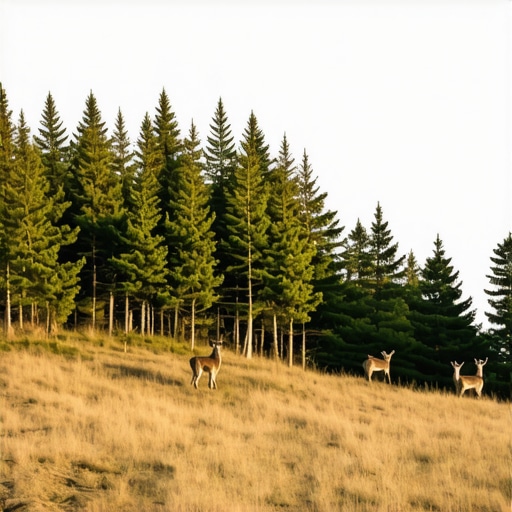
Planning the Perimeter: Why Site Analysis Trumps Plant Selection
To create a functional deer barrier, you must conduct a site analysis focusing on wildlife corridors, sun exposure, and soil drainage; simply planting random shrubs without a topographical assessment leads to plant stress and increased susceptibility to foraging. Most homeowners think they can just buy a pallet of green stuff and be done. They are wrong. I always drill into my new crew members: if you don’t fix the soil grading first, every plant you put in the ground is just expensive compost. I once saw a rookie crew drop ten-thousand dollars worth of specimen American Hollies into holes dug into heavy, unamended clay. Those holes acted like bathtubs. Within three months, the root flares were rotted, the soil microbiology was anaerobic, and the trees were dead sticks. If the tree is stressed, its chemical defenses drop. A healthy evergreen produces bitter tannins and resins. A stressed one is a buffet. Fix your yard cleanup and landscaping prep first. Check your irrigation lines. If the water doesn’t move away from the root ball at 1 inch per hour, you have a drainage crisis, not a deer problem.
“A retaining wall doesn’t fail because of the stone; it fails because of the water trapped behind it.” – Hardscape Engineering Axiom
The Physics of Deterrence: Selecting Prickly Evergreens for Zone-Specific Success
Selecting prickly evergreens like Ilex opaca or Picea pungens provides a physical and sensory deterrent that exploits a deer’s aversion to mechanical injury and bitter alkaloids, effectively redirecting their movement away from your landscaping. You need to understand the USDA Hardiness Zones. If you put a plant rated for Zone 7 into a Zone 5 pocket, the winter desiccation will brittle the leaves, and the deer will ignore the dulled spines. We use a biological blueprint. We want high-density branching and sclerophyllous foliage. This isn’t about looks; it’s about making the deer decide that the caloric reward of your garden isn’t worth the ocular risk of a sharp needle.
How do I keep deer from eating my landscaping?
To stop deer from eating your landscaping, you must install a multi-layered defense using unpalatable species, install motion-activated irrigation, and maintain a physical height of at least six feet for perimeter hedging to disrupt the deer’s line of sight and jumping confidence.
Which evergreens are actually deer-proof?
While no plant is 100% deer-proof, species like Picea glauca (White Spruce), Juniperus virginiana (Eastern Red Cedar), and Ilex aquifolium (English Holly) are highly resistant due to their abrasive textures and aromatic oils that confuse a deer’s olfactory senses.
| Species | Deterrent Type | Growth Rate | Soil pH Preference |
|---|---|---|---|
| Ilex opaca | Serrated Leaf Spines | Slow (6-12″/year) | 4.5 – 6.0 |
| Picea pungens | Stiff Needle Points | Medium (12-18″/year) | 5.5 – 7.5 |
| Juniperus chinensis | Aromatic Resins/Scale | Fast (18-24″/year) | 6.0 – 8.0 |
| Berberis thunbergii | Cane Thorns | Fast (24″+/year) | 5.0 – 7.5 |
Soil Preparation and the Irrigation Infrastructure
Proper soil preparation for a deer barrier requires achieving a bulk density that allows for capillary action while maintaining macropores for oxygen exchange, coupled with an irrigation system delivering exactly 1 inch of water per week. Don’t just throw sod install techniques at a treeline. Turf needs different NPK ratios than woody ornamentals. For these evergreens, you want low nitrogen and high phosphorus initially to encourage lignification. Soft, nitrogen-pushed growth is exactly what deer love. It’s candy to them. If you use a high-nitrogen turf fertilizer near your barrier, you’re essentially seasoning the plants for the local herd.
“Effective weed management and moisture retention in woody plantings are best achieved through a 3-inch layer of coarse-textured organic mulch, kept away from the trunk to prevent fungal pathogens.” – Penn State Agricultural Extension
The Master Landscaper’s Planting Protocol
- Inspect Root Flares: Ensure the transition between trunk and root is visible above the soil line. Planting too deep kills 90% of nursery stock.
- Excavate Wide, Not Deep: Dig the hole twice as wide as the root ball to allow lateral root expansion into uncompacted soil.
- Hydration Check: Install 0.5 GPH (gallons per hour) drip irrigation emitters at the drip line, not the trunk.
- Mechanical Protection: Use hardware cloth around the base for the first two years to prevent buck rub.
- Mulch Geometry: Apply 3 inches of cedar mulch in a donut shape. No mulch volcanoes.
Long-Term Maintenance: Beyond the Initial Install
Maintaining a natural deer barrier involves annual structural pruning to increase branch density and bi-annual soil testing to ensure cation exchange capacity remains optimal for resin production. It will rot if you over-water. Don’t skip the yard cleanup. Leaf litter from deciduous trees trapped in your prickly evergreens can harbor scale insects and spider mites. Clean it out. If the plant is healthy, the spines stay sharp. If the plant is weak, the defense fails. This is applied biology. If you treat your yard like a construction site instead of an ecosystem, the deer win every time. Use a 10-10-10 slow-release fertilizer in early spring. Stop by August. You don’t want new, tender growth when the first frost hits. That tender growth is a beacon for hungry deer in November.