
The Ground-Up Build: Why 80 Percent of Lawns Fail Before April
I always drill into my new crew members: if you don’t fix the soil grading first, every plant you put in the ground is just expensive compost. In over two decades of managing high-end turf and hardscape installs, I have seen thousands of dollars wasted on high-quality seed that never had a chance because the contractor ignored the structural reality of the site. Successful landscaping is not an aesthetic exercise; it is an engineering project that uses biology as a medium. When we talk about dormant seeding in late February, we are not just throwing seed on the ground and hoping for the best. We are timing a biological intervention to sync with the physical mechanics of the freeze-thaw cycle. If you skip the prep, your yard cleanup is just busy work. If you ignore the soil chemistry, your irrigation system is just a tool for drowning your investment.
What is Dormant 2026 Seeding in Late February?
Dormant seeding is the strategic application of grass seed during the late winter months, specifically Late February, when soil temperatures remain below 50 degrees Fahrenheit to prevent immediate germination while utilizing the freeze-thaw cycle to incorporate the seed into the top layer of the soil profile. This process ensures that as soon as the ground hits the 55-degree mark in spring, the seed is already positioned for maximum root-to-soil contact. It avoids the mud-soaked delays of March and the weed competition of April. You are essentially using the earth’s natural contraction and expansion as a mechanical seeder.
“Successful dormant seeding relies on the honeycombing of the soil surface during freeze-thaw cycles to provide the necessary seed-to-soil contact without mechanical aeration.” – Penn State Center for Turfgrass Science
The Yard Cleanup: Pre-Seeding Mechanical Prep
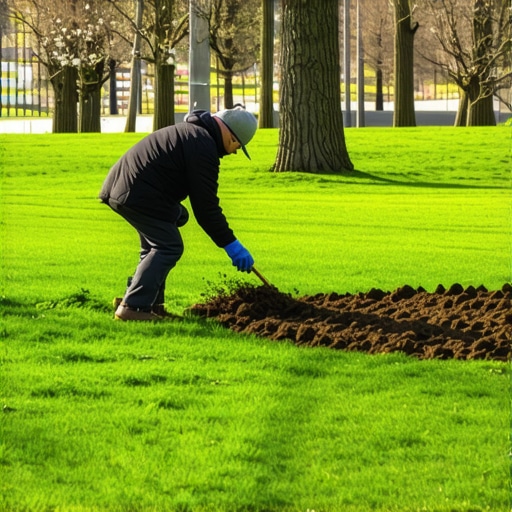
Before a single seed hits the dirt, a rigorous yard cleanup must occur to expose the soil surface. This is where most homeowners fail. If you have a layer of oak leaves, pine needles, or dead thatch more than 0.5 inches thick, your dormant seeding attempt will fail. The seed will get caught in the debris and never touch the soil. You need a clean, bare-earth canvas. This involves more than just a leaf blower. You need to vigorously rake or power-rake the area to remove any organic material that prevents the seed from falling into the soil cracks. If the soil is heavily compacted, the freeze-thaw cycle won’t be enough to pull the seed down. Compaction is the enemy of oxygen exchange. Use a core aerator to pull 3-inch plugs if the soil feels like concrete under your boots. This creates the vertical channels needed for the seed to settle during the February frost periods.
How long does dormant seed take to germinate?
Dormant seed remains inactive until soil temperatures consistently reach 50 to 55 degrees Fahrenheit for several consecutive days, typically occurring in late March or early April depending on your specific USDA Hardiness Zone. The seed undergoes a process called imbibition, where it absorbs moisture, but the biological machinery inside the seed coat stays paused until the thermal threshold is met. This gives the grass a three-week head start over spring-sown lawns, which often have to wait for the soil to dry out enough for equipment to pass over it without causing rutting or compaction.
Soil Chemistry: The NPK and pH Equation
Grass seed is a biological engine, and like any engine, it needs the right fuel. In late February, you aren’t applying high-nitrogen fertilizers because the plants aren’t active enough to use them, and nitrogen runoff is a major environmental pollutant. Instead, you focus on the Cation Exchange Capacity (CEC) and the soil pH. Most turf grasses, especially Kentucky Bluegrass and Turf-Type Tall Fescue, require a pH between 6.2 and 7.0. If your soil is too acidic (common in high-clay regions), the nutrients are chemically locked and unavailable to the seedling. Adding pelletized lime during your February prep allows the winter rains to slowly work the calcium carbonate into the soil horizon. Do not guess on this. A $20 soil test is the difference between a thick lawn and a patch of wasted money. You want a high phosphorus (the P in N-P-K) starter fertilizer available the moment germination begins to stimulate radical and coleoptile development.
| Material Choice | Cost Per 1,000 Sq Ft | Establishment Time | Success Rate (February) |
|---|---|---|---|
| Certified Blue Tag Seed | $45 – $65 | 60 – 90 Days | High (Proper Prep) |
| Standard Sod Install | $600 – $950 | 14 – 21 Days | High (Year Round) |
| Hydroseed (Slurry) | $150 – $300 | 45 – 60 Days | Moderate (Early Spring) |
Irrigation Systems and Water Management
While February is usually wet, you must plan for the transition into April. An irrigation system that hasn’t been winterized correctly or one that is started too late can kill a dormant-seeded lawn during its first dry spell in May. Check your backflow preventers and zones now. The primary goal for dormant seeding is to keep the soil moist but not saturated once the temperature rises. If your soil grading is poor, water will pool and rot the seed before it can sprout. This is why we check for hydrostatic pressure issues and ensure a 2 percent slope away from the home’s foundation. If you have low spots, February is the time to add a 70/30 mix of topsoil and sand to level the grade before the seed is spread.
“A retaining wall doesn’t fail because of the stone; it fails because of the water trapped behind it.” – Hardscape Engineering Axiom
Can I dormant seed over snow?
Yes, spreading grass seed over a light dusting of snow is an effective dormant seeding technique because it allows you to see your coverage pattern and the seed will settle into the soil as the snow melts. As the snow undergoes a melt-refreeze cycle, it actually helps press the seed into the mud. However, avoid seeding over heavy ice or deep drifts, as the seed may wash away during a rapid thaw. The key is ensuring the seed eventually finds its way to the soil surface before the spring winds can blow it off the site.
The Late February Seeding Checklist
- Remove all leaf litter, sticks, and debris from the target area.
- Identify and remediate soil compaction using a core aerator or garden fork.
- Conduct a soil test to determine pH levels and nutrient deficiencies.
- Apply pelletized lime if the pH is below 6.0 to neutralize acidity.
- Choose a high-quality, weed-free seed mix (avoid big-box store ‘contractor mix’).
- Spread seed at a rate of 4-6 lbs per 1,000 square feet for fescue blends.
- Lightly rake the seed into the soil or allow the frost to handle incorporation.
- Flag your irrigation heads to avoid damage during future cleanup.
The Settling-In Period: What to Expect in Year One
Once the seed is in the ground in February, your job is 90 percent done until April. You must resist the urge to walk on the lawn during the ‘mud season’ of March. Foot traffic on wet, newly seeded soil creates compaction that will stunt the emerging root systems. When you see the first green haze of germination, do not reach for the weed killer. Most pre-emergent herbicides will kill your new grass just as easily as they kill crabgrass. You must wait until you have mowed the new lawn at least three times before applying any traditional weed control. Expect some ‘settling’ of the soil grade. If you see small ruts forming, top-dress them lightly with sand. This is a marathon, not a sprint. By the time your neighbors are just starting their landscaping in late April, your dormant-seeded lawn will already have a robust root structure established, making it far more resilient to the heat of July. If you follow the math and the biology, the results will be measurable in the thickness of the turf and the depth of the roots. Anything else is just luck.