
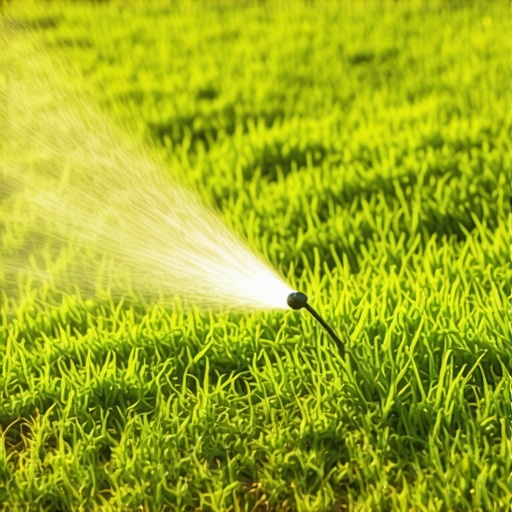
The Chemical Nightmare: A Case Study in DIY Disaster
Last season, I walked onto a property that looked like a napalm strike had hit it. The homeowner, trying to get a jump on the spring, had seen a few patches of clover and henbit. Instead of identifying the weed or checking the label, they loaded a pump sprayer with a 41% glyphosate concentrate and ‘spot sprayed’ their entire front yard. They didn’t realize that at 55 degrees, the fescue was still active enough to absorb the systemic poison. By the time I arrived, $12,000 worth of premium tall fescue sod was a necrotic, yellow graveyard. This is what happens when you treat your lawn like a chore rather than a biological system. Targeted spot spraying in early 2026 isn’t about carpet-bombing your yard; it is about surgical precision and understanding the chemical half-life of your applications.
The Science of Targeted Spot Spraying in Early 2026
Effective spot spraying requires a deep understanding of weed phenology and soil temperature thresholds to ensure that herbicides penetrate the target plant without migrating into the root zones of your desirable turf grass. In early 2026, we are seeing soil temperatures fluctuate rapidly, meaning you must monitor the 55-degree mark for pre-emergent efficacy and the 65-degree mark for post-emergent absorption. Stop guessing. Start measuring.
“Successful weed management is not just about the chemical; it is about the timing of the plant’s physiological vulnerability.” – Weed Science Society of America Handbook
How much modified gravel do I need for a patio base?
While the focus here is on turf, the edges of your hardscaping—patios and walkways—are the primary breeding grounds for weeds. If you didn’t install a minimum of 6 inches of compacted 21A or CR-6 modified gravel topped with a geotextile fabric, the hydrostatic pressure will eventually push weed seeds through your polymeric sand joints. For every 100 square feet of patio, you need roughly 2.5 tons of modified stone to create a base that is both stable and inhospitable to weed growth. It must be compacted in 2-inch lifts. No exceptions.
Identifying the Enemy: 2026 Weed Profiles
In early 2026, the primary offenders are winter annuals that are reaching maturity. You are looking at Poa annua (annual bluegrass), Lamium amplexicaule (henbit), and Stellaria media (common chickweed). These plants have been growing under the snow or during the dormant winter months, building massive root reserves. A simple ‘weed and feed’ won’t touch these. You need selective, systemic herbicides applied directly to the foliage. If the plant is flowering, you’ve almost missed the window. The seed bank is already being replenished.
| Weed Species | Chemical Target | Application Timing | Action Level |
|---|---|---|---|
| Poa Annua | Ethofumesate / Simazine | Late Feb – Early March | High – Aggressive Seeder |
| Henbit / Chickweed | 2,4-D / Dicamba / MCPP | When temps hit 55F | Medium – Aesthetic Nuisance |
| Dandelion | Triclopyr | Pre-Bloom | Low – Taproot focus |
| Crabgrass (Pre-Emergent) | Prodiamine | Soil Temp 50-55F | CRITICAL – Prevention only |
The Professional Spot Spraying Checklist
- Calibrated Hand Sprayer: Use a fan tip nozzle for broadleaf weeds and a pin-stream for grassy weeds to minimize drift.
- Surfactants: Always add a non-ionic surfactant to your mix. This breaks the surface tension of the weed leaf, allowing the chemical to stick rather than bead off.
- Marking Dye: Use a blue or green tracker dye. If you can’t see where you sprayed, you will double-dose and burn the turf.
- Weather Window: Minimum 4-hour rain-free period post-application. Wind speeds must be under 5mph.
- PPE: Chemical-resistant gloves and long sleeves. This is chemistry, not a hobby.
What is the best temperature for spot spraying weeds?
The optimum temperature for spot spraying broadleaf weeds is between 60 and 80 degrees Fahrenheit, as this is when the plants are most metabolically active and will readily translocate the herbicide to the root system. If you spray below 50 degrees, the weed is dormant and won’t ‘drink’ the poison. If you spray above 85 degrees, the herbicide can volatilize—turning into a gas—and drift into your neighbor’s prize roses or your own ornamental beds. It’s physics.
Irrigation and the Post-Spray Recovery
Your irrigation system plays a massive role in weed control. Most hacks tell you to water every day. They are wrong. Frequent, shallow watering encourages shallow weed roots and thatch buildup. To combat weeds in 2026, you want deep, infrequent cycles—roughly 1 inch of water once a week. This forces your sod install or established turf to push roots deep into the soil profile where the weeds can’t compete for moisture. If you are spot spraying, turn off the zones for 24 hours to let the chemical set. Don’t wash your money down the storm drain.
“A retaining wall doesn’t fail because of the stone; it fails because of the water trapped behind it, much like a lawn doesn’t fail because of the weeds, but because the soil conditions invited them.” – Hardscape Engineering Axiom
The Soil Grading Connection
If you have recurring weed patches in the same spot every year, you don’t have a weed problem; you have a soil grading or compaction problem. Water pooling in low spots creates an anaerobic environment that kills grass and invites sedges and poa annua. During your yard cleanup, look for these depressions. You may need to core aerate to a depth of at least 3 inches to break up the plow pan or add top-dressing to level the grade. Without proper drainage, you are just throwing herbicide at a symptom while the disease—poor soil structure—festers underneath.
The 2026 Maintenance Horizon
Spot spraying is a temporary measure. The real work is in the soil biology. Check your pH. If you aren’t at a 6.5, your turf can’t even uptake the nitrogen you’re feeding it, leaving a buffet for opportunistic weeds. In 2026, we are moving away from heavy nitrogen loads and toward micronutrient-dense applications that strengthen the cell walls of the grass. A thick canopy is the only 100% effective weed control. If sunlight can’t hit the soil, the weed seeds can’t germinate. It’s that simple. Get the canopy tight, manage your water, and use your sprayer like a scalpel, not a sledgehammer.