
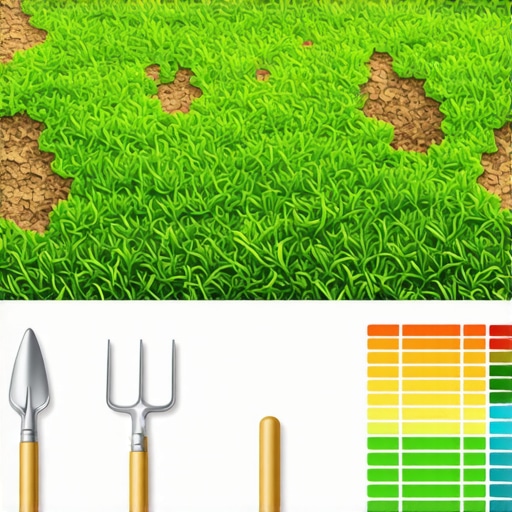
The Autopsy of a Dying Lawn: Identifying Rhizoctonia Solani
To fix lawn brown patch disease, you must disrupt the fungal life cycle by reducing leaf wetness duration, optimizing nitrogen application, and applying preventative fungicides like azoxystrobin when nighttime temperatures consistently exceed 65 degrees Fahrenheit. This pathogen doesn’t just kill the blade; it rots the sheath.
I remember a homeowner in late July who called me out after his front yard turned into a graveyard of tan circles. He thought he was helping by dumping 10 pounds of quick-release nitrogen and watering every night at 8:00 PM. He basically built a five-star hotel for fungus. The smell alone told me the story: a sour, rotting hay scent that sticks to your boots. He didn’t have a lawn anymore; he had a petri dish. We had to strip the sod and start from the dirt because he had reached the point of no return. Don’t be that guy. Understand that Rhizoctonia solani is an opportunist waiting for you to mess up your irrigation and fertilization timing.
“Rhizoctonia solani is a soil-borne fungus that does not produce spores; it survives as mycelium in plant debris or as sclerotia in soil, waiting for optimal moisture and temperature.” – Texas A&M AgriLife Extension
How do I identify brown patch vs. drought stress?
Drought stress causes grass to curl and turn a bluish-gray color, and your footprints will stay visible in the turf. Brown patch presents as circular patches ranging from a few inches to several feet in diameter, often with a dark, water-soaked ‘smoke ring’ around the perimeter in the early morning. If the grass pulls up easily but the roots look white and healthy, the fungus is attacking the leaf sheath at the soil line.
The Chemical Nightmare: Why Your Fertilizer is Killing Your Yard
Applying high-nitrogen fertilizer during periods of high humidity and heat creates a flush of succulent leaf growth that lacks the structural integrity to resist fungal penetration. You are essentially feeding the enemy while weakening the host. If the combined temperature and humidity (the 150 rule) exceed 150, stop the nitrogen. Stick to slow-release formulas or wait for the break in the weather. I see guys using cheap big-box weed-and-feed products in the middle of a heatwave; it is professional negligence. You need to focus on potassium (K) to strengthen the cell walls, not nitrogen (N) to make it look pretty for a week.
“High nitrogen levels during periods of environmental stress significantly increase the susceptibility of cool-season grasses to brown patch by promoting soft, lush tissue.” – Penn State Center for Turfgrass Science
The biology is simple. The fungus enters the plant through the stomata or wounds from dull mower blades. If you haven’t sharpened your blades this season, you are shredding the grass, leaving open sores for the infection to take hold. Sharp blades mean clean cuts and faster healing. It is a basic engineering fix.
The Restoration Schedule: A 4-Week Recovery Plan
This remediation schedule requires strict adherence to irrigation timing, thatch management, and fungicide rotations to ensure the mycelium is suppressed and the turfgrass canopy can recover. You cannot miss a day. The goal is to dry out the leaf blades as fast as possible. If the grass is wet for more than 10 hours, the fungus wins. Period.
| Week | Action Item | Technical Target |
|---|---|---|
| 1 | Apply Fungicide | Azoxystrobin or Propiconazole at curative rate |
| 1 | Adjust Irrigation | Water at 4:00 AM only; 1/2 inch total |
| 2 | Core Aeration | 3 inch depth to reduce soil compaction |
| 3 | Yard Cleanup | Power rake to remove 1/2 inch of thatch |
| 4 | Sod Install/Seed | Replace dead zones with resistant cultivars |
Notice the irrigation timing. Watering at night is a death sentence. You want the sun to burn off the moisture immediately after the irrigation cycle finishes. Aim for 1 inch of water per week, delivered in two heavy sessions. This forces the roots to go deep, searching for water, rather than sitting in a shallow, fungus-ridden puddle at the surface. Use a rain gauge. Guessing is for amateurs.
What is the best fungicide for Rhizoctonia?
The most effective fungicides for brown patch are Group 11 (QoI) like azoxystrobin and Group 3 (DMI) like propiconazole, which should be rotated to prevent pathogen resistance and ensure total fungal suppression. If you use the same chemical over and over, the fungus adapts. You have to hit it with different modes of action. Follow the label rate to the milliliter. More is not better; more is just toxic.
Engineering the Environment: Soil and Drainage
Proper soil grading and surface drainage are the primary defenses against moisture-driven diseases, as standing water creates the anaerobic conditions where Rhizoctonia thrives. If your yard has low spots, no amount of chemical will fix the problem. You need to level the grade. Sometimes that means a full yard cleanup, removing the top layer of organic debris, and hauling in sandy loam to ensure water moves off the site. Check your gutters too. A clogged downspout dumping 50 gallons of water into one corner of the lawn will cause a fungal breakout every single time.
- Check soil pH: Target 6.5 for optimal nutrient uptake.
- Remove thatch: Anything over 1/2 inch is a sponge for disease.
- Calibrate sprinklers: Use the tuna can test for even distribution.
- Mow high: Keep fescue at 3.5 to 4 inches to shade the soil.
Thatch is the layer of dead and living organic matter between the green vegetation and the soil surface. Too much thatch acts like a wet blanket. It holds the humidity right at the base of the plant. A power rake or vertical mower is necessary once a year to keep this under control. If you can’t see the soil when you pull the grass apart, you have a thatch problem. Fix it or watch your grass rot. It is that simple.