
The Forensic Diagnosis of Canine-Induced Nitrogen Scald
Dog urine spots are caused by highly concentrated nitrogen and salts that create a localized drought condition known as physiological wilt. Fixing these spots with gypsum pellets involves using calcium to displace sodium ions, improving soil permeability and allowing the excess salts to leach below the root zone.
You see it every spring. You walk out onto a lawn that should be waking up, but instead, it looks like someone took a blowtorch to 6-inch circles across the turf. It is not just yellow; it is a brittle, straw-like necrosis that signifies the death of the crown. Most homeowners think they have a fungus or a grub problem. They don’t. They have a chemistry problem. Dog urine is essentially a high-dose liquid urea. While nitrogen is a primary macronutrient in the NPK (Nitrogen-Phosphorus-Potassium) ratio, too much of it at once creates a salt index so high it sucks the moisture out of the grass blades. This is osmotic stress. It is violent, it is fast, and if you have heavy clay soil, those salts are going to sit there and cook the roots for months.
The Chemical Nightmare: A Cautionary Tale of DIY Fixes
I recently got called out to a property where the homeowner had attempted a ‘home remedy’ they found on a forum. They had a few dog spots and decided to dump 50 pounds of high-nitrogen starter fertilizer over the entire yard, thinking ‘more green stuff fixes yellow stuff.’ It did not work. Within three days, they had torched the entire front lawn, turning a $500 repair into a $12,000 sod install. They had essentially doubled down on the salt load. When I pulled a soil core, the compaction was so severe and the nitrogen levels were so toxic that the soil smelled like a chemistry lab. We had to excavate three inches of topsoil just to get a clean base for the new turf. Don’t be that guy. Fix the soil chemistry before you touch the fertilizer spreader.
“The application of gypsum (calcium sulfate) is effective in remediating sodic soils by replacing exchangeable sodium with calcium, which improves soil structure and water infiltration.” – Texas A&M AgriLife Extension
The Science of Cation Exchange and Soil Flocculation
Gypsum pellets work by utilizing the principle of cation exchange to replace sodium and high-concentration ammonia ions with calcium, which restores the soil structure and allows for proper drainage. This is not a magic powder; it is a soil conditioner. If you are dealing with heavy clay, the sodium in dog urine causes clay particles to repel each other. This is called dispersion. The soil becomes tight, airless, and hydrophobic. Water will sit on top of the spot rather than soaking in. When you apply calcium sulfate (gypsum), the calcium ions force the clay particles to clump together. This is called flocculation. It creates macropores in the soil, allowing the toxic levels of nitrogen and salts to be flushed out by your irrigation system. Without this process, the soil remains a tomb for any new grass seed you try to plant.
How much modified gravel do I need for a patio base?
While this article focuses on turf, if your dog spots are near a hardscape edge, you must ensure your modified gravel base is at least 4-6 inches deep to prevent nitrogen-rich runoff from undermining the polymeric sand in your pavers. Poor drainage near patios often leads to concentrated salt deposits that kill the grass right at the stone’s edge.
Does gypsum neutralize dog pee?
Technically, gypsum pellets do not neutralize the pH of the urine; instead, they address the soil salinity and structural damage caused by the urea. To truly neutralize the nitrogen, you need heavy irrigation to dilute the concentration, while the gypsum ensures the soil is porous enough to let that water pass through.
Material Comparison for Turf Repair
| Amendment | Primary Function | Effect on Soil pH | Best Use Case |
|---|---|---|---|
| Gypsum Pellets | Salt Displacement | Neutral | Dog spots in clay soil |
| Pelletized Lime | Acidity Correction | Increases pH | Mossy, acidic lawns |
| Humic Acid | Carbon Loading | Neutral | Microbial stimulation |
| Elemental Sulfur | Alkalinity Correction | Decreases pH | Lowering high pH soil |
The Step-by-Step Gypsum Pellet Remediation Method
The gypsum pellet method requires a systematic approach to yard cleanup and landscaping maintenance to ensure the dead spots do not return and that the soil remains hospitable for new growth.
- Excavate the dead organic matter: Use a hand rake to remove the brittle, yellow grass. You need to see the dirt. If the thatch layer is thick, the gypsum won’t reach the soil.
- Aerate the spot: Use a hand-held core aerator to pull two or three 3-inch plugs from the center of the spot. This breaks the surface tension.
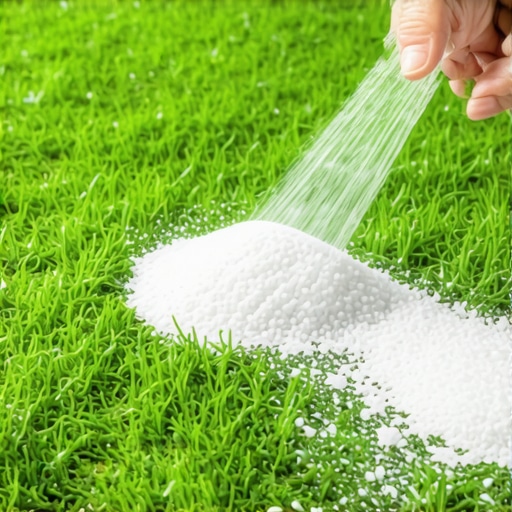
- Apply the Gypsum: Use pelletized gypsum at a rate of roughly 2 cups per large spot. Do not use powdered gypsum; it blows away and doesn’t penetrate as deeply.
- Hydrate intensely: This is the most critical step. You must apply at least 1 inch of water to the spot immediately. This initiates the cation exchange.
- Re-seed or Sod Install: Wait 48 hours after the heavy watering. If the spot is larger than a dinner plate, a sod install is better than seeding. Cut out a square of the dead turf and drop in a fresh piece of sod.
“A retaining wall doesn’t fail because of the stone; it fails because of the water trapped behind it, much like a lawn fails not because of the grass, but the soil chemistry beneath it.” – Hardscape Engineering Axiom
Irrigation Calibration and Long-Term Prevention
If you have dog spots, your irrigation is likely insufficient. Most people water for 15 minutes every day. This is a mistake. It keeps the surface wet but doesn’t leach salts. You need deep, infrequent watering. Aim for 1 inch of water once per week. This forces the roots to chase the water down, making the turf more resilient to the salt shocks of dog urine. If you are doing a yard cleanup, check your sprinkler heads. Are they hitting the areas where the dog usually goes? If not, adjust the arc. You can also utilize landscaping design to your advantage by creating a designated ‘mulch station’ or using gravel for the dog’s favorite areas, keeping the high-traffic urine zones away from the sensitive turf grass. Don’t skip the spring aeration. Compaction is the ally of the dog spot. Keep the soil open, keep the calcium levels high, and you’ll stop seeing those yellow rings of death. It will rot if you don’t drain it. Don’t skip the water.