
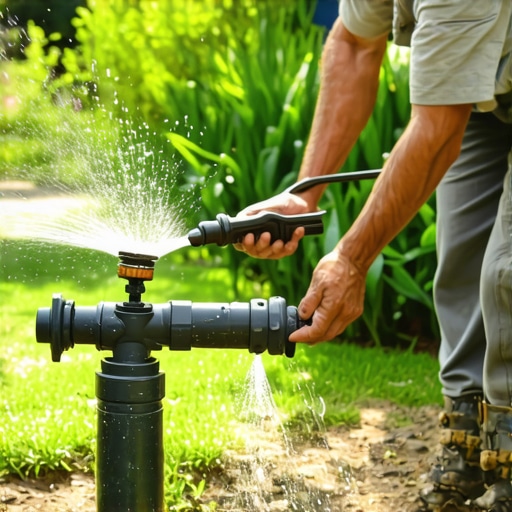
Why Low Sprinkler Pressure Often Originates in the Valve Box
Low sprinkler pressure is usually caused by sediment accumulation, failing diaphragms, or solenoid obstructions within the valve box, which restricts the dynamic head pressure required for nozzle pop-up. Identifying these hydraulic bottlenecks early prevents turf desiccation and catastrophic irrigation system failure during peak heat cycles.
I always drill into my new crew members: if you don’t fix the soil grading first, every plant you put in the ground is just expensive compost. I saw this play out last week on a site where a homeowner spent four grand on new sod install but refused to service their irrigation valves. They called me screaming that the sod was turning straw-colored within forty-eight hours. I didn’t even look at the grass; I went straight to the valve box. When I cracked the bonnet on zone three, it was packed with fine silt and calcified mineral deposits. The water wasn’t reaching the heads because the valve was only opening forty percent of the way. The physics of water don’t care about your feelings or your budget. If the PSI drops below the manufacturer’s operating pressure, the system fails. Period. We spent the afternoon performing a full valve box flush, and by that evening, the rotors were actually reaching their full radius of throw. Don’t be that guy. Fix the mechanics before you blame the grass.
“A properly functioning irrigation valve is the heart of the landscape; when sediment restricts the diaphragm’s travel, the resulting friction loss renders the entire downstream lateral line inefficient.” – Irrigation Association Technical Manual
How do I clear sediment from irrigation valves?
Clearing sediment requires a systematic valve flush where you manually override the solenoid, remove the bonnet, and allow static pressure to eject debris from the valve body. This process ensures that internal orifices are clear of the grit that typically bypasses mainline filters. Most DIYers think a quick yard cleanup involves just raking leaves, but real maintenance starts underground. You need to inspect the valve manifold for leaks. Look for standing water. If the box is muddy, you have a leak. It is that simple. I’ve seen polymeric sand from nearby hardscaping projects wash into poorly sealed boxes and wreck solenoids in a single season. It happens fast. Stop ignoring the hum coming from your valves.
| Symptom | Mechanical Cause | PSI Impact |
|---|---|---|
| Heads not popping up | Blocked Diaphragm Port | High Loss (15-20 PSI) |
| Mist/Fogging at Head | Excessive Mainline Pressure | Variable |
| Weeping/Leaking Heads | Debris in Valve Seat | Constant Low Flow |
| Weak Stream/Short Throw | Solenoid Plunger Obstruction | Moderate Loss (10 PSI) |
The Forensic Autopsy of a Failing Irrigation Valve
The forensic autopsy of a failing irrigation valve reveals that mineral scaling and micro-debris create hydrostatic resistance, preventing the internal spring-loaded diaphragm from fully retracting. This mechanical failure leads to uneven water distribution, localized dry spots, and eventual root zone collapse in perennial beds and turfgrass. I’ve taken apart hundreds of these. Most look like they’ve been filled with concrete. The 2026 weather patterns have been brutal, with flash floods pushing more silt into municipal lines than ever before. If you aren’t running a Y-filter on your main line, you’re just inviting sand to live in your valves. That sand acts like sandpaper on the rubber seals. It shreds them. Once the seal is gone, you lose the pressure differential needed to snap the valve shut. Your water bill goes up, and your pressure goes down. It’s a losing game.
Why is my sprinkler zone pressure dropping suddenly?
A sudden drop in sprinkler zone pressure usually indicates a ruptured lateral line or a clogged master valve, though it can also be triggered by a solenoid that is shorting out due to corroded wire splices. Check your multimeter readings at the controller first. If you aren’t getting 24VAC to the valve, the plunger won’t lift. No lift means no flow. If the electrical is fine, you’re looking at a physical blockage. We often find that tree roots have crushed PVC lines, but before you start digging up the whole yard, flush the valve. It is the cheapest and fastest diagnostic step. Remove the screws, hold the diaphragm down, and let the water blast out the rocks. You’ll be surprised what comes out of there. I’ve found everything from snail shells to pebbles the size of a pea.
“The maintenance of consistent operating pressure is vital for the application of the ‘one-inch-per-week’ rule, as sub-optimal PSI leads to poor distribution uniformity and water waste.” – Penn State Agricultural Extension
Irrigation is not a ‘set it and forget it’ luxury. It is a civil engineering project in your backyard. When we do a landscaping install, the irrigation is the first thing we test and the last thing we verify. If the GPM (gallons per minute) doesn’t match the nozzle requirements, the whole design is compost. You need to calculate your friction loss across every foot of pipe. Most ‘contractors’ don’t even know what that means. They just slap some sod down and leave. Then, three months later, you have fungus because the water is pooling in low spots due to poor grading and weak pressure failing to atomize the spray. It’s a chain reaction of failure. Break the chain. Flush your valves every spring.
- Inspect the valve box for vermin or root intrusion.
- Manually bleed the valve to check for instantaneous pressure.
- Remove the bonnet and inspect the diaphragm for tears.
- Clean the metering port with a thin wire or needle.
- Reassemble and perform a static pressure test.
Precision matters. If you are off by five PSI, your MP Rotators won’t rotate. They will just dribble. That dribble creates a mud hole, which invites pests and root rot. The grass dies, the landscaping looks like garbage, and you’re back to square one. Do the work. Clean the valves. Keep the pressure high. Your sod install depends on it. Don’t be lazy with the infrastructure. The dirt always wins if you let it.