
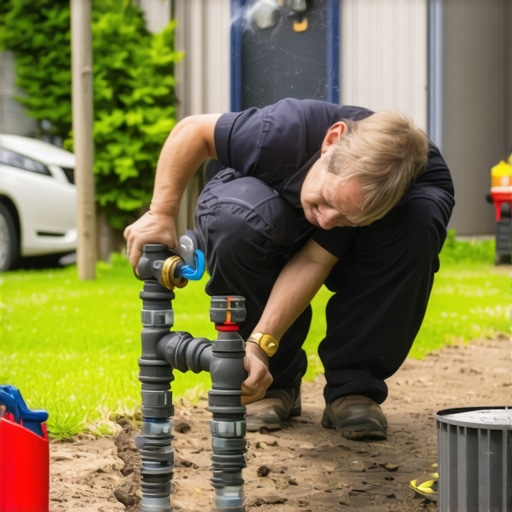
The Anatomy of Irrigation Failure: Why 2026 Sprinkler Valves Stay Open
To resolve a sprinkler zone valve that won’t shut off, you must isolate the failure between a mechanical blockage in the diaphragm and an electrical short in the solenoid or controller circuit. Identifying whether the valve seat is compromised by debris or the solenoid plunger is stuck allows for targeted repair without unnecessary excavation of the main manifold.
The Apprentice Lesson: The Cost of Dirty Irrigation Lines
I always drill into my new crew members: if you don’t fix the soil grading and clean the valve boxes first, every plant you put in the ground is just expensive compost. Last season, I had a greenhorn install a beautiful new sod layout without flushing the main lines. Within forty-eight hours, three zones wouldn’t shut off. A single grain of coarse sand had lodged in the bleed port of a valve. That tiny grain caused two thousand dollars in water damage and nearly drowned the new root system. Irrigation is not just plumbing; it is the lifeblood of the landscape, and it requires surgical cleanliness. If you ignore the microscopic reality of the water column, the soil will win every time.
“Proper irrigation scheduling and system maintenance are essential to minimize water waste and prevent runoff-induced erosion.” – Penn State Extension
The Mechanical Autopsy: Diaphragms and Debris
Most 2026-era valves operate on a pressure-differential principle. The water pressure above the diaphragm must exceed the pressure below it to keep the valve closed. When a valve fails to shut off, the bypass port is usually clogged. Even a 200-micron particle of grit can prevent the pressure from equalizing. You must disassemble the bonnet and inspect the rubber for pinholes. A hole smaller than a needle tip will prevent the valve from seating. Don’t just wipe it off; replace it. The rubber degrades over five to seven years due to chlorine and temperature fluctuations. It is a wear item. Don’t be cheap.
How do I know if my sprinkler valve solenoid is bad?
Diagnosing a faulty solenoid requires a multimeter set to Ohms. A functional solenoid should read between 20 and 60 Ohms of resistance. If the reading is zero, the coil has shorted; if it is infinite, the internal wire has snapped. A buzzing sound usually indicates that the plunger is trying to move but is obstructed by mineral buildup or a bent housing. If you hear a click but the water continues to flow, the solenoid is likely fine, and the issue is purely mechanical within the valve body itself.
Why is my sprinkler zone still running when the controller is off?
When a zone continues to run after the controller is powered down, the problem is almost always a mechanical failure or a manual override left open. Check the manual bleed screw first. If that is tight, the internal diaphragm is either torn or being held open by a physical obstruction like a pebble or PVC shaving. In rare cases, a ‘leaking’ triac in the controller can send just enough voltage to hold a valve open without actually triggering it, but this is a 5% scenario compared to the 95% likelihood of a dirty valve seat.
| Component | Common Failure | Detection Method | Required Action |
|---|---|---|---|
| Diaphragm | Tear or perforation | Constant weeping flow | Replace diaphragm kit |
| Solenoid | Shorted coil | Multimeter Ohms test | Replace solenoid |
| Valve Seat | Pitting or debris | Visual inspection | Clean or replace body |
| Controller | Blown station triac | Voltage check at terminal | Replace controller/module |
The Hydrostatic Reality of Sod Installation
When performing a sod install, the irrigation system must be 100% reliable. New sod requires heavy initial saturation to prevent root desiccation, but a valve that won’t shut off creates an anaerobic environment. This lack of oxygen kills the primary roots before they can knit into the soil. You aren’t just wasting water; you are rotting your investment. I recommend a full pressure test of the manifold before any grass touches the dirt. Check the static pressure. If your PSI is over 80, you need a pressure regulator, or your valves will chatter and fail prematurely.
System Maintenance and Yard Cleanup Protocol
Yard cleanup isn’t just about raking leaves; it’s about protecting your infrastructure. Overgrown grass and mulch hide valve boxes. When these boxes fill with silt, the solenoids become submerged, leading to premature corrosion. Keep your valve boxes clear and dry.
- Inspect valve boxes for standing water monthly.
- Flush the main line after any repairs to prevent debris entry.
- Check solenoid wire connectors for waterproof integrity (Grease caps only).
- Test the manual bleed on every zone to ensure the plunger hasn’t seized.
- Verify that the controller’s rain sensor is not bypassed.
“A zone valve that fails to close can lead to anaerobic soil conditions, effectively drowning the root zone of high-value turfgrass.” – Texas A&M AgriLife Extension
The Engineering of the Repair
Do not skip the cleaning phase. Use a small brush to scrub the valve seat. If the plastic is pitted, no new diaphragm will fix it. You will have to cut the valve out and replumb it. It’s a pain, but it’s the only way. Use Teflon tape on the threads, but never on the first two threads—you don’t want tape shreds entering the valve chamber. That’s how you end up right back where you started. Tighten the bonnet screws in a cross-pattern, like lug nuts on a truck. This ensures even pressure on the seal. It won’t leak if you do it right. Follow the torque. Don’t over-tighten.