
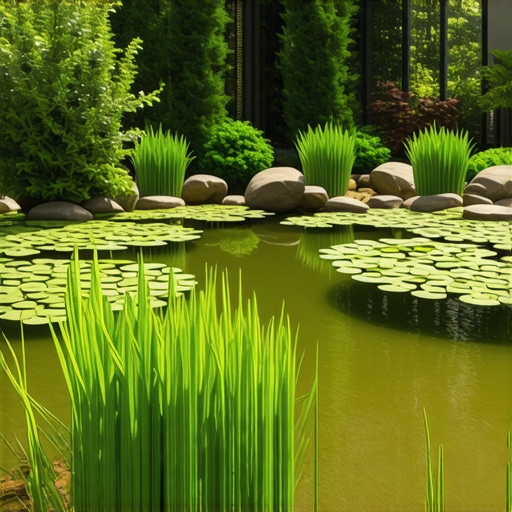
How to Add Oxygen to Your Pond Without a Fountain: Natural Aeration Guide
I always drill into my new crew members: if you don’t fix the soil grading and water chemistry first, every plant you put in the ground is just expensive compost. I have seen guys spend ten grand on koi and decorative stone only to watch the whole system choke out in a single July heatwave because they relied on a tiny, decorative fountain that did nothing for the actual gas exchange. A pond is not a static pool; it is a pressurized biological reactor that requires constant atmospheric interaction to prevent the build-up of toxic gases like hydrogen sulfide and methane. If you want to keep your water clear and your fish alive without a mechanical fountain, you have to understand the physics of dissolved oxygen (DO) and the biological demands of the nitrogen cycle.
What is the best way to oxygenate a pond without a pump?
The most effective method to oxygenate a pond naturally is through the strategic installation of submerged aquatic vegetation and optimizing surface area exposure for wind-driven gas exchange. By utilizing plants like Hornwort and Anacharis, you create a direct source of oxygenated byproducts during photosynthesis that dissolve directly into the water column.
The Science of Gas Exchange and the Thermocline
Oxygen enters water through two primary pathways: direct absorption at the surface and as a byproduct of photosynthesis from aquatic plants. In a standard backyard pond, the surface is where the ‘breathing’ happens. However, water has a limited capacity to hold oxygen, a limit that decreases as temperature rises. This is why ponds often crash in the summer. When the surface water warms, it becomes less dense and floats on top of the cooler, deeper water, creating a layer called the thermocline. Without mechanical or natural mixing, the bottom layer becomes anoxic (void of oxygen), leading to the accumulation of organic muck and the death of beneficial aerobic bacteria.
“A pond without proper vertical mixing is essentially two different ecosystems: a living surface and a dying bottom. Without gas exchange, the anaerobic decomposition of organic matter will eventually overwhelm the entire volume.” – Agricultural Extension Water Management Manual
The Ground-Up Build: Planning for Natural Aeration
Before you ever dig a hole or lay a liner, you must consider the ‘fetch’ of your pond. Fetch is the distance wind can travel across the water surface without obstruction. If you tuck your pond in a corner blocked by a fence and a shed, you are killing its primary source of oxygen. I tell my clients to place ponds in areas where the prevailing winds can hit the water. This creates ripples, which increases the surface area significantly. Every ripple is an opportunity for oxygen to enter and carbon dioxide to escape. If the water is glass-still, your pond is suffocating.
Botanical Aeration: Selecting the Submerged Workhorses
Most homeowners make the mistake of only buying ‘pretty’ plants like lilies or lotuses. While these provide shade and keep temperatures down, they do almost nothing for oxygenation because their leaves are above the water. You need submerged plants, also known as oxygenators. These plants live entirely underwater and pump oxygen directly into the water during daylight hours. However, you must be careful. At night, these plants reverse the process and consume oxygen. Balance is the key to preventing a morning ‘fish gulp’ scenario.
| Plant Species | Optimal Depth | Oxygenation Rate | Growth Pattern |
|---|---|---|---|
| Hornwort (Ceratophyllum demersum) | 2 to 4 feet | Very High | Rootless, free-floating clumps |
| Anacharis (Elodea canadensis) | 1 to 3 feet | High | Rapid vertical growth |
| Eelgrass (Vallisneria) | 1 to 2 feet | Moderate | Rooted, carpet-forming |
| Water Starwort | 6 to 12 inches | Moderate | Cold-water tolerant |
How do you know if your pond is low on oxygen?
You can identify low oxygen levels by observing fish behavior, such as gasping at the surface, and water odor, which may smell like rotten eggs. High levels of algae bloom and organic sludge accumulation are also primary indicators that the aerobic bacteria are failing to keep up with the waste load.
Managing the Sludge: The Role of Yard Cleanup
One of the biggest drains on pond oxygen is decaying organic matter. This is where your landscaping habits directly impact your water quality. If you let grass clippings, dead leaves, or excess fertilizer from a poorly timed sod install wash into the pond, you are adding fuel to the fire. As that organic matter rots, it consumes massive amounts of oxygen. This is why a proper perimeter and buffer zone are essential. I always recommend a 2-foot ‘no-mow’ zone or a gravel border around the pond to catch runoff before it hits the water. If your irrigation system is hitting the pond, you are also likely introducing phosphates that trigger algae blooms, which further deplete oxygen when they die off.
The Engineering of Surface Geometry
If you aren’t using a pump, you need to maximize the water-to-air interface. A deep, narrow pond is an oxygen nightmare. A wide, shallow pond with varied depths is a biological powerhouse. By creating ‘shelves’ in the pond design, you increase the area where sunlight can reach submerged plants and where wind can stir the water. I design my ponds with a ‘stair-step’ profile. This doesn’t just help with plant placement; it ensures that even minor air movement creates localized currents that move water from the edges toward the center.
“Effective pond management relies on maintaining dissolved oxygen levels above 5 mg/L to support aquatic life and prevent the solubility of heavy metals from the sediment.” – ICPI Water Quality Standards
How much modified gravel do I need for a pond border?
To create a stable, filtering border for a natural pond, you should plan for a three-inch deep layer of 57 stone or clean river rock extending at least 18 inches from the edge. This prevents soil erosion and acts as a biological filter for surface runoff containing lawn chemicals.
The Maintenance Checklist for a Pump-Free Pond
Maintaining a pond without mechanical help requires more discipline, not less. You are the regulator. You have to monitor the system closely. Don’t skip the manual labor. If you see a buildup of muck, get it out. If the plants are overgrown, thin them out. It is a game of balances and measurements.
- Weekly: Remove any floating debris, leaves, or dead plant matter immediately.
- Monthly: Thin out oxygenating plants if they cover more than 50% of the pond volume to prevent nighttime oxygen crashes.
- Seasonally: Perform a partial water change (10-15%) using dechlorinated water to refresh the mineral content.
- Temperature Checks: Once the water hits 80 degrees Fahrenheit, keep a close eye on fish. Warm water is a silent killer.
The transition to a natural system is not about neglect; it is about precision. You are replacing electricity with biology. It takes a season or two for the system to find its equilibrium, but once it does, it is far more resilient than any pump-fed pond. Just remember: the soil, the wind, and the plants are your equipment now. Treat them with the same respect you would a high-end filtration system. It won’t fail if you don’t cut corners.