
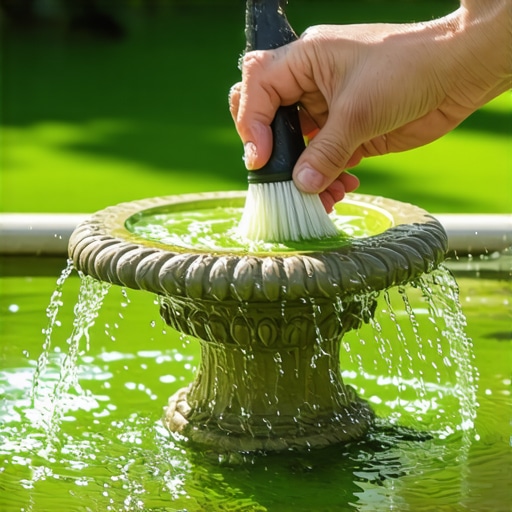
I recently got called out to examine a $12,000 tiered limestone fountain that a homeowner had effectively ruined. They used a high-pressure washer at 3,500 PSI to blast away green algae, thinking they were being thorough. Instead, they stripped the factory sealant and opened the microscopic pores of the stone, essentially creating a luxury hotel for the next generation of spores. This is the reality of stone maintenance: if you treat your hardscapes with a ‘mow-and-blow’ mentality, you are going to destroy your investment. Cleaning algae is not just about aesthetics; it is about managing the biological film that threatens the structural integrity of your yard’s centerpieces.
How to Clean Algae Off a Stone Fountain Safely
To safely clean algae off a stone fountain, you must utilize pH-neutral cleaners or mild mechanical agitation to remove the biofilm without etching the stone. Professional remediation involves draining the system, applying a biological enzyme or a diluted vinegar solution, and scrubbing with soft nylon brushes to protect the stone’s surface from pitting and long-term erosion.
The Forensic Reality of Algae Growth
Algae is not just a green stain. It is a complex organism that thrives on nitrogen, sunlight, and stagnant water. In many cases, I see fountains situated near a fresh sod install where the high-nitrogen fertilizer used to establish the grass leaches into the water feature. This creates a nutrient-rich soup. When your irrigation system overs sprays into the basin, you are constantly topping off the fountain with chlorinated tap water that can actually stress the stone’s finish while providing the exact minerals algae needs to bloom. Most people see green and reach for the bleach. Stop. Bleach can cause efflorescence, a process where salt crystals grow inside the stone and pop the face off your masonry.
“Algae growth is primarily driven by nutrient availability, specifically phosphorus and nitrogen, which act as a catalyst for rapid cellular division in aquatic environments.” – Cornell University Agricultural Extension
The Biofilm Breakdown: Why Your Stone is Slippery
The slime you feel on the stone is an Extracellular Polymeric Substance (EPS). This is a protective shield the algae builds. You cannot just rinse it off. You have to break the bond between the EPS and the stone. If your fountain is made of cast stone or concrete, it has a high alkalinity. Using acidic cleaners like undiluted muriatic acid will dissolve the lime in the concrete. You will end up with a pile of sand. For landscaping professionals, the goal is to preserve the stone’s ‘skin.’ Once that skin is gone, the fountain will never stay clean again because the surface area for algae to grip has increased tenfold.
Materials Comparison for Stone Remediation
| Cleaning Agent | Safe for Limestone? | Effectiveness | Risk Level |
|---|---|---|---|
| Bleach (Sodium Hypochlorite) | No | High | High (Salt damage/Pitting) |
| White Vinegar (Diluted) | Yes (if rinsed) | Moderate | Low |
| Hydrogen Peroxide (3%) | Yes | High | Very Low |
| Enzymatic Algaecides | Yes | High | Zero |
How do I keep pond water clear without killing birds?
This is a common question during a yard cleanup. The answer lies in oxygenation and enzymes. Stagnant water is the enemy. Use a pump that moves the entire volume of the fountain at least twice an hour. Add beneficial bacteria treatments that are labeled as bird-safe. These bacteria eat the nitrogen that the algae would otherwise use for fuel. It is basic biology. If there is no food, there is no algae. Check your pump intake regularly. A clogged pump reduces flow, lowers oxygen, and invites the green slime.
The Step-by-Step Cleaning Protocol
- Drain the System: Completely empty the fountain. Do not let the pump run dry; you will burn the motor.
- Mechanical Removal: Use a stiff nylon brush. Never use wire brushes on stone. You will leave metal fragments that will rust and stain the stone.
- The Solution: Mix 1 part white vinegar with 3 parts water. For tougher spots, a 3% hydrogen peroxide spray works wonders on organic stains without changing the stone’s pH.
- The Scrub: Work in circular motions. Focus on the water line and the underside of tiers where moisture lingers.
- The Rinse: Use a garden hose at low pressure. Ensure every bit of the cleaning solution is gone.
- The Seal (Optional): If the stone is dry, apply a breathable silane-siloxane sealer. This prevents water from soaking into the stone while letting vapor escape.
“Surface degradation on architectural stone occurs when aggressive chemical cleaning agents disrupt the natural binder of the mineral matrix, leading to irreversible friability.” – Hardscape Engineering Axiom
How much modified gravel do I need for a fountain base?
If you are installing a new fountain as part of a landscaping project, do not just set it on the soil. It will settle, tilt, and the water will spill over one side, leading to uneven algae growth. You need a 4 to 6-inch base of compacted #21A or 3/4-inch modified gravel. Calculate your square footage, multiply by the depth in feet, and then multiply by 1.5 to get the approximate tonnage. Compaction is non-negotiable. Use a hand tamper or a plate compactor until the base is rock hard. If it doesn’t ring when you hit it, it isn’t ready.
Maintenance Schedule for Long-Term Clarity
Don’t wait for the water to turn into pea soup. A fountain is a living system. Every week, add a capful of specialized fountain enzyme. Every month, do a 20% water change. This reduces the concentration of dissolved solids. During your seasonal yard cleanup, remove any decaying leaves immediately. One rotting leaf can provide enough phosphorus to trigger an algae explosion that will take weeks to fix. It is easier to prevent the bloom than to scrub the stone. Keep your irrigation heads pointed away from the stone. Hard water deposits from sprinklers create a white crust that algae loves to hide under. Do the work now, or pay me to replace the stone later. Choice is yours.