
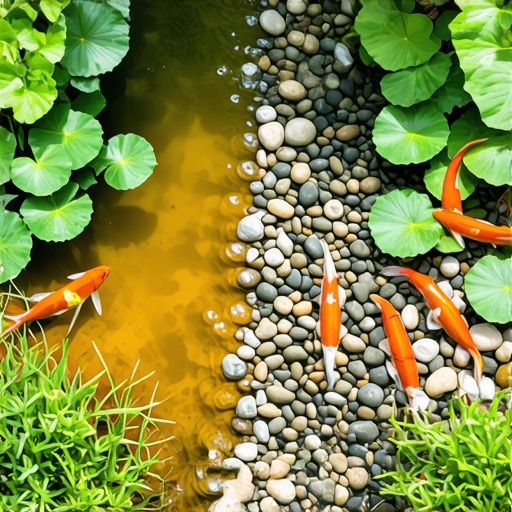
A murky pond is not just an eyesore; it is a failing ecosystem that screams of biological and structural mismanagement. When a pond loses clarity, you are witnessing a breakdown in the nitrogen cycle or a physical failure in the pond’s surrounding grading. In my twenty years of high end landscaping, I have seen too many homeowners treat their ponds like swimming pools, dumping in harsh chemicals that kill the very bacteria needed to keep the water clear. This approach is a death sentence for your aquatic life. Real clarity comes from understanding the interplay between nutrient loads, dissolved oxygen, and mechanical filtration.
The Chemical Nightmare: A Cautionary Tale of Sod and Runoff
I recently got called out to a property where a homeowner had spent a fortune on a professional sod install and a custom backyard pond. They wanted a perfect lawn and perfect water. However, three days after the sod was laid, they ignored my warnings and applied a high nitrogen liquid fertilizer to the turf. That night, a heavy thunderstorm hit. The runoff carried those nitrates directly into the pond. By the next afternoon, the water was a thick, opaque green, a classic case of an algae bloom triggered by nutrient loading. The fish were gasping at the surface because the algae was stripping the oxygen from the water. We had to perform an emergency water change and install a massive aeration system just to stabilize the biological oxygen demand. It was a $5,000 mistake that could have been avoided with proper grading and patience.
Understanding the Root Causes of Pond Turbidity
Pond turbidity is the measure of relative clarity in a liquid, caused by individual particles that are generally invisible to the naked eye. These particles can be organic, like planktonic algae, or inorganic, like suspended clay and silt. To fix the water, you must first identify which of these two culprits is dominating your water column. Brown water usually points to a physical issue, while green water indicates a biological imbalance.
How do I tell if my pond water is murky from algae or dirt?
To diagnose the cause of your murky pond water, fill a clear glass with the water and let it sit for twenty four hours. If the sediment settles at the bottom and the water above is clear, you have a mechanical filtration or erosion issue; if the water remains green, you are dealing with a planktonic algae bloom.
“A pond is a living organism, and its health is dictated by the balance of the nitrogen cycle, where ammonia is converted to nitrites and then nitrates by beneficial bacteria.” – Aquatic Ecosystems Manual
The Physics of Pond Filtration and Water Movement
Mechanical filtration is your first line of defense against suspended solids. If your pond lacks a skimmer or a properly sized biological filter, debris like leaf litter and grass clippings from your yard cleanup will sink to the bottom. Once there, they undergo anaerobic decomposition. This process releases methane and hydrogen sulfide, which are toxic to fish and turn the water a dark, tea like color. Your pump must be capable of moving the entire volume of the pond at least once every hour. If you have a 2,000 gallon pond, you need a pump rated for at least 2,000 gallons per hour at your specific head pressure. Anything less is just pushing dirty water around.
How much pond filtration do I need?
For most residential ponds, your biological filter should be sized at approximately 10 percent of the total pond volume to provide enough surface area for nitrifying bacteria. A properly sized UV clarifier is also essential for eliminating the single celled algae that causes green water without harming the larger ecosystem.
| Factor | Biological Imbalance (Green) | Physical Suspension (Brown) | Organic Tannins (Tea-Colored) |
|---|---|---|---|
| Primary Cause | High Phosphates/Nitrates | Soil Erosion/Clay Runoff | Decomposing Leaf Litter |
| Primary Fix | UV Sterilization/Beneficial Bacteria | Flocculants/Grading Correction | Active Carbon/Skimmer Maintenance |
| Critical Metric | Phosphate levels < 0.05 ppm | TSS (Total Suspended Solids) | Dissolved Oxygen Levels |
The Engineering Solution: Fixing the Source
Stop looking for a bottle of blue dye to hide the problem. You need to look at your landscape’s grading. If your lawn slopes toward your pond, every time you perform a yard cleanup or irrigation cycle, you are flushing organic matter into the water. We solve this by installing a French drain or a dry creek bed to redirect runoff away from the pond. This is fundamental civil engineering. You also need to check your sod install edges. If the soil is exposed at the water’s edge, it will constantly slough off into the pond, keeping the water brown. Rocking the edges with a mix of cobble and gravel will stabilize the bank.
“Eutrophication is the process by which a body of water becomes overly enriched with minerals and nutrients which induce excessive growth of algae.” – Penn State Agricultural Extension
Nitrogen and phosphorus are the fuel for murky water. While your irrigation system is vital for your lawn, over watering can lead to nutrient leaching. You must calibrate your irrigation to ensure water is penetrating the root zone of your grass without creating surface runoff. Use a rain sensor to prevent the system from running during storms, which is when the most pond contamination occurs.
The Multi-Step Remediation Checklist
- Test the water for ammonia, nitrites, nitrates, and phosphates using a professional grade titration kit.
- Increase aeration by adding a bottom diffused aerator to break the thermocline and increase dissolved oxygen.
- Add beneficial bacteria (Nitrosomonas and Nitrobacter) weekly to jumpstart the biological filter.
- Inspect the pump intake and skimmer basket for debris that could be restricting flow.
- Identify any areas of soil erosion around the perimeter and stabilize them with riprap or aquatic plantings.
- Install an ultraviolet (UV) clarifier to neutralize planktonic algae.
Why is my pond still murky after cleaning?
If your pond remains cloudy after a yard cleanup, you likely have suspended colloidal clay particles that are too small for mechanical filters to catch. In this scenario, you must use a flocculant, which clumps these microscopic particles together so they become heavy enough to sink or be captured by your filter pads.
Long Term Maintenance and Biological Stability
The secret to clear water is a massive amount of surface area for bacteria. This is why we use specific filter media and gravel beds. Do not use tap water to wash your filter mats; the chlorine will kill the beneficial bacteria and reset your nitrogen cycle to zero. Always use pond water for cleaning. Furthermore, your plant load should cover about 40 to 50 percent of the pond’s surface. Plants like lilies and marginals act as biological sponges, soaking up the nitrates that would otherwise feed algae. It is simple math: if the plants eat the food, the algae starves. Do not skip the fall cleanup. Removing dead lily pads and fallen leaves before they rot over winter is the only way to prevent a murky mess in the spring. You have to be proactive. Biology does not wait for you to be ready.