
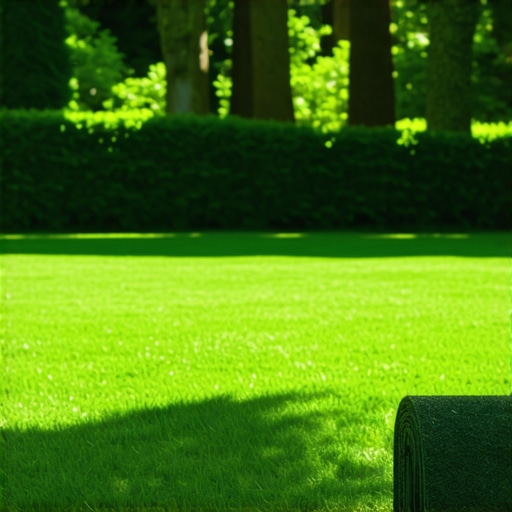
Laying 2026 Sod in Shade: Why Fine Fescue Rolls are the Engineering Solution for Low-Light Lawns
Planning a successful sod installation in 2026 requires more than just clearing a patch of dirt and rolling out green mats. In shaded environments, you are fighting against the fundamental biological limits of turfgrass. Most ‘mow-and-blow’ outfits will try to sell you a standard Tall Fescue or Bluegrass blend for a backyard with 80% canopy cover. They are setting you up for failure. Fine Fescue—specifically varieties like Hard, Chewings, and Creeping Red—is the only material that makes sense when your light levels drop below 600 micromoles of PAR during peak summer. If you don’t understand the physics of light penetration and the chemistry of soil acidity in the shade, you are just throwing money into a wood chipper.
What makes Fine Fescue the superior choice for shady 2026 landscapes?
Fine Fescue sod rolls are the optimal biological response to low-light environments because these specific cultivars possess a unique cellular structure that maximizes photosynthetic efficiency under canopy-filtered light, requiring significantly less nitrogen and water than standard Kentucky Bluegrass or Tall Fescue varieties.
I always drill into my new crew members: if you don’t fix the soil grading and chemistry first, every roll of sod you put in the ground is just expensive compost. Last season, I watched a homeowner waste four grand on premium sod because they ignored the ‘junk’ soil left behind by their pool contractor. The soil was so compacted it had the bulk density of a sidewalk. I told them straight: if a soil probe won’t go in six inches with one hand, your roots won’t either. We had to bring in a Harley Rake, incorporate three inches of organic leaf mold, and reset the entire grade to a 2% slope before a single blade of grass touched the property. That is the difference between a contractor and a landscaper.
“A lawn in the shade is not just a lawn; it is a high-stress biological system that requires precise management of the light-water-nutrient tri-factor to avoid fungal pathogens.” – Agronomy Field Manual for Professional Turf Managers
How much shade can fine fescue sod actually handle?
While the internet often claims grass needs ‘full sun,’ Fine Fescue can survive on as little as four hours of dappled sunlight. However, ‘surviving’ and ‘thriving’ are different metrics. For a 2026 sod install to maintain its density, you need to manage the micro-environment. This means thinning out lower tree limbs to increase airflow and light penetration. If you have standing water or a ‘squish’ factor when you walk, your sod will rot. Fine Fescue hates wet feet; it needs a well-drained profile where the gravitational water can move out of the root zone quickly.
| Feature | Fine Fescue (Shade Mix) | Tall Fescue | Kentucky Bluegrass |
|---|---|---|---|
| Light Requirement | 4-5 Hours Dappled | 6-8 Hours Direct | 8-10 Hours Direct |
| Drought Tolerance | High (if established) | Moderate | Low |
| Nitrogen Needs | 1-2 lbs per 1000 sq ft | 3-4 lbs per 1000 sq ft | 4-5 lbs per 1000 sq ft |
| Leaf Texture | Needle-like / Fine | Coarse | Medium / Soft |
The Engineering of the Soil Bed: Prep or Die
Before the sod truck arrives, your site prep must be surgical. We start with a soil test. Most shaded areas are acidic due to tree root exudates and decaying leaf litter. If your pH is sitting at 5.2, your Fine Fescue won’t be able to uptake nutrients, no matter how much fertilizer you dump on it. We aim for a pH of 6.2 to 6.5. This usually requires a calibrated application of pelletized dolomitic lime. Then comes the grading. Hydrostatic pressure isn’t just for retaining walls; it affects turf too. Water must move away from the house and tree trunks. We use a modified gravel base in high-traffic areas, but for the sod bed itself, a 70/30 mix of sandy loam and composted organic matter is the standard.
- Call 811: Never drop a tiller or a spade until the utilities are marked.
- Vegetation Kill-Off: Use a non-selective herbicide to kill existing weed seed banks two weeks before install.
- Soil Decompaction: Use a power rake or tiller to reach a 6-inch depth.
- Grading: Ensure a 2% minimum slope away from all structures.
- Starter Fertilizer: Use a high-phosphorus (the middle number on the bag) formula to encourage immediate root elongation.
- Moisture Check: The soil should be damp, not muddy, before the first roll is laid.
- Tight Seams: Butt edges tightly together; do not overlap or leave gaps.
- Rolling: Use a water-filled sod roller to ensure 100% soil-to-root contact.
- Initial Irrigation: Saturate the area immediately to a 4-inch depth.
- Stay Off: No foot traffic for at least 21 days while the primary roots knit into the substrate.
“Soil compaction is the primary reason for turf failure in residential landscapes, as it restricts oxygen exchange and prevents deep root development.” – Penn State Center for Turfgrass Science
How do I manage irrigation for sod in the shade?
Shady areas stay wet longer because there is less evaporation. This is a breeding ground for Pythium and Rhizoctonia. You cannot set your irrigation timer to the same schedule as the sunny front yard. Deep, infrequent watering is the mandate. You want to force the roots to chase the water down into the soil profile. Daily light misting is a death sentence for Fine Fescue; it keeps the crown wet and the roots shallow. Aim for one inch of water per week, delivered in two heavy sessions early in the morning—ideally between 4:00 AM and 8:00 AM.
2026 Maintenance: The First Twelve Months
Once the sod is down, the job isn’t over. Yard cleanup in the fall is critical. You cannot leave a layer of maple or oak leaves on top of Fine Fescue for more than three days. It will smother the grass, trap moisture, and kill the turf in a week. Use a blower, not a rake, to clear debris to avoid pulling up the young root system. Mowing height is also non-negotiable. For shade-grown Fine Fescue, keep your deck height at 3.5 to 4 inches. The more leaf surface area you leave on the plant, the more light it can harvest. If you scalp it down to 2 inches, you are starving the plant of its only energy source. Use a sharp blade. Dull blades tear the grass, leading to brown tips and disease entry points.