
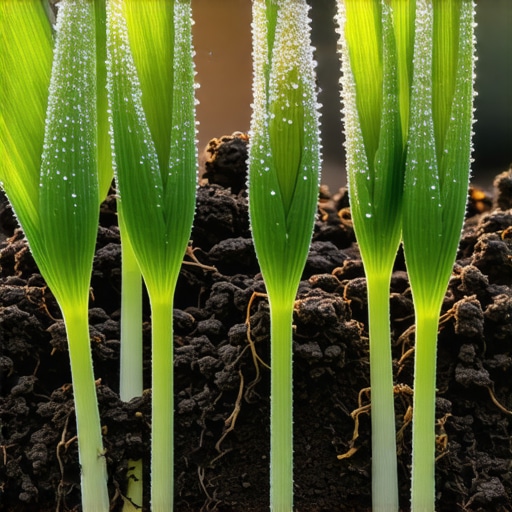
The ground was cold, but not cold enough. Last October, I walked onto a property where the homeowner had dumped forty pounds of annual rye over a layer of thick, unraked oak leaves and then saturated it with a high-nitrogen ‘weed and feed’ they bought at a big-box store. They called me three weeks later when their yard looked like a toxic mud pit. The chemical burn from the pre-emergent in that fertilizer had effectively sterilized the seed, and the lack of yard cleanup meant the few seeds that did germinate were suffocated by decaying organic matter. This is the ‘Chemical Nightmare’ I see every season: expensive seed wasted because the contractor or homeowner ignored the biology of the soil. If you are planning for 2026, you cannot afford to guess.
The Critical Window for 2026 Winter Rye
To successfully seed 2026 winter rye, you must plant when soil temperatures drop between 50°F and 65°F, typically 6 to 8 weeks before the first hard frost. This timing ensures the Lolium multiflorum establishes a root system capable of surviving winter dormancy while preventing early-season fungal rot. Timing is everything. Start too early, and the heat will fuel Pythium blight. Start too late, and the first hard freeze will shatter the cell walls of the tender blades before they have hardened off.
Why Soil Temperature Trumps Air Temperature
Air temperature is a liar. It fluctuates wildly. Soil temperature is the true metric for germination. In 2026, we are looking at a projected transition zone shift that may delay the first frost by ten days. You need a probe. Push a soil thermometer four inches into the ground at 10:00 AM. If it reads 70 degrees, put the seed back in the shed. We are waiting for that sweet spot where the summer heat has dissipated but the microbial activity in the soil is still high enough to facilitate nutrient uptake.
“A successful turf establishment is 10% seed quality and 90% seed-to-soil contact and environmental timing.” – Agronomy Field Manual, Section 4
The Forensic Breakdown of Soil Preparation
Most ‘mow-and-blow’ crews will tell you to just throw seed on top of your existing lawn. They are wrong. It will rot. You need to perform a deep yard cleanup followed by mechanical intervention. This isn’t about aesthetics; it is about engineering a growth environment. You need to remove the thatch layer—that spongy mat of dead grass and debris that prevents water and oxygen from reaching the roots. If your thatch is thicker than half an inch, your rye won’t stand a chance.
| Action Item | Technical Specification | Impact on 2026 Yield |
|---|---|---|
| Soil pH Check | 6.2 to 7.0 pH | Determines nutrient bioavailability |
| Core Aeration | 2.5 – 3 inch depth | Relieves compaction; increases oxygen |
| Seed Rate | 10-15 lbs per 1,000 sq ft | Prevents overcrowding and damping off |
| Irrigation Depth | 1 inch per week | Forces deep root architecture |
How much water does annual rye need to germinate?
For the first 14 days, your irrigation system should be set to frequent, light misting cycles—roughly three times a day for 5 to 10 minutes—to keep the seed bed moist but not anaerobic. Once the rye reaches two inches in height, you must pivot. Stop the frequent misting. You need to move to deep, infrequent watering. This forces the roots to chase the moisture down into the soil profile. Shallow roots lead to winter desiccation. Deep roots lead to survival.
The Role of Irrigation and Hydrostatic Pressure
When we talk about irrigation, we aren’t just talking about sprinklers. We are talking about drainage. If your yard has poor grading, winter rye will drown in the low spots. I’ve seen $10,000 sod install jobs fail in a single winter because the landscaping contractor didn’t account for hydrostatic pressure and water pooling against the foundation. Before you seed, check your grades. If water isn’t moving away from your house at a minimum of 2% slope, your winter rye will become a swamp.
“Surface drainage is the most neglected aspect of residential turf management; without it, even the hardiest cool-season grasses will succumb to anaerobic stress.” – Penn State Agricultural Extension
When is it too late to plant winter rye?
If you miss the window where soil temperatures are above 50°F, you are gambling. Once the soil hits 40°F, the metabolic processes of the seed slow to a crawl. You might get a ‘green haze,’ but the root system will be non-existent. In 2026, if you haven’t hit the ground by the first week of November in the transition zone, save your money. At that point, you’re better off waiting for a dormant seeding in late winter or a full sod install in the spring.
The Pre-Seeding Checklist
- Conduct a Soil Test: Do not guess at your NPK ratios. Most yards are phosphorus-deficient during the seeding phase.
- Perform Yard Cleanup: Scalp the existing warm-season grass to 1.5 inches to allow light to reach the new seed.
- Core Aeration: Use a hollow-tine aerator. Spike aerators just increase lateral compaction.
- Calibrate Spreader: Test your equipment on a paved surface first to ensure an even 12 lbs/1000 sq ft distribution.
- Irrigation Check: Ensure all heads are providing head-to-head coverage. Dry spots in rye look like scorched earth.
The Biological Reality of 2026
Landscaping is not a decoration; it is a living system. Winter rye is a greedy feeder. It wants nitrogen, and it wants it early. But don’t dump 46-0-0 urea on it. You want a slow-release starter fertilizer that won’t spike the salt index of the soil. High salt kills the beneficial mycorrhizae that the roots need to thrive. If you ignore the microbiology, you’re just growing a temporary carpet that will vanish at the first sign of 2027 heat. Do it right. Fix the soil. Time the frost. Or don’t do it at all.