
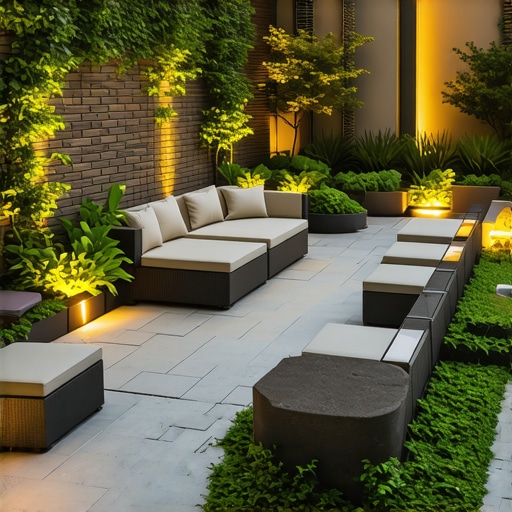
Engineering the Small Footprint: Beyond the Perimeter
Small backyard 2026 layouts maximize square footage by integrating vertical engineering, multi-functional hardscape zones, and high-efficiency sub-surface irrigation. By prioritizing soil stabilization and drainage gradients, property owners can recapture up to 40% of unusable footprint previously lost to slope or poor vegetation management. This is not about aesthetics; it is about site-specific civil engineering on a micro-scale. Every square inch must perform a structural or biological function. If it doesn’t serve the drainage plan or the usage zone, it is wasted space. Most people think of their yard as a flat surface. I think of it as a three-dimensional volume of soil, water, and pressure. When you are working with limited square footage, you cannot afford a single mistake in the base layer.
The Hardscape Autopsy: Why Small Yards Fail
I recently got called out to tear up a $30,000 patio that was sinking because the previous contractor thought two inches of paver sand on top of uncompacted fill was enough. It was a disaster. The homeowner saw a ‘pretty’ surface for six months, but the hydrostatic pressure from the spring thaw turned that base into a slurry. The entire project shifted three inches toward the foundation of the house. We had to excavate down to virgin subgrade, install a geogrid for stabilization, and rebuild the entire drainage profile from the ground up. This is the reality of small-scale landscaping. You don’t have the luxury of space to hide poor engineering. If your base fails in a 200-square-foot yard, the whole yard is dead. Don’t be the person who pays for the same patio twice because you hired a guy with a truck and a shovel instead of a laser level and a plate compactor.
“A retaining wall doesn’t fail because of the stone; it fails because of the water trapped behind it.” – Hardscape Engineering Axiom
The Ground-Up Build: Materials and Compaction
Success in a small backyard begins with what you don’t see. For 2026 layouts, we are moving toward permeable systems that manage stormwater on-site rather than shedding it into a neighbor’s property. This requires a tiered material approach. You need 2A modified crushed stone for the sub-base, compacted in 2-inch lifts. If you try to compact 6 inches at once, the middle stays soft. It will settle. You want a Proctor density of at least 95%. I tell my crew that the tamper should literally bounce off the compacted base. That is how you know it’s ready. In small spaces, we also utilize ‘edge restraints’ that are mechanically fastened into the base, not just spiked into the dirt. This prevents the lateral ‘creep’ that ruins small patios over time.
| Material Layer | Function | Recommended Depth | Compaction Target |
|---|---|---|---|
| Subgrade (Soil) | Foundation | Excavated to 12″ | 90% Proctor |
| 2A Modified Gravel | Load Bearing | 6-8″ (in lifts) | 95% Proctor |
| #57 Open Graded Stone | Drainage/Storage | 4″ (if permeable) | Static Fit |
| Polymeric Sand | Joint Stability | Full Depth of Paver | Zero Voids |
How much modified gravel do I need for a patio base?
To calculate modified gravel for a patio base, multiply your total square footage by the desired depth in feet (e.g., 0.5 feet for a 6-inch base) and divide by 27 to find cubic yards, then multiply by 1.5 to account for compaction shrinkage and density weight. Always round up by 10%. In small backyards, under-ordering is a logistical nightmare because a tri-axle truck won’t fit in your alleyway. You need to get your volumes right the first time. If you are building a 200-square-foot patio with a 6-inch base, you are looking at roughly 6 to 7 tons of stone. Do not skip this. A thin base is an invitation for frost heave and weeds.
The Irrigation and Sod Install Protocol
In a small yard, you cannot just spray water everywhere. You will rot your fence and create mold on your siding. 2026 layouts utilize sub-surface drip irrigation for planting beds and high-efficiency rotary nozzles for turf. If you are doing a sod install, the soil prep is 90% of the work. You need to till in 2 inches of high-quality compost to break up clay compaction. I don’t care how good the sod looks on the pallet; if you lay it on hard-pan clay, the roots will never dive. They will stay in that top one-inch layer of organic matter, and the first time the temperature hits 90 degrees, your lawn will toast. Deep roots are the only defense against heat stress. We use a 10-10-10 starter fertilizer to kickstart the phosphorus uptake, but only after a soil pH test. If your pH is 5.5, that fertilizer is just expensive salt.
“Planting a tree too deep is the most common cause of premature decline in urban landscapes. The root flare must remain visible at the soil surface to ensure gas exchange.” – ISA Arboricultural Standards
Small Backyard Layout Checklist for 2026
- Utility Marking: Call 811. Small yards often house the main gas and fiber optic lines. One wrong swing of a pickaxe and you’re in debt.
- Drainage Gradient: Ensure a minimum 2% slope away from the primary structure. Use a transit level, not a 4-foot bubble level.
- Verticality: Use trellises and espalier fruit trees to add biomass without sacrificing floor space.
- Smart Controllers: Install an irrigation clock with a rain sensor. Over-watering is the #1 killer of small-space plants.
- Yard Cleanup: Remove all invasive species and ‘volunteer’ trees (like Mulberry or Tree of Heaven) before they compromise your hardscape.
Will a small yard need a full irrigation system?
A small yard absolutely benefits from a dedicated irrigation system because the limited soil volume in raised beds and tight turf areas dries out 30% faster than larger acreage. Using pressure-compensated emitters ensures that every plant receives the exact gallon-per-hour requirement regardless of its position on the line. Manual watering in small spaces often leads to ‘soil splashing’ which spreads fungal pathogens like powdery mildew. An automated system, specifically one utilizing Netafim tech for sub-surface delivery, keeps the foliage dry and the roots hydrated. It is an investment in longevity, not a luxury.
The 2026 Maintenance Cycle
Once the install is done, the work doesn’t stop. The first year is the ‘settling in’ period. You will see some polymeric sand washouts; just refill them. You will see some sod seams; top-dress them with a 50/50 sand and compost mix. Don’t use big-box store weed-and-feed. It’s trash. Use a targeted pre-emergent in the spring (dimension) and a slow-release nitrogen in the fall. In a small yard, one weed looks like a forest. Keep it tight. Watch your irrigation levels. Most people drown their plants in the first month. Roots need oxygen just as much as water. If the soil is muddy, turn the clock off. It’s common sense, but common sense isn’t common. Landscaping is a science of observation. If you don’t watch the yard, you’ll lose it.