
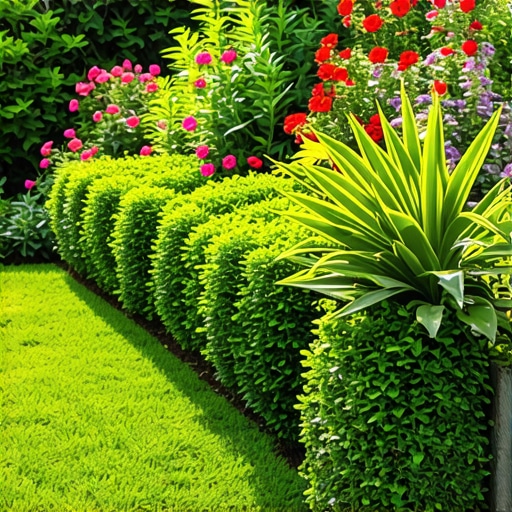
The Biology of Invasion: Why Grass Won’t Stay in Its Lane
To stop grass from growing into flower beds, you must install a physical barrier that extends at least 4 inches below the soil line to intercept rhizomatous root systems and maintain a 2-inch vertical ‘air gap’ or mechanical edge to prevent stoloniferous creep from bypassing the perimeter. Understanding the enemy is half the battle. Turfgrasses like Kentucky Bluegrass or Bermuda aren’t just plants; they are aggressive, colonial organisms. They don’t just grow; they colonize. They use underground runners called rhizomes and surface-level runners called stolons to hunt for the moisture and nitrogen-rich soil found in your garden beds. If you don’t build a structural defense, you’re not gardening; you’re just hosting a slow-motion invasion.
The Apprentice Lesson: Why Grading Matters More than Mulch
I always drill into my new crew members: if you don’t fix the soil grading first, every plant you put in the ground is just expensive compost. I remember a job back in ’04 where we spent three days just correcting the slope between a lawn and a massive rose garden. The homeowner thought I was wasting time. But here is the reality: if the bed sits lower than the lawn, every rainstorm washes grass seeds and nitrogen-heavy runoff directly into the mulch. That isn’t a flower bed; it is a nutrient-enriched petri dish for weeds. We cut a 4-inch deep V-trench, stabilized the soil with a heavy-gauge steel edge, and that border hasn’t moved an inch in twenty years. Professional landscaping is about physics and biology, not aesthetics. If the water flows toward the bed, the grass follows the water. It is that simple. Don’t skip the trenching.
“Turfgrasses are highly competitive for soil moisture and nutrients, and their root systems can extend far beyond the visible edge of the lawn if not physically restricted.” – Penn State Extension: Managing Turf and Ornamental Boundaries
The Mechanical Edge: The 4-Inch Rule
A mechanical edge, often called a ‘Victorian edge’ or ‘spade edge,’ is the most effective and least expensive way to stop turf encroachment if maintained properly. This involves cutting a clean, vertical 90-degree face into the soil exactly 4 inches deep. This depth is critical because it exceeds the standard depth of most turf rhizomes. The grass roots grow horizontally, reach the ‘cliff’ of the air gap, and stop because they cannot grow through the air. It is a biological dead-end. You must keep this trench clear of debris. If mulch fills the trench, it creates a bridge for the stolons to crawl over. Clean it twice a year. Use a half-moon edger or a power edger with a high-torque blade. Don’t just tickle the surface. Cut deep.
| Material Type | Expected Lifespan | Barrier Depth | Best For |
|---|---|---|---|
| Heavy-Gauge Steel | 25+ Years | 4-6 Inches | High-end residential, clean lines |
| UV-Inhibited Poly | 10-15 Years | 5 Inches | Curved beds, budget-conscious |
| Natural Stone (Dry-Stack) | 50+ Years | Variable | Rustic aesthetics, drainage control |
| Cast-In-Place Concrete | 30+ Years | 6-8 Inches | Permanent formal borders |
How deep should a garden edge be to stop grass roots?
To effectively stop invasive grass species, a garden edge must reach a minimum depth of 4 inches, though 6 inches is preferred for aggressive warm-season grasses like Bermuda or St. Augustine. This depth ensures that subterranean rhizomes cannot dive under the barrier. For cool-season grasses like Fescue or Bluegrass, a 4-inch barrier combined with a 2-inch mulch-free air gap at the surface is usually sufficient to prevent both underground and surface-level infiltration. Use a spade to check your depth every few feet. Consistency is the only way to ensure 100% exclusion.
The Hardscape Solution: Selecting Your Armor
If you don’t want to recut a trench every spring, you need a physical barrier. But not all barriers are created equal. Those cheap, 2-inch plastic strips from big-box stores are a joke. The sun’s UV rays will embrittle the plastic within two seasons, and the frost-heave will spit them out of the ground by February. You need professional-grade materials. I prefer 14-gauge cold-rolled steel. It’s thin enough to disappear into the landscape but tough enough to stop a power mower’s wheels and thick enough to block every root. When installing, you must overlap the joints by at least 4 inches and secure them with 12-inch steel stakes. Anything less will buckle under the hydrostatic pressure of the soil when it freezes.
Does mulch prevent grass from spreading into beds?
Mulch alone does not prevent grass from spreading; in fact, improperly applied mulch can encourage grass growth by providing a moist, nutrient-rich medium for wind-blown seeds and stoloniferous creep. To use mulch as a barrier, you must first establish a mechanical trench and then apply a 2-3 inch layer of coarse-textured hardwood mulch, ensuring it does not fill the trench or touch the stems of your ornamentals. Avoid fine-textured mulches that behave like soil. You want mulch that ‘knits’ together to block light while allowing gas exchange. Mulch is a secondary defense, never the primary one.
“Failure in hardscape borders typically occurs at the transition zones where soil compaction is inconsistent, allowing water to pool and roots to penetrate.” – ICPI Tech Manual 2: Structural Edging Standards
The Chemical Layer: Pre-emergents and Soil pH
Sometimes mechanical and physical barriers need a little help. This is where pre-emergent herbicides and soil chemistry come into play. Grass thrives in a specific pH range (usually 6.0 to 7.0). If you’re growing acid-loving plants like Azaleas or Blueberries, keeping your bed pH lower (around 5.0 to 5.5) creates a chemical environment that is naturally hostile to turfgrass. Additionally, applying a pre-emergent like Prodiamine or Pendimethalin in early spring creates a ‘vapor barrier’ in the top inch of soil that prevents grass seeds from germinating. Just remember: these chemicals don’t know the difference between a grass seed and a flower seed. Don’t use them if you’re trying to grow perennials from seed. They are for established beds only.
- Step 1: Identify the grass species (Rhizomatous vs. Stoloniferous).
- Step 2: Excavate a 4-inch deep V-trench at the bed perimeter.
- Step 3: Install a professional-grade barrier (Steel or 5-inch Poly).
- Step 4: Backfill with non-organic material like crushed gravel at the base for drainage.
- Step 5: Top-dress with 3 inches of triple-shredded hardwood mulch.
- Step 6: Inspect the edge monthly for ‘bridging’ debris.
Irrigation Logic: Don’t Feed the Enemy
One of the biggest mistakes I see in high-end yards is poorly designed irrigation. If your sprinklers are hitting the first 12 inches of your flower bed while trying to water the lawn, you are literally inviting the grass to move in. This is called ‘over-spray,’ and it’s a primary driver of bed infestation. Your irrigation should be zoned. The lawn gets its water, and the beds get drip-line irrigation. Drip lines deliver water directly to the base of your ornamental plants, leaving the surface of the mulch dry. Grass seeds can’t germinate in dry mulch, and stolons won’t crawl across dry ground as easily. If the soil at the edge of the bed stays dry, the grass stays in the lawn. It is a simple matter of resource management. Control the water, control the boundary.