
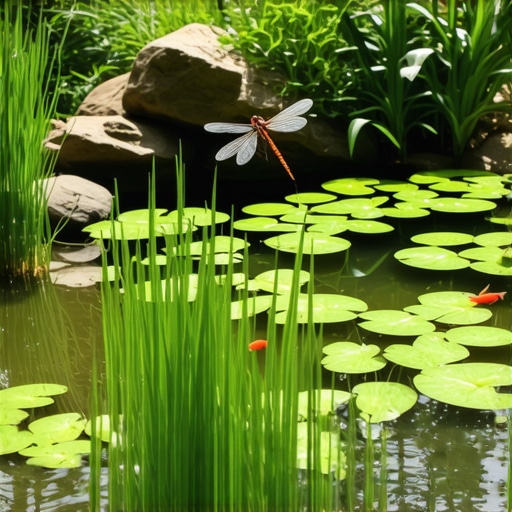
Designing Out the Problem: Why 80 Percent of Mosquito Control Happens Before the Water Goes In
To stop mosquitoes in a garden pond naturally, you must eliminate stagnant zones through hydraulic agitation, introduce specific biological predators like Gambusia affinis, and maintain water chemistry that favors larval pathogens like BTI. This engineering-first approach focuses on breaking the 7-to-10-day reproductive cycle of the mosquito by utilizing physical movement and ecological competition rather than toxic chemical applications that damage your landscaping ecosystem.
I always drill into my new crew members: if you don’t fix the soil grading first, every plant you put in the ground is just expensive compost. This applies double to water features. I once walked onto a job site where a homeowner had spent five grand on a DIY pond kit. Within three weeks, the thing was a stinking, black-water pit swarming with Culex mosquitoes. The issue wasn’t the water; it was the physics. They had zero circulation in the corners, creating pockets of anaerobic sludge. Mosquitoes don’t just like water; they like stagnant, nutrient-rich filth. If you don’t design for movement, you’re just building a bug factory. We had to rip the liner out, regrade the base to prevent ‘dead spots,’ and install a pump that actually met the head-pressure requirements for the waterfall. Don’t be that guy. Fix the engineering, or the bugs win.
“A garden pond is a managed ecosystem; when the biological oxygen demand exceeds the supply, the system shifts from a predatory environment to a breeding ground for opportunistic dipterans.” – Aquatic Systems Management Manual
How much water movement do I need to stop mosquitoes?
Surface tension is the mosquito’s best friend. Female mosquitoes require still water to deposit their egg rafts (naviculae). To disrupt this, your pump must turn over the entire volume of the pond at least once every hour. If you have a 1,000-gallon pond, you need a pump rated for at least 1,200 GPH to account for ‘head loss’—the vertical distance the water travels up to your spillway. Constant agitation makes it physically impossible for the larvae to breathe through their siphons at the surface. They drown. It is that simple. Keep the water moving, or keep the bugs.
The Biological Arsenal: Predators and Microbiological Warfare
Once your hydraulics are set, you turn the pond into a hostile environment. This isn’t about one single ‘silver bullet’ fix. It is about layers of defense. You start with the microbiology. Bacillus thuringiensis israelensis (BTI) is a naturally occurring soil bacterium. It isn’t a poison in the traditional sense. It produces crystalline toxins that, when ingested by mosquito larvae, destroy their digestive tract. It is highly specific. It won’t touch your dragonflies, your frogs, or your dogs. Use the ‘dunks’ or the granular form every 30 days. It is non-negotiable.
| Control Method | Primary Target | Longevity | Engineering Requirement |
|---|---|---|---|
| Surface Agitation | Egg Rafts/Larvae | Constant | 1.0x Volume Turnover/Hr |
| BTI (Microbiological) | 1st-4th Instar Larvae | 30 Days | Direct Water Contact |
| Predatory Fish | Active Larvae | Seasonal/Year-round | Minimum 18″ depth for overwintering |
| Plant Density Mgmt | Habitat Reduction | Ongoing | Regular yard cleanup and thinning |
Will goldfish eat mosquito larvae in my pond?
Yes, but they are lazy. If you overfeed them with flakes, they will ignore the larvae. For real control, use native minnows or ‘Mosquito Fish’ (Gambusia affinis). These small, aggressive feeders can consume their weight in larvae daily. However, be careful. Gambusia can be invasive in certain watersheds. Always check with your local agricultural extension before introducing non-native species into a pond that might overflow into local streams during heavy rain. If you just did a sod install and the grade isn’t settled, a heavy storm could wash your fish right into the municipal drain.
Vegetation Management and the Nitrogen Cycle
Plants are vital for filtration, but too many floating plants create the very stagnation you are trying to avoid. Water hyacinth or duckweed can quickly cover 100% of the surface. This traps heat and prevents your irrigation overflow or rain from disturbing the surface. Aim for 50-60% coverage max. This provides shade for fish—keeping the water cooler and more oxygenated—without creating a structural mat for mosquito breeding. During your regular yard cleanup, prune back aquatic plants. If leaves fall in and rot, they increase the organic load. High nitrogen equals high mosquito counts. Keep it clean.
“Effective mosquito management in ornamental ponds relies heavily on the maintenance of a high Dissolved Oxygen (DO) environment, which supports larval predators and accelerates the breakdown of organic waste.” – Penn State Agricultural Extension
The Maintenance Checklist for a Mosquito-Free Zone
- Check pump intake screens daily for debris to ensure maximum GPH flow.
- Apply BTI granules every 3 weeks during the peak heat of summer.
- Thin out floating vegetation to maintain at least 40% open water surface.
- Remove ‘string algae’ which provides a protective micro-habitat for larvae.
- Inspect the pond perimeter for any settling in your sod install that creates shallow puddles.
The Impact of Surrounding Landscaping
Your pond doesn’t exist in a vacuum. If your irrigation system is hitting the pond and causing it to overflow, you are leaching your expensive BTI and nutrients. Worse, if your yard has poor drainage, the ‘overflow’ creates muddy bogs in the grass. This is where Aedes mosquitoes love to lay eggs. Ensure your landscaping includes a French drain or a dedicated overflow pipe that leads to a dry well. Every time we do a pond install, we look at the entire yard cleanup strategy. If you have piles of old leaves or clogged gutters nearby, you’re breeding the very bugs you’re trying to keep out of the pond. It is a holistic system. Treat it like one. Don’t skip the details. It will rot if you do. Design for flow. Manage the biology. Enjoy the water.