
The Forensic Autopsy: Why This $30,000 Retaining Wall Crumbled
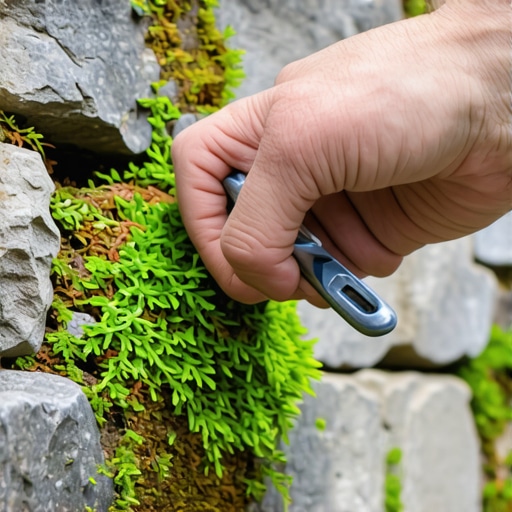
I recently got called out to tear up a $30,000 patio and retaining wall system that was literally sinking into the earth because the previous contractor ignored the basic laws of physics and biology. The homeowner thought the green moss growing on the north-facing side was a charming aesthetic choice. It wasn’t. That moss was a biological sponge holding thousands of gallons of water against the stone veneer and mortar joints. Over three winters, the freeze-thaw cycle expanded that trapped moisture, shattering the mortar and allowing hydrostatic pressure to push the wall six inches out of plumb. When we excavated, we found a saturated mess of rotted soil and no drainage stone. It was a total loss. This is why you don’t ignore moss. It is not just a plant; it is a structural threat that signals poor yard cleanup and failed moisture management.
What is the most effective way to remove moss from north-facing walls?
To remove moss effectively, use a stiff-bristled brush for mechanical removal, followed by a solution of zinc sulfate or diluted sodium hypochlorite at a 1:10 ratio to kill remaining spores. This prevents structural degradation caused by moisture retention and acidic secretions that weaken masonry joints and stone veneers.
The Biological Reality of North-Facing Surfaces
North-facing walls are the prime real estate for bryophytes because they lack direct sunlight, which means evaporation rates are nearly zero. In the landscaping world, we look at this through the lens of micro-climates. While your south-facing lawn might be struggling with heat stress, your north-facing hardscape is likely a swamp. Moss does not have a vascular system. It doesn’t have roots in the traditional sense; it has rhizoids. These tiny filaments anchor the moss to the stone and pull nutrients directly from the air and the minerals in your mortar. If you have an irrigation system that is overspraying onto these walls, you are essentially running a moss farm. Proper irrigation management is the first step in any yard cleanup routine. You need to adjust your spray heads to ensure they are hitting the sod install, not the vertical masonry. If the stone stays wet, the moss stays alive. It is that simple.
“A retaining wall doesn’t fail because of the stone; it fails because of the water trapped behind it.” – Hardscape Engineering Axiom
The Chemical Warfare: Zinc Sulfate vs. Bleach
Most homeowners reach for a pressure washer and blast the wall at 3500 PSI. This is a mistake. High-pressure water forces moisture deeper into the stone and can easily strip away the face of the brick or mortar. Instead, you need to use chemistry. Zinc sulfate is the professional choice for long-term control. It changes the pH of the surface, making it toxic to moss while remaining relatively safe for nearby plantings if used at the correct concentration. If you use sodium hypochlorite, commonly known as pool shock or bleach, you must be careful. It is highly effective at killing spores, but it can also oxidize any metal fixtures or railings nearby. Always pre-wet any surrounding plants before application to prevent chemical burn. I have seen guys ruin a brand new sod install by letting bleach runoff soak into the fresh roots. Don’t be that guy. Use a low-pressure pump sprayer and let the chemicals do the heavy lifting.
The Removal Method Matrix
| Method | Efficiency Rating | Structural Risk | Longevity |
|---|---|---|---|
| Pressure Washing | 9/10 | High (Erosion) | Short-term |
| Manual Scrubbing | 6/10 | Low | Medium-term |
| Zinc Sulfate Treatment | 8/10 | Very Low | Long-term |
| Vinegar (Acetic Acid) | 4/10 | Medium (Acidic) | Short-term |
How much does it cost to clean a retaining wall professionally?
Professional cleaning for a moss-covered wall typically costs between $1.50 and $4.50 per square foot, depending on the severity of the growth and the height of the structure. This price should include a soft-wash chemical treatment and a post-cleaning inspection of the mortar joints for any signs of spalling or structural failure.
Will power washing damage my mortar joints?
Yes, power washing can easily damage mortar joints if the nozzle is held too close or the PSI is set above 1500 for soft stone or 2500 for hard masonry. High pressure can carve out the binder material in the mortar, leading to water infiltration and eventual wall collapse during freeze-thaw cycles. Always use a wide-angle tip or a soft-wash system.
“Proper identification of the bryophyte species is less critical for management than correcting the environmental conditions of low light and high moisture.” – Penn State Agricultural Extension
The Role of Yard Cleanup and Drainage
If you want the moss to stay gone, you have to change the environment. This means aggressive yard cleanup. Remove any overhanging tree branches that are casting deep shade onto the wall. This increases airflow and allows the small amount of ambient light to reach the surface. Check your landscaping for signs of poor drainage. If water is pooling at the base of the wall, it will wick up through the stone via capillary action, keeping the entire structure damp. This is why we always install a perforated pipe and one-inch clean crushed stone behind any wall we build. If you don’t fix the water, you are just wasting money on cleaning. You might also consider a sod install with a high-drainage sandy loam base near the wall to ensure surface water moves away from the foundation quickly.
The Foreman’s Maintenance Checklist
- Inspect walls every spring for green film or fuzzy growth.
- Adjust irrigation timers to prevent night-time wall soaking.
- Clear leaf litter and organic debris from the wall base immediately.
- Check mortar joints for