
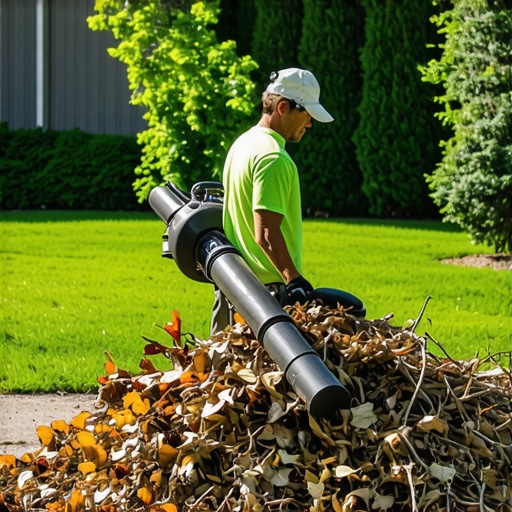
The Engineering of Yard Cleanup: Beyond the Surface
I always drill into my new crew members: if you don’t fix the soil grading and clear the deep-layer organic waste first, every plant you put in the ground is just expensive compost. Most homeowners see a mess; I see a biological bottleneck. Cleaning out years of garden debris is not a weekend hobby; it is a tactical extraction of biomass that has likely altered your soil chemistry and compaction levels over time. If you ignore the subterranean reality, your new sod or irrigation system will fail within twenty-four months. I have seen $50,000 landscapes rot from the bottom up because the contractor was too lazy to pull out the decaying root systems of invasive species. We do it right, or we don’t do it at all.
The Strategic Sequence for Clearing Years of Overgrowth
To clean years of debris, you must prioritize the bulk removal of organic matter before addressing soil composition. This involves a top-down approach starting with canopy thinning, followed by ground-level brush clearing, and finally root-system extraction to prevent immediate regrowth. Speed is a function of equipment and sequence, not effort. If you try to rake before you brush-hog, you are wasting 40% of your labor hours. We start with the heavy canopy to drop weight to the floor, then move in with skid steers or high-torque brush cutters. It is about mechanical advantage. Don’t skip the grading check. A flat yard is a swamp waiting to happen.
How do I clear a neglected backyard fast?
The fastest method involves using a commercial-grade brush hog or flail mower for the initial pass to reduce biomass volume. Following this, industrial-strength power rakes should be used to scarify the surface and pull up matted thatch and decaying wood. This mechanical approach replaces weeks of manual labor with hours of machine time. You need to get the debris down to a size that can be handled by a high-capacity chipper or hauled off in 30-yard dumpsters. Manual raking is for touch-ups, not for reclaiming a forest.
“Organic matter incorporation must account for the carbon-nitrogen ratio; high-carbon debris like wood chips can cause temporary nitrogen deficiency in the soil as microbes consume available nitrogen to break down the carbon.” – Cornell University Cooperative Extension
The Materials Breakdown: Why Quality Inputs Matter
When you transition from cleanup to landscaping and sod install, the source of your materials is the difference between a lawn that thrives and one that dies. I refuse to use big-box store sod or “general purpose” fill dirt. Those products are often infested with nutsedge or crabgrass seeds. We use nursery-grade stock with verified provenance. For irrigation, we use Schedule 40 PVC for main lines, never the thin-walled stuff that cracks the first time the ground shifts. We are looking at PSI ratings and flow rates. If your irrigation system cannot deliver 1 inch of water per week across every square inch of the property, your sod is doomed. Precision matters.
| Debris Type | Removal Tool | Soil Impact Factor | Disposal Method |
|---|---|---|---|
| Woody Brush | Flail Mower | High Carbon Loading | On-site Chipping |
| Leaf Mold/Thatch | Power Rake | pH Acidification | Composting |
| Invasive Roots | Root Rake Attachment | Structural Instability | Deep Burial/Haul-off |
| Dead Turf | Sod Cutter | Nitrogen Drawdown | Green Waste Recycling |
The Forensic Step-by-Step Debris Remediation Process
First, we perform a site survey to mark utilities. Call 811. If you hit a gas line, the cleanup becomes a hazmat scene. Next, we attack the vertical debris. Any dead limb over 2 inches in diameter comes down. Once the floor is covered, we bring in the heavy loaders. We aren’t just moving sticks; we are removing the top 2 inches of degraded organic material that has turned into a hydrophobic mat. This mat prevents water from reaching the subsoil. Once cleared, we test the compaction. If the soil is over 300 PSI, the roots can’t penetrate. We aerate or till depending on the site-specific needs. Then comes the grading. We aim for a 2% slope away from all structures. Water is the enemy of the foundation.
- Phase 1: Vertical thinning and canopy reduction.
- Phase 2: Surface biomass pulverization and collection.
- Phase 3: Sub-surface root extraction and rock picking.
- Phase 4: Soil pH testing and NPK amendment application.
- Phase 5: Rough grading and drainage verification.
What is the cost of professional yard debris removal?
Professional debris removal typically costs between $500 and $2,500 per acre depending on the density of the overgrowth and the local disposal fees. This price should include mechanical clearing, hauling, and initial site stabilization to prevent erosion immediately after the soil is exposed. Labor is the variable. If we can get a skid steer in there, the price drops. If it’s a tight-access backyard behind a row of townhomes where everything is hand-carried, the price doubles. You pay for access as much as you pay for the work.
“A retaining wall or graded slope doesn’t fail because of the stone or soil; it fails because of the hydrostatic pressure of trapped water behind it.” – ICPI Hardscape Engineering Manual
The Settling In: Post-Cleanup Care
Once the debris is gone and the sod is laid, the clock starts. You have a 14-day window where that sod is vulnerable. We set the irrigation timers for deep, infrequent cycles—not the misting nonsense people see on TV. We want to force those roots down. In year one, expect settling. Organic matter we couldn’t reach will decompose and create small depressions. It is normal. Don’t panic. Just top-dress with a sand-peat mix. If you see a mushroom, it’s a good sign. It means the soil biology is returning. But stay off the grass. Foot traffic on new sod is a death sentence. Let it root. Let it breathe. Then you can enjoy it.