
The Science of Crystal Clear Ponds: Engineering Algae Out of Your Landscape
I always drill into my new crew members: if you don’t fix the biological load first, every pond you build is just an expensive vat of liquid compost. I’ve seen enough $50,000 backyard projects turn into pea-soup nightmares within three months because the contractor focused on the ‘look’ rather than the limnology. A pond is not a static feature like a patio; it is a pressurized biological reactor. If you don’t understand the nitrogen cycle, you shouldn’t be digging holes. Algae isn’t a disease; it’s a symptom of a chemical imbalance, usually a surplus of nitrates and phosphates combined with insufficient dissolved oxygen. To keep a pond clear, you must out-compete the algae for resources. It’s that simple, and that difficult.
Why Your Pond Turns Green Every Summer
Pond algae blooms occur when nutrient levels—specifically nitrates and phosphates—exceed the processing capacity of the biological filter during peak sunlight hours. This imbalance is often caused by organic debris buildup, overstocked fish populations, and high-phosphorus runoff from nearby landscaping and sod install projects. To fix it, you must starve the algae at the molecular level. It will rot if you don’t manage the load. Don’t skip the chemistry. I’ve seen homeowners spend thousands on irrigation systems only to have the runoff from their fertilized lawn dump nitrogen straight into the water column. That’s a recipe for a yard cleanup nightmare later in the season.
“A pond is a closed system; every gram of nitrogen added through fish food or organic debris must be processed by beneficial bacteria or removed through mechanical filtration.” – Aquatic Biology Manual
How much UV sterilization do I need for a 2000-gallon pond?
For a standard 2000-gallon pond, you need a minimum of 18 to 25 watts of UV-C light to effectively kill suspended Chlorella algae. However, UV only addresses ‘green water’ (single-celled algae), not the stringy filamentous algae that clings to rocks. For that, you need manual removal and biological competition. I always recommend sizing your pump to cycle the entire volume of the pond at least once every hour. If you’re pushing 2000 gallons, your pump better be rated for at least 2500 GPH to account for head pressure loss. Anything less is a compromise that will lead to stagnation. Check the flow. Adjust the valves. Accuracy matters here.
The Role of Bio-Filtration and Nitrogen Conversion
Your pond’s ‘kidneys’ are the beneficial bacteria living on the surface area of your filter media. These bacteria, specifically Nitrosomonas and Nitrobacter, convert toxic ammonia into nitrites and then into less harmful nitrates. If your filter media is too small or lacks oxygen, the cycle breaks. This is where most ‘mow-and-blow’ contractors fail. They throw in a few bags of lava rock and call it a day. Professional setups use K3 media or high-density Matala mats. We need surface area. More surface area equals more bacteria. More bacteria equals less food for algae. Use the math. Don’t guess.
| Control Method | Mechanism | Pros | Cons |
|---|---|---|---|
| UV Sterilization | UVC Light Radiation | Eliminates green water quickly | High electricity cost; no effect on string algae |
| Beneficial Bacteria | Biological Competition | Natural; long-term stability | Requires consistent dosing and high oxygen |
| Barley Straw | H2O2 Production | Organic; low cost | Slow acting; unpredictable results |
| Ionization | Copper Ions | Kills string algae on contact | Can be toxic to invertebrates and some fish |
Can I use well water to fill my pond?
Well water is often high in dissolved minerals and can contain high levels of phosphates or nitrates depending on local agricultural activity. Before filling your pond or topping it off after a yard cleanup, test the water for PH and phosphate levels. High phosphate levels in your source water act as high-octane fuel for algae. If your well water is the culprit, you’ll need a phosphate binder or a dedicated pre-filter. I’ve seen sod install crews use well water that was so high in iron it turned the pond orange before the algae even had a chance to turn it green. Test your source. Know your baseline.
“Phosphorus is the limiting nutrient in most freshwater systems; control the phosphorus, and you control the bloom.” – Penn State Agricultural Extension
Strategic Planting for Nutrient Sequestration
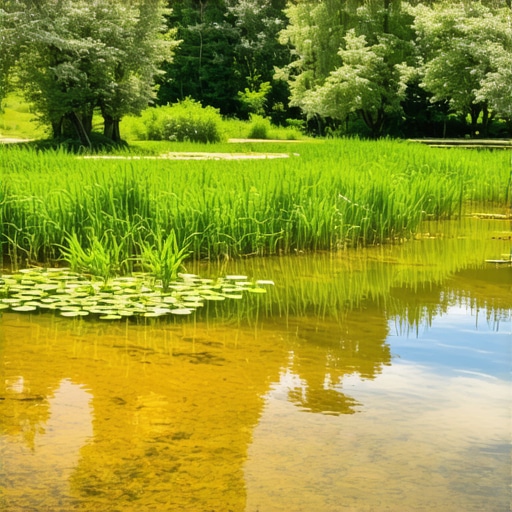
Plants are your best allies in the war against algae. You want at least 50% to 60% of the pond surface covered by lily pads or floating plants like Water Lettuce. This does two things: it shades the water, preventing the sun from fueling photosynthesis in algae, and it pulls nitrates directly from the water. Marginal plants like Iris pseudacorus or Pickerelweed act as natural bog filters. If you don’t have a bog filter, build one. It’s just a shallow area where water is forced through the root systems of gravel-planted perennials. It’s nature’s most efficient strainer. It works better than any chemical you can buy at a big-box store.
- Check your skimmer daily: Remove leaves and organic matter before they sink and rot.
- Maintain high dissolved oxygen: Install an aerator with a bottom diffuser. Surface bubbles aren’t enough.
- Monitor fish feeding: Only feed what they can eat in two minutes. Excess food is just algae fertilizer.
- Dose bacteria weekly: Keep the colony strong, especially during heatwaves when oxygen levels drop.
- Clean your mechanical filters: Don’t let the sludge build up. Wash mats in pond water, not tap water (chlorine kills the bacteria).
The Winter-to-Spring Transition
The most dangerous time for algae is early spring. The water warms up enough for algae to wake up, but your beneficial bacteria are still dormant. This is when you must be aggressive. Do a deep yard cleanup around the pond perimeter to prevent old leaves from blowing in. Perform a 25% water change. Start your UV light as soon as the threat of a hard freeze passes. I’ve seen guys wait until June to start their pond maintenance, and by then, the string algae is three feet long and wrapped around the pump intake. You can’t fix that with a bottle of chemicals; you fix that with a pressure washer and a sore back. Start early. Stay ahead of it. Discipline is the only thing that keeps a pond clear.