
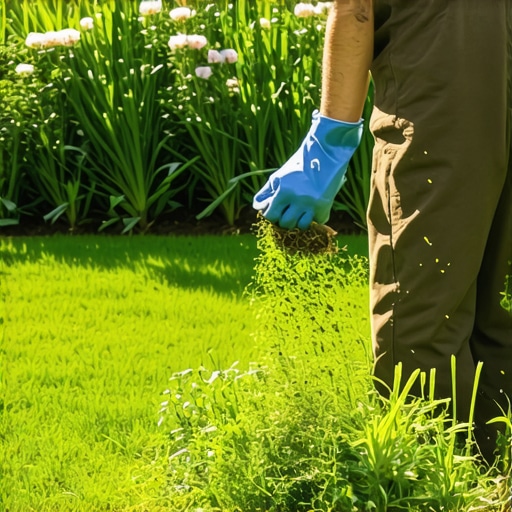
The ground is still cold, but the big-box flyers are already screaming at you to dump high-nitrogen salts on your lawn. Stop. Most homeowners kill their grass before the first dandelion even blooms. You see it every year: patches of yellowing turf, the squish of fungus-ridden soil underfoot, and the inevitable invasion of crabgrass. This is the visual autopsy of a failed spring strategy. I recently got called out to a property where a homeowner had completely torched their front lawn by applying a massive dose of 46-0-0 Urea fertilizer at high noon in 80-degree weather. The grass didn’t just turn yellow; it turned into crispy, chemical-scorched straw. The soil biology was essentially sterilized by the salt index. This is the price of following bad DIY advice instead of understanding the horticultural reality of your yard. Real landscaping isn’t about cosmetic fixes; it is about engineering a biological system that can withstand the stress of the coming summer. To do that, you have to ignore the marketing and look at the science of your soil.
The Biological Failure of Early Spring Fertilizing
Spring fertilizing fails when homeowners prioritize foliar growth over root development, often applying high-nitrogen products too early in the season. This creates weak, succulent top-growth that cannot survive the summer heat and bypasses the crucial window for pre-emergent weed control. When you force a plant to grow too fast, its cell walls are thin and weak. This is an open invitation for pests and fungal pathogens. If the soil temperature hasn’t reached a consistent 55 degrees Fahrenheit, the grass isn’t even truly awake. You’re just feeding the weeds that are already active. Most of that expensive fertilizer is simply leaching into the groundwater. It is a waste of money and an environmental hazard.
“Excessive nitrogen in early spring can stimulate top growth at the expense of root development, leading to turf that is less drought-tolerant.” – Penn State Extension
We see this constantly with “mow-and-blow” hacks who want the lawn to look green for two weeks so they can get paid, regardless of the long-term health of the turf. True turf management requires a focus on the Nitrogen Cycle and the Cation Exchange Capacity (CEC) of your soil. If your CEC is low—common in sandy soils—you can’t just dump nutrients and expect them to stay put. They wash away. You need to build organic matter first. This is where yard cleanup becomes more than just raking leaves; it is about removing the layers of debris that block sunlight and oxygen from reaching the crown of the grass plant. A dense thatch layer acts like a sponge for pathogens and a barrier for nutrients.
The Role of Yard Cleanup in Weed Suppression
Professional yard cleanup involves removing debris that harbors fungal pathogens and prevents sunlight from reaching the soil, which is vital for early season turf density. Removing matted leaves allows the soil to breathe and ensures that pre-emergent barriers reach the soil surface directly. If you apply a pre-emergent over a layer of oak leaves, you have effectively done nothing. The weed seeds underneath will germinate the moment the light hits them. You are essentially building a nursery for crabgrass. You must clear the deck before you play the hand. This includes mechanical de-thatching if your layer exceeds half an inch. Anything more than that prevents water from reaching the root zone, leading to localized dry spots even if your irrigation system is running at full tilt.
How much modified gravel do I need for a patio base?
While the focus here is turf, many homeowners combine spring landscaping with hardscape projects. For a standard patio, you need a minimum of 4 to 6 inches of compacted modified gravel (often called 2A or CR6). To calculate the volume, multiply the square footage by the depth in feet, then divide by 27 to get cubic yards. Do not skip the compaction. If the base isn’t hit with a plate compactor until it literally bounces, your patio will settle within two seasons. This is civil engineering on a small scale. Hydrostatic pressure and freeze-thaw cycles do not care about your aesthetic goals; they only care about gravity and physics.
| Growth Stage | Ideal Soil Temp | Action Required | Fertilizer Ratio (N-P-K) |
|---|---|---|---|
| Dormant | Below 50°F | Yard Cleanup & Debris Removal | None |
| Awakening | 55°F | Pre-emergent & Slow Release N | 10-0-0 |
| Active Growth | 65°F+ | Core Aeration & Micronutrients | 20-0-10 |
Soil temperature is the only metric that matters in the spring. You can buy a soil thermometer for ten dollars, or you can watch the forsythia bushes. When they start blooming, the soil is hitting that 55-degree mark. That is your window for crabgrass prevention. If you miss it, you’ll be fighting a losing battle with post-emergents all summer, which are significantly more expensive and harsher on the environment. Weeds like Poa Annua and Chickweed are already established by then. You have to be proactive, not reactive. This is where the engineering mindset beats the gardening mindset every time.
Why Irrigation Calibration is Non-Negotiable
Your lawn requires exactly one inch of water per week, delivered in two deep sessions rather than daily misting to force the root system to extend deeper into the soil profile. Daily shallow watering is the fastest way to grow a crop of weeds. Weeds have shallow roots; they love a surface-level misting. Deep-rooted turf grass wants to chase the moisture down into the subsoil. If your irrigation nozzles are clogged or the pressure is poorly regulated, you’ll have sections of the yard that are drowning and sections that are desiccating. Check your zones. It is common to see a 30% difference in output between a head near the pump and one at the end of the line. Calibration is the difference between a resilient lawn and a high-maintenance disaster.
How to calibrate irrigation for new sod?
For a new sod install, you must monitor the moisture level twice daily for the first 14 days. Place tuna cans or rain gauges around the zone to ensure even coverage. You are looking for a consistent 0.25 inches per session during the establishment phase. Once the roots have knitted into the soil—usually when you can no longer pull up a corner of the sod—you must immediately transition to the deep-watering protocol. If you keep the sod too wet for too long, the roots will stay in the top inch of soil. This is called root girdling, and it will kill the lawn the moment the first July heatwave hits. It will rot. Don’t skip this transition.
- Step 1: Soil Test. Know your pH and nutrient levels before buying anything.
- Step 2: Deep Clean. Remove all leaf litter and thatch to expose the soil.
- Step 3: Edge and Mulch. Define your beds to prevent grass creeping into the soil.
- Step 4: Pre-emergent Timing. Apply when soil temps hit 55°F.
- Step 5: Irrigation Audit. Check every head for proper spray patterns and volume.
The remediation process for a failed lawn often requires core aeration. This is the process of pulling 3-inch plugs of soil out of the ground to relieve compaction. If your soil is hard as a brick, no amount of fertilizer will help. The roots need oxygen as much as they need water. In areas with heavy clay, compaction is the number one killer of turf. We use heavy, gas-powered aerators to break that surface tension. It looks messy for a week, but it is the single best thing you can do for the longevity of your landscape. Do not let anyone tell you that “liquid aeration” is a substitute for mechanical plugging. It isn’t. It’s a chemical shortcut that fails to address the structural integrity of the soil.
“A retaining wall doesn’t fail because of the stone; it fails because of the water trapped behind it.” – Hardscape Engineering Axiom
The same logic applies to your lawn. If your landscaping doesn’t account for drainage, the water will sit, the roots will suffocate, and the weeds will move in. Look at your grading. If the ground doesn’t slope away from your house at a minimum of 2%, you have a drainage problem that a bag of fertilizer can’t fix. You might need a French drain or a dry creek bed to move that volume. Landscaping is about managing water, light, and soil chemistry in a way that favors your desired species over the opportunistic ones. It is a constant state of biological warfare. If you aren’t arming your grass with the right tools—deep roots, proper pH, and timed nutrients—you’ve already lost the battle. Success in the spring is built on the work you do when the ground is still cold. Get the cleanup right, get the timing right, and the results will follow. Skip the shortcuts.