
The smell of damp, decaying wood chips is a familiar one in this industry, but it is often the scent of a ticking time bomb. When we pull up to a site for a yard cleanup or a sod install, the first thing I check is the proximity of organic mulch to the concrete slab. If I see six inches of shredded hardwood banked up against the siding, I know I’m looking at a future repair bill for the homeowner. Wood mulch near a foundation is a liability that compromises the structural integrity of the home. It is an invitation to pests and a reservoir for moisture that concrete was never meant to handle.
The Engineering Failure of Wood Mulch Near Concrete
Wood mulch acts as a biological sponge that traps moisture against foundations, leading to hydrostatic pressure increases and concrete efflorescence. By maintaining a high moisture content in the soil directly adjacent to the footer, wood mulch prevents the necessary drying cycles required to keep basements and crawlspaces dry. This constant dampness can accelerate the carbonation of concrete, leading to structural degradation over decades. It is not just about aesthetics; it is about moisture management.
I always drill into my new crew members: if you don’t fix the soil grading first, every plant you put in the ground is just expensive compost. I remember an apprentice, eager to finish a landscaping job in a high-end neighborhood, who started piling premium cedar mulch right over the weep holes of a brick veneer. I stopped him immediately. I explained that those holes are there for a reason. By covering them with organic material, he was essentially creating a highway for moisture to travel into the wall cavity. We spent the next three hours re-grading the entire bed to ensure a 2 percent slope away from the house before we even talked about ground cover. It’s a lesson in civil engineering that most ‘mow-and-blow’ outfits completely ignore. If the water has nowhere to go, it goes into your house. Simple as that.
“A retaining wall doesn’t fail because of the stone; it fails because of the water trapped behind it.” – Hardscape Engineering Axiom
The Entomology of Decay: Termites and Carpenter Ants
Subterranean termites and carpenter ants are attracted to the cellulose found in wood mulch, which provides both a food source and a thermal blanket for their colonies. When mulch is placed within three feet of a foundation, it creates a protected environment where these pests can forage without being exposed to predators or desiccation. The moisture retained by the mulch makes the soil easier for termites to tunnel through, eventually leading them to the sill plate of your home. It is a biological certainty that damp wood attracts wood-destroying organisms.
Does wood mulch attract termites to my house?
Yes, wood mulch provides cellulose and moisture, the two primary requirements for subterranean termite survival. While the mulch itself may not always be the primary food source, it acts as a bridge that allows termites to bypass chemical barriers and enter the foundation or siding of a structure undetected. Regular inspections are critical if mulch is present.
| Material | Pest Risk | Moisture Retention | Decomposition Rate | Foundation Safety |
|---|---|---|---|---|
| Hardwood Mulch | High | High | Rapid | Low |
| River Rock (1-3″) | Low | Low | None | High |
| Pine Straw | Moderate | Medium | Moderate | Moderate |
| Pea Gravel | Low | Low | None | High |
Hydraulic Conductivity and the Perched Water Table
The physics of soil moisture is often misunderstood by DIYers. When you lay a thick layer of organic mulch over compacted clay or even sandy loam, you create what we call a perched water table. The mulch holds onto water through capillary action, and because it is organic, it begins to break down into a fine, silty layer that clogs the pores of the soil beneath it. This reduces the hydraulic conductivity of the ground near your foundation. Instead of water draining away, it sits. This water then exerts hydrostatic pressure against the foundation walls. Over time, this pressure finds the smallest micro-cracks in the concrete, leading to seepage and mold growth in your basement. During a yard cleanup, we often find that the soil beneath old mulch is a foul-smelling, anaerobic mess because it hasn’t breathed in years.
“Excessive moisture in the foundation zone is the leading cause of structural instability in residential buildings.” – National Agronomy Manual
The Superiority of Inorganic Barriers
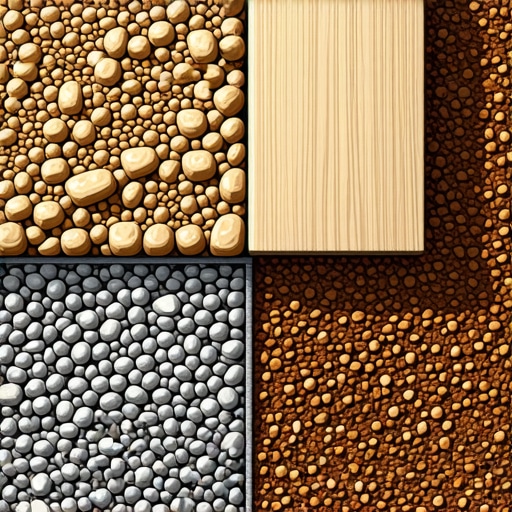
To solve the moisture and pest issue, we have shifted our landscaping protocol to use inorganic materials like river rock or washed gravel in the first 18 to 24 inches from any structure. This creates a dry zone. Rock does not decompose, it does not provide a food source for insects, and it allows for rapid evaporation. When paired with a professional-grade geotextile fabric, this setup ensures that water moves through the surface quickly and into the irrigation or drainage system rather than soaking into the foundation. This is a standard we never deviate from, regardless of the client’s initial preference for the look of wood.
What is the best alternative to mulch near a foundation?
The best alternative is washed river rock or crushed stone over a non-woven geotextile fabric. This inorganic barrier prevents weed growth while allowing the soil to breathe and moisture to evaporate quickly. It also eliminates the cellulose source that attracts termites and carpenter ants, providing a permanent solution that requires far less maintenance than wood mulch.
Foundation Landscape Maintenance Checklist
- Inspect Grading: Ensure the soil slopes away from the foundation at least 6 inches over the first 10 feet.
- Clear Weep Holes: Ensure at least 2 to 4 inches of the foundation is visible below the siding or brick line.
- Clear Debris: Remove all leaves and organic matter from the rock border during your yard cleanup.
- Check Irrigation: Ensure irrigation heads are not spraying directly against the house or saturating the foundation zone.
- Monitor for Pests: Look for mud tubes or ant trails every spring and fall.
We see a lot of sod install projects where the homeowner wants the grass to grow right up to the brick. I tell them no. You need that buffer. You need a place where the house can breathe and the water can escape. Landscaping is about more than just plants; it’s about protecting the largest investment you own. Don’t let a $5 bag of mulch cause $5,000 in termite damage or foundation repair. It is simply not worth the risk. [IMAGE_PLACEHOLDER]