
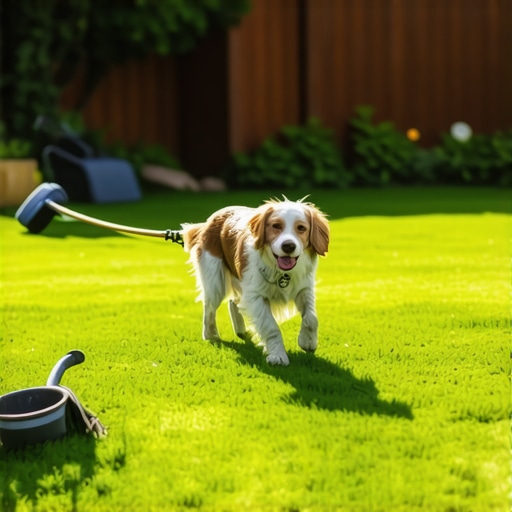
Those yellow, necrotic rings in your yard are not just an eyesore; they are chemical burns caused by concentrated nitrogen and salts. If your lawn looks like a minefield of dead patches, you are dealing with a localized overdose of urea that has physically dehydrated the plant tissue at a cellular level. It is a biological failure, not a mystery.
Why Dog Urine Kills Your Lawn
Dog urine kills grass because it contains high concentrations of nitrogen and dissolved salts, which cause osmotic stress. When the concentration of salts in the soil exceeds the concentration inside the grass roots, water is pulled out of the plant through reverse osmosis, leading to rapid desiccation and plant death.
As a professional who has spent two decades digging into the root zones of failing properties, I have seen it all. I recently got called out to a property where a homeowner had completely torched their front lawn by applying a heavy layer of 46-0-0 urea fertilizer right on top of existing pet spots. They thought they were helping. Instead, they increased the soil salinity to the point of sterilization. The grass didn’t just turn brown; it turned into a crispy, grey husk. We had to excavate the top four inches of soil and perform a full sod install because the soil microbiology was effectively nuked. This is the ‘Chemical Nightmare’ I see every spring. People treat their grass like a carpet when they should treat it like a living organism with a specific chemical threshold. When a dog urinates, it is essentially applying a liquid fertilizer with a nitrogen count far beyond what any turfgrass can metabolize at once. The result is a classic fertilizer burn, magnified by the pH of the urine itself.
“Excessive nitrogen concentrations in the soil create an osmotic imbalance, drawing water out of the root cells rather than into them.” – Texas A&M AgriLife Extension
The Science of Soil Salinity and Osmotic Stress
To understand how to fix these spots, you must understand the nitrogen cycle. Urea (CH4N2O) is the primary nitrogenous waste in canine urine. Once it hits the soil, urease enzymes break it down into ammonia and eventually nitrates. In small doses, this is beneficial. In the concentrated ‘dump’ of a 70-pound Labrador, it’s a localized toxic event. The salt index of the urine is the real killer. It binds to soil particles, preventing the roots from absorbing the actual H2O they need. This is why the edges of the spot are often dark green; the nitrogen is diluted enough at the periphery to actually act as a fertilizer, while the center is a dead zone. Fixing this requires more than a ‘quick green’ spray; it requires a systematic yard cleanup and chemical flushing of the soil profile.
How much water is needed to flush dog urine?
To effectively neutralize a fresh dog urine spot, you must apply at least three times the volume of the urine in water within eight hours of the event. For a standard large dog, this equates to roughly two to three gallons of water per spot to move the nitrogen below the root zone. This is a critical component of irrigation management for pet owners.
Is sod install better than seeding for pet spots?
A sod install is generally superior for pet spot repair because mature sod has an established root system that can better withstand minor pH fluctuations. Seeding into a urine-damaged area often fails because the residual salts in the soil prevent the delicate radicle of a germinating seed from surviving its first 48 hours.
Strategic Repair Protocols for 2026
If you are looking at dead spots right now, you have three options: flushing, neutralizing, or replacing. Flushing works only if the grass is still showing some yellow/green life. Once it’s straw-colored and pulls out of the ground with zero resistance, the crown is dead. It will rot. You cannot wish it back to life with a hose. At that point, you must physically remove the dead organic matter. This is where a thorough yard cleanup becomes mandatory. You need to rake out the dead thatch, scarify the soil to a depth of two inches, and incorporate a soil conditioner like gypsum (calcium sulfate). Gypsum doesn’t change the pH much, but it helps displace the sodium ions from the dog’s salts, allowing them to leach out during your next irrigation cycle.
| Grass Variety | Nitrogen Tolerance | Recovery Speed | Root Depth |
|---|---|---|---|
| Tall Fescue | Moderate | Slow (Clumping) | 8-12 inches |
| Kentucky Bluegrass | Low | High (Rhizomes) | 4-6 inches |
| Bermuda Grass | High | Very High | 6-10 inches |
| Perennial Ryegrass | Moderate | Moderate | 3-5 inches |
As the table shows, Bermuda grass is the king of recovery. Its aggressive rhizomatous growth means it can fill in a dead spot from the sides within weeks. However, if you live in a transition zone, you’re likely stuck with Tall Fescue. Fescue doesn’t spread. If a spot dies, it stays dead until you reseed it. Don’t skip the soil prep. If you just throw seed on top of a dead spot, you are wasting money on expensive compost. You must break the surface tension of the soil.
“High salt indices in canine waste disrupt the soil’s cation exchange capacity, leading to localized plant dehydration.” – Cornell University Turfgrass Program
The Professional Pet-Owner Maintenance Checklist
- Immediate Dilution: Keep a watering can near the ‘potty’ area. Saturate every fresh spot immediately.
- High-Mowing Heights: Keep your turf at 3.5 to 4 inches. Taller grass has deeper roots and more leaf surface to handle stress.
- Soil Testing: Conduct a soil test every spring to check your base nitrogen levels; over-fertilizing a pet-heavy yard is a recipe for disaster.
- Core Aeration: Perform this twice a year to reduce compaction and allow water to penetrate deeper into the soil profile.
- Gypsum Application: Apply pelletized gypsum to high-traffic areas to help mitigate salt accumulation.
Stop buying those ‘dog rocks’ or pills that claim to change your dog’s urine pH. Most of those are just salt-loading the dog to make them drink more water, or worse, altering their internal chemistry in ways that can lead to bladder stones. Fix the yard, not the dog. Your focus should be on soil health and proper irrigation. If your irrigation system isn’t hitting the corners where the dog prefers to go, those spots will never recover. Check your head-to-head coverage. A dry spot is a weak spot.
The Long-Term Engineering Solution
If you are tired of the constant repair cycle, you need to look at the structural engineering of your yard. Often, dog spots are exacerbated by poor drainage. If water sits on the surface, the urine sits there too. We often install ‘pet zones’ using decomposed granite or high-quality synthetic turf with a perforated backing and a 6-inch crushed stone base. This allows the urea to drain instantly into the sub-base where it can’t harm any foliage. It’s an investment, but so is replacing 400 square feet of sod every year because you can’t keep up with the nitrogen load. Professional landscaping is about solving the biological problem before it becomes a visual one. Focus on the soil, and the grass will follow. Ignore the soil, and you’re just decorating a graveyard.