
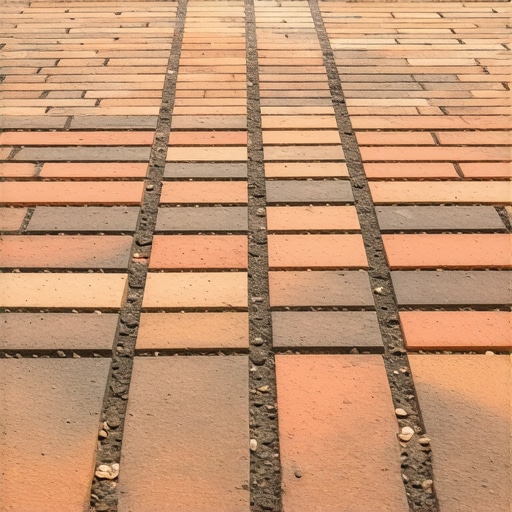
The Hardscape Autopsy: Why Your Patio Is Turning into a Meadow
I recently got called out to tear up a $30,000 patio that was sinking and overrun with vegetation because the previous contractor thought he could skip the compaction phase and use play sand in the joints. The homeowner was furious, watching thousands of dollars in hardscaping vanish under a carpet of crabgrass and clover. They had been told it was a maintenance-free installation. There is no such thing as maintenance-free in the world of dirt and stone, but there is such a thing as engineering against biology. Weeds do not typically grow from the soil beneath your bricks; they germinate from the top down in the organic debris that collects in the gaps. If your joints aren’t sealed with a stable, non-organic medium, you aren’t building a patio; you are building a very expensive planter box.
The Biology of Weed Infiltration in Paver Joints
To stop weeds permanently, you must eliminate the void space and organic accumulation between pavers using stabilized jointing materials like high-grade polymeric sand or epoxy resins. Most weed growth in hardscapes is the result of wind-blown seeds landing in degraded joint sand that has been saturated by improper irrigation or poor drainage. Stop thinking about the weeds and start thinking about the environment they thrive in. They need moisture, a place to anchor, and a food source. Most DIYers try to kill the plant, but the pro kills the habitat.
“A retaining wall doesn’t fail because of the stone; it fails because of the water trapped behind it. Similarly, a paver system fails when the joint integrity is compromised by moisture-retaining debris.” – Hardscape Engineering Axiom
Why Landscape Fabric Is a Lie
I see it on every amateur job site: rolls of cheap black fabric spread under the bricks. It is a waste of money. In a few years, dust and organic matter blow into the cracks from above. This creates a microscopic layer of soil. The weeds grow in that layer, and their roots eventually punch right through your expensive fabric. If you want to stop weeds, you don’t need a blanket; you need a density. You need to achieve 98% Proctor density in your base and a rock-hard seal in your joints. Don’t skip this.
The Forensic Breakdown of Jointing Materials
Not all sand is created equal. If you use masonry sand or play sand, you are asking for trouble. These materials wash out with the first heavy rain or a poorly aimed irrigation head. When the sand washes out, the gap fills with dirt. Dirt grows weeds. It is that simple. We use polymeric sand, which is a calibrated mix of sand and functional binders that turn into a flexible, glue-like substance when hydrated. This creates a barrier that is too hard for roots to penetrate and too dense for seeds to find a home. Unlike mortar, it stays flexible, so it won’t crack during freeze-thaw cycles. It is the gold standard for a reason.
| Material Type | Weed Resistance | Lifespan | Best Use Case |
|---|---|---|---|
| Play/Masonry Sand | Zero | 1 Season | Temporary leveling only |
| Polymeric Sand | High | 5-10 Years | Standard residential patios |
| Permeable Stone Chips | Medium | 20 Years | High-drainage areas |
| Resin-Bound Aggregates | Maximum | 15+ Years | High-traffic commercial or wet zones |
How much modified gravel do I need for a patio base?
For a permanent, weed-free installation, you need a minimum of 4 to 6 inches of compacted 2A modified gravel for a standard pedestrian patio. This base must be compacted in 2-inch lifts using a plate compactor to ensure there is no settling. If the base settles, the bricks shift. If the bricks shift, the joint seals break. Once that seal breaks, the weeds move in. It is a domino effect of failure. Measurement is everything. If you are eye-balling your base depth, you have already failed the project.
The Step-by-Step Remediation Process
If you have an existing patio that looks like a jungle, you have to perform a full joint-cleanout. You cannot just spray poison and hope for the best. You need to pressure wash the existing joints to a depth of at least one inch. Be careful not to blast out the bedding sand beneath the pavers. Once the joints are clean and bone-dry—and I mean 24 hours of zero humidity dry—you sweep in the new polymeric sand. You must use a plate compactor with a protective mat to vibrate the sand deep into the joints. This eliminates air pockets. Any air pocket is a future home for a dandelion.
Can I put new polymeric sand over old sand?
Absolutely not. New polymeric sand will not bond to old, dirty sand. It will create a thin shell that will flake off in weeks, a process known as scaling. You must excavate the top inch of the old material to ensure the new polymers have enough surface area to grip the vertical edges of the pavers. It is back-breaking work, but cutting corners here is why you are in this mess to begin with.
The Engineering Checklist for a Weed-Free Patio
- Excavate to a depth of 7-9 inches to accommodate base, bedding, and paver thickness.
- Install a geotextile fabric between the subgrade soil and the gravel base (this is the only place fabric belongs).
- Compact the gravel base until the tamper literally bounces off the surface.
- Use ASTM C-33 sand for the 1-inch bedding layer.
- Install edge restraints (plastic or aluminum) with 10-inch spikes every 12 inches to prevent lateral shifting.
- Sweep polymeric sand into joints and vibrate with a compactor.
- Remove all excess sand dust with a leaf blower before hydrating to avoid a white haze.
“Soil stabilization and moisture control are the primary factors in preventing invasive vegetation in hardscape systems. Without a compacted sub-base, the structural integrity of the jointing material will inevitably fail.” – Agronomy & Hardscape Manual, Section 4.2
The Maintenance Schedule: Year One and Beyond
Even a perfect install needs an eye kept on it. If you have an irrigation system, make sure the heads aren’t pointed directly at the paver joints. Constant high-pressure water will eventually erode the polymers. During your yard cleanup, don’t let wet leaves sit on the bricks. The tannins in the leaves can stain the stones and provide a nutrient base for moss. If you see a small crack in the joint, fix it immediately with a touch-up of sand. It will rot if you don’t. A little maintenance now saves a $30,000 autopsy later. It’s about engineering, not just aesthetics. Real landscaping is about outlasting the elements, not just looking good for the photo.