
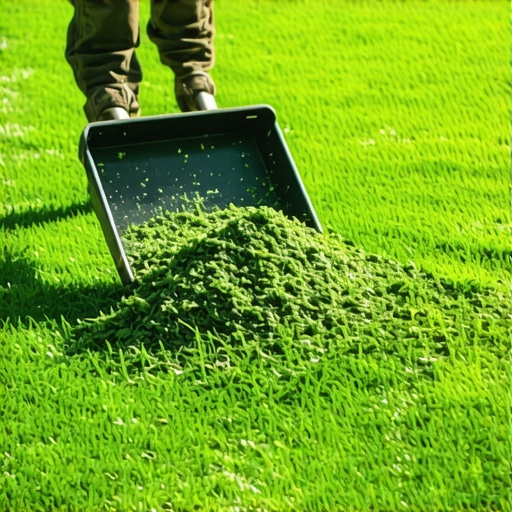
Why Topdressing is the Foundation of High-Performance Turf
Topdressing involves applying a thin layer of 70/30 sand-compost mix to an existing lawn to improve soil structure, level the surface, and stimulate microbial activity. This specific ratio provides the physical support of angular sand with the biological benefits of organic matter, ensuring your turf has the pore space necessary for gas exchange and deep root growth.
I always drill into my new crew members: if you don’t fix the soil grading first, every plant you put in the ground is just expensive compost. Most homeowners see a yellowing patch and think ‘more water’ or ‘more nitrogen.’ They are wrong. Usually, it is a compaction issue or a drainage failure. I have spent two decades watching guys throw $5,000 worth of premium sod on top of hardpan clay without any soil prep. Three months later, that sod install is a brown, hydrophobic mess. Topdressing is the professional way to prevent that death spiral. It is not just about aesthetics; it is about the civil engineering of the first six inches of earth.
The Engineering Logic of the 70/30 Mix
The 70/30 sand-compost ratio is the gold standard for a reason. You need the 70% sand to provide structural integrity and macropores. Without sand, the organic matter would eventually compact back down into a dense, anaerobic layer. The 30% compost provides the Cation Exchange Capacity (CEC), allowing the soil to actually hold onto the nutrients you are feeding it. If you use too much compost, the lawn stays too wet. If you use too much sand, you are basically growing grass in a desert. Precision matters here.
“A retaining wall doesn’t fail because of the stone; it fails because of the water trapped behind it.” – Hardscape Engineering Axiom
The same logic applies to your lawn. If your soil profile does not allow water to move vertically through the root zone, the water sits. It creates hydrostatic pressure on the root cell walls, effectively drowning the plant. When we perform landscaping at a high level, we are managing water movement first and biology second.
How much modified gravel do I need for a patio base?
While we are talking about soil physics, homeowners often ask this during a yard cleanup. For a standard patio, you need a minimum of 4 to 6 inches of compacted 21A or 3/4-inch minus gravel. This base prevents the settling and heaving that ruins landscaping projects. Without a compacted base, your topdressing efforts on the adjacent lawn will be undercut by poor site drainage.
Can I use play sand for topdressing my lawn?
Never use play sand. Play sand is typically rounded through erosion or mechanical tumbling. Rounded grains roll against each other and compact tightly, like marbles in a jar. You need angular masonry sand. These grains lock together while still leaving gaps—pores—for air and water to travel. Using play sand is a fast track to a concrete-like lawn surface.
| Material Property | Angular Masonry Sand | Screened Leaf Compost | 70/30 Pro-Mix |
|---|---|---|---|
| Drainage Rate | High | Low | Moderate-High |
| Nutrient Retention | Very Low | Very High | Moderate |
| Compaction Resistance | High | Low | High |
| Microbial Load | Low | Very High | Moderate |
The Implementation Protocol: Step-by-Step
Before you even touch the mix, you need a clean slate. This means a thorough yard cleanup. You cannot topdress over sticks, heavy thatch, or debris. You are building a layer, not hiding trash. Once the surface is clear, you must address irrigation. A dry lawn is a brittle lawn. You need the soil to be moist but not saturated. This ensures the topdressing material bonds with the existing soil profile rather than sitting on top like a crust.
- Core Aeration: Use a machine that pulls actual 3 inch plugs. Do not use the spikes that just push dirt sideways.
- Material Distribution: Drop the 70/30 mix in small mounds across the yard. One cubic yard usually covers 1,000 square feet at a 1/8 inch depth.
- Leveling: Use a specialized 36 inch lawn level or a landscaping rake. Work the material into the aeration holes.
- Hydration: Run your irrigation system for 10 minutes to settle the dust and push the fines into the soil canopy.
“Soil compaction is the single most restrictive factor for turfgrass root growth in urban environments.” – Penn State Center for Turfgrass Science
If you skip the aeration step, you are wasting money. The sand needs to get into the ground, not just sit on the blades. We call this ‘bridging.’ If the sand stays on the surface, it will dull your mower blades and do nothing for the roots. It must reach the root zone to change the soil texture.
Managing the Post-Installation Phase
After the application, your lawn will look like it has been through a war. That is normal. The grass will grow through the thin layer of sand and compost within 7 to 10 days. During this time, do not scalp the lawn. Set your mower to its highest setting. You want maximum leaf surface area to drive photosynthesis and recovery. If you are doing a sod install nearby, ensure the transition heights are matched so you don’t create a trip hazard or a drainage dam.
Check your irrigation heads. Often, the process of raking and leveling can bump a sprinkler head out of alignment. A single dry spot in a freshly topdressed lawn will bake the new organic matter and turn it into a hydrophobic brick. Watch the clock. Ten minutes of water, twice a day, for the first week is the rule. Deep, infrequent watering comes later. Right now, it is about moisture consistency.
How do I calculate how much topdressing material I need?
To calculate your needs, multiply your total square footage by the desired depth in inches, then divide by 324. For example, 5,000 square feet at 0.25 inches is (5000 x 0.25) / 324, which equals roughly 3.85 cubic yards. Always round up. You will lose some material to the aeration holes and uneven spots in the grade.