
Why Your High-Efficiency 2026 Drip Emitters are Failing
Drip emitter failure is typically caused by mineral calcification, biofilm accumulation, or particulate ingestion that restricts the flow of water to the root flare. Fixing these components requires an understanding of acetic acid concentrations and the chemical dissolution of calcium carbonate deposits. Use a distilled white vinegar soak to restore GPH (Gallons Per Hour) flow rates without damaging the silicone diaphragms inside the emitters.
I always drill into my new crew members: if you don’t fix the soil grading first, every plant you put in the ground is just expensive compost. I tell them this because I’ve seen $50,000 landscapes die within six months because a tech forgot to check the static pressure or ignored hard water scaling. We recently audited a site in a region with 18 grains of hardness. The 2026-spec pressure-compensating (PC) emitters were completely seized. The homeowner thought it was a pump failure. It wasn’t. It was calcium carbonate. The salt crust was so thick you could scrape it off with a flathead screwdriver. This is what happens when you treat irrigation as a set-it-and-forget-it utility instead of a precision engineering system. If you aren’t testing your water’s pH and mineral load, you are just waiting for your sod install to turn into a hay field.
“Mineral precipitates in micro-irrigation systems are a primary cause of non-uniformity, often requiring acid injection or manual cleaning to restore design flow specifications.” – Agricultural Extension Agronomy Manual
The Science of the Vinegar Soak: Breaking the Ionic Bond
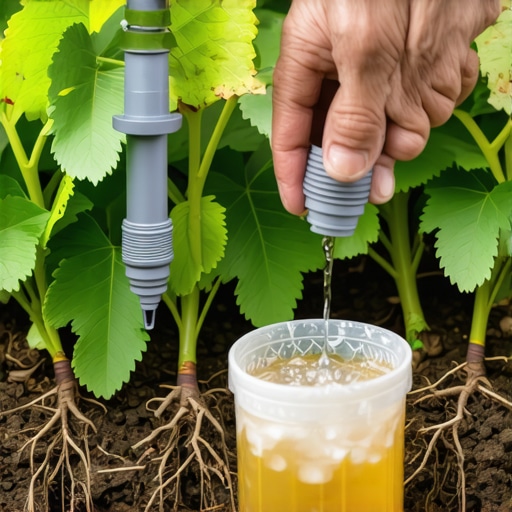
The vinegar soak trick works by utilizing acetic acid to chemically react with calcium and magnesium salts, converting solid limescale into a water-soluble calcium acetate. This reaction is critical for 2026 drip emitters that feature tortuous path designs, where even a 0.5mm blockage can reduce stomatal conductance in your plants. Don’t be fooled by hacks telling you to poke a needle into the emitter. You will ruin the check valve. Use chemistry instead. [IMAGE_PLACEHOLDER_1]
How do I know if my drip emitters are clogged?
Identify clogs by looking for localized dry spots, salt crusting on the emitter head, or reduced emitter discharge during a timed flow test. A healthy 2.0 GPH emitter should fill a small container at a consistent rate. If it’s dripping erratically, the internal labyrinth is compromised. Check the lateral lines for hydrostatic pressure drops. Low pressure at the end of a run often points to internal scaling across the entire circuit.
Will vinegar harm my plants if it leaks from the emitters?
When used as a soak solution for detached emitters, vinegar poses zero risk to your landscaping; however, if flushed through the system, it must be neutralized or heavily diluted. Acetic acid at high concentrations is a non-selective herbicide. It will scorch turf grass and alter soil pH if not managed. Always flush the irrigation lines with clear water for at least five minutes after any acid-based cleaning process to protect the microbiology of the root zone.
The Forensic Restoration Process: Step-by-Step
Restoring a clogged emitter isn’t just about cleaning; it’s about preventative engineering. You need to verify the micron rating of your irrigation filter before putting these back in the ground. If your filter is passing anything larger than 120 mesh, you’re just begging for another failure. Follow this How-To guide for 2026-gen hardware.
- Step 1: Excavate the emitter and disconnect it from the 1/4 inch distribution tubing.
- Step 2: Submerge the components in a 1:1 solution of 5% acetic acid (distilled white vinegar) and warm water.
- Step 3: Let soak for 12 to 24 hours. The effervescence you see is the CO2 being released as the calcium dissolves.
- Step 4: Use a soft-bristled brush to clear the orifice. Do not use metal wires.
- Step 5: Re-install and perform a pressure test to ensure the flow rate matches the manufacturer’s spec.
| Emitter Type | Common Failure Mode | Vinegar Soak Time | Recovery Rate |
|---|---|---|---|
| PC (Pressure Compensating) | Diaphragm scaling | 24 Hours | 95% |
| Non-PC (Standard) | Labyrinth blockage | 12 Hours | 88% |
| Adjustable Bubbler | Thread calcification | 6 Hours | 100% |
| In-line Drip Tape | Orifice sealing | Not recommended | Low |
The Engineering Reality of Hard Water in 2026 Systems
Modern 2026 irrigation systems are built to be efficient, which means they have smaller internal diameters. This makes them highly susceptible to hydrostatic failure when minerals build up. In cities with high alkalinity, your landscaping is under constant threat. A yard cleanup isn’t just about raking leaves; it’s about checking the integrity of your water delivery. If your sod install is starting to show brown edges, don’t just turn up the timer. That’s a rookie move. Check the emitters. Increasing the time on a clogged system just wastes water and increases soil salinity. You’re essentially brining your plants to death. Stop it.
“A retaining wall doesn’t fail because of the stone; it fails because of the water trapped behind it. Similarly, an irrigation system fails because of the minerals trapped inside it.” – Hardscape Engineering Axiom
I’ve seen guys spend thousands on pre-emergent and aeration while their drip lines are literally calcified shut. It’s incompetent. You need to treat the drip emitters like the fuel injectors in a high-performance engine. They need to be clean to atomize… or in this case, deliver… the payload correctly. If you’re dealing with heavy clay soils, the stakes are even higher. Poorly delivered water won’t penetrate the clay plate; it will just sit and evaporate, leaving even more salt behind. It’s a vicious cycle that ends in a total landscape replacement. Clean your emitters every spring. It’s cheaper than new nursery stock. It’s that simple. Get your hands dirty and fix it right. Don’t be a hack.