
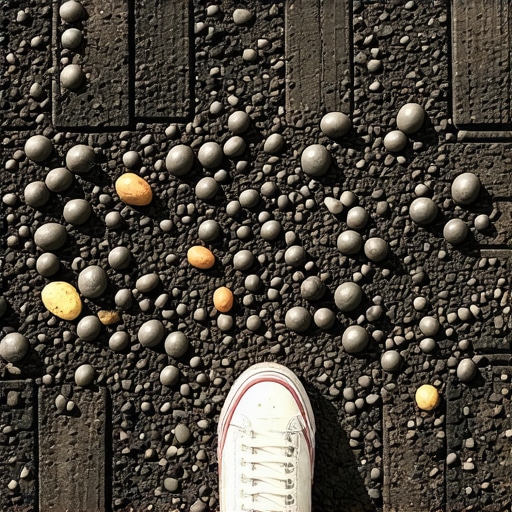
The Engineering Behind Surface Durability
Choosing the right mulch for heavy traffic areas requires understanding the physical properties of organic and inorganic matter under load. Durable mulch materials like double-shredded hardwood or engineered wood fiber provide the necessary structural interlocking to resist displacement while protecting the soil microbiology and irrigation lines from mechanical damage in high-use zones. Every year, I see the same mistake: homeowners buying bags of dyed mulch that float away during the first heavy rain or turn into a slippery mess. I always drill into my new crew members: if you don’t fix the soil grading first, every plant you put in the ground is just expensive compost. It starts with the base. If your grade is off, your mulch is just a dam for problems. We don’t just spread material; we engineer a permeable surface that can handle boots, paws, and equipment. You have to think about the friction coefficient of the wood fibers. Smooth bark nuggets are useless in a walkway. They roll like ball bearings. You need shredded fibers that knit together like a fabric. This interlocking action is what prevents the material from migrating onto your new sod install or clogging up your yard cleanup efforts. We are looking for high lignin content. Lignin is the glue that holds wood cells together. The more of it there is, the slower the mulch breaks down and the better it stands up to being stomped on.
Why Most Walkway Mulch Fails
Failures usually occur because the installer ignored the transition between the hardscape and the softscape. When you have heavy foot traffic, you are applying vertical pressure that translates into lateral displacement. Without a proper edge or a material with high internal friction, your mulch ends up in the lawn. This is why we avoid pine straw or large bark chunks in transit zones. They lack the mass and the shape to stay put. We also have to consider the Carbon to Nitrogen (C:N) ratio. Fresh wood chips will rob the soil of nitrogen as they decompose, which can yellow the edges of your turf. It is a biological tax you pay for using inferior materials. I have spent two decades fixing these mistakes. I have seen landscaping jobs where the mulch was piled six inches high against a tree trunk. That is a death sentence. It creates a moisture trap that invites fungal pathogens and rot. We call those mulch volcanoes. They are the mark of a hack. A professional knows that the root flare must always be visible. We are here to mimic the forest floor, not bury it in a landfill of dyed wood waste.
“A mulch layer that is too thick or composed of fine particles can become hydrophobic, repelling water and preventing it from reaching the root zone of the plants it is intended to protect.” – Purdue University Cooperative Extension Service
How much mulch is needed for a heavy traffic path?
For high-traffic footpaths, you should maintain a compacted depth of 3 to 4 inches of heavy-duty mulch to ensure adequate soil coverage and weed suppression while allowing for the eventual settling and decomposition that occurs under constant mechanical pressure. Start with a 2-inch base of coarser material and top with 2 inches of finer, interlocking fibers. This creates a tiered system. The bottom layer handles the drainage. The top layer handles the boots. If you go thinner than 3 inches, you will see the soil through the gaps within a month. If you go thicker than 4, you risk anaerobic conditions where the bottom layer turns into a stinky, slimy mess because it cannot breathe. Soil needs oxygen. Roots need to respire. If you choke the soil with 6 inches of mulch, you are killing the very plants you are trying to highlight. This is especially critical near irrigation heads. If your mulch is too deep, it will bury the pop-up heads, causing them to spray directly into the mulch instead of the lawn. That leads to localized flooding and dry patches elsewhere. It is a cascading failure.
| Mulch Type | Traffic Resistance | Decomposition Rate | Best Use Case |
|---|---|---|---|
| Double-Shredded Hardwood | High | Moderate | Main Walkways |
| Engineered Wood Fiber (EWF) | Very High | Slow | Playgrounds/Paths |
| Pine Bark Nuggets | Low | Slow | Ornamental Beds |
| Cedar Shreds | Moderate | Slow | Insect Prone Areas |
| Crushed Stone | Extreme | None | Permanent Paths |
Selecting Materials Based on Site Physics
Cedar and cypress are the heavyweights of the mulch world because they contain natural oils that resist rot and deter insects. But they are expensive. If you are doing a massive yard cleanup, you might be tempted by the cheap stuff. Don’t. Cheap mulch is often ground-up pallets that have been treated with chemicals or contain old nails. I have seen dogs get splinters from bad mulch that required vet visits. I use high-quality, aged hardwood. The aging process allows the initial nitrogen draw to happen at the composting facility, not in your flower bed. We also look at the texture. For a path, you want a ‘hairy’ texture. Those fibers grab each other. When you walk on it, the pressure actually helps lock the fibers together. It is self-reinforcing. Contrast that with stone. Stone is durable, but it holds heat. In the summer, a stone path can cook the roots of adjacent plants. It also doesn’t contribute anything to the soil. As a horticulturalist, I want my mulch to eventually become soil. I want that organic matter to feed the worms and the microbes. But I want it to happen on my schedule, not in three weeks. This is why we avoid softwoods like pine for high-traffic zones. They are too soft. They crush into dust underfoot. Dust doesn’t drain. Dust turns to mud.
“Mulches should be applied to a depth of 2 to 3 inches around most plants, but in areas with high foot traffic or where soil erosion is a concern, a slightly thicker layer of coarse material may be necessary to maintain soil integrity.” – Virginia Tech Dendrology Manual
How do I stop mulch from washing away in heavy rain?
To prevent mulch migration during heavy rain, you must install structural edging such as steel or heavy-duty plastic and ensure the soil grade slopes away from the path at a minimum of 2 percent to manage hydrostatic pressure and surface runoff effectively. Water is the enemy of any landscape install. If your mulch is floating away, your drainage is broken. You can’t fix a drainage problem with more mulch. You fix it with a shovel. We often install French drains or dry creek beds alongside high-traffic paths to give the water somewhere to go. We also use ‘tackifiers’ on steep slopes. These are organic glues that hold the mulch together until it knits naturally. But on flat ground, the right material choice is your best defense. A heavy, wet hardwood mulch is much harder to move than light, dry pine straw. Consider the particle size. If the pieces are too small, they behave like sand. If they are too large, they behave like debris. You want a mix of sizes to fill the voids. This is the same principle we use in hardscaping for gravel bases. It is all about the sieve analysis.
The Step-by-Step Installation Protocol
- Clean the area of all weeds and debris. This is a yard cleanup phase. Do not skip it.
- Check the irrigation system. Ensure all heads are at the correct height for the new mulch depth.
- Grade the soil. Create a slight crown in the center of the path so water runs to the sides.
- Apply a pre-emergent herbicide if the season is right. This stops weed seeds from germinating in the new mulch.
- Spread the first 2 inches of coarse mulch. Tamp it down lightly. This is your foundation.
- Apply the final 2 inches of shredded hardwood. Rake it smooth.
- Water the mulch immediately. This adds weight and helps the fibers settle and lock together.
Maintaining the High-Traffic Zone
Maintenance isn’t just about adding more material. It is about agitation. Every few months, take a pitchfork and turn the top inch of mulch. This breaks up any fungal mats (like dog vomit slime mold) and prevents the surface from becoming hydrophobic. It also freshens the color without adding more volume. If you just keep piling mulch on top of mulch, you will eventually have a path that is higher than your lawn. That creates a drainage nightmare. Your landscaping should work with the land, not against it. Eventually, the bottom layer will turn into rich, black humus. That is a good thing. It means your soil is healthy. When that happens, you might need to remove some of the old material before adding new. It is a cycle. You are managing a living system. Don’t treat it like a static carpet. Check for compaction. If the mulch gets too packed down, it loses its ability to cushion the soil. This can lead to soil compaction, which kills roots. Use a core aerator nearby if you notice the ground getting hard. Your sod install nearby will thank you for the extra oxygen. Professional landscaping is about the details. It is about knowing the difference between a 1-inch chip and a 3-inch shred. It is about understanding that water always wins, so you have to give it a path. Stick to the science, forget the big-box store advice, and build a landscape that actually lasts. It is hard work. It is dirty. But it is the only way to do it right. Anything else is just cutting grass.