
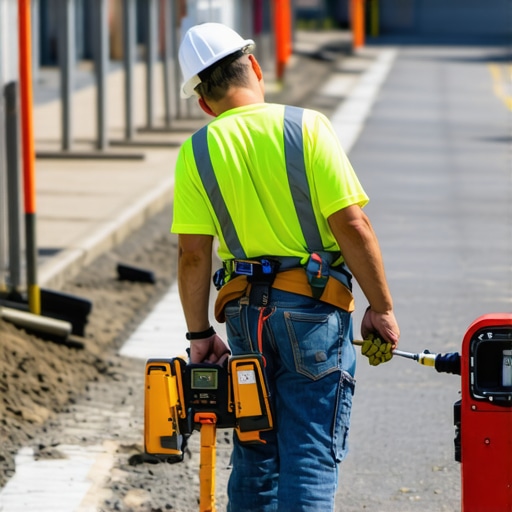
I always drill into my new crew members: if you don’t fix the soil grading first, every plant you put in the ground is just expensive compost. I saw this firsthand last summer when we took over a property after a massive sod install. The previous contractor had dumped six inches of screened topsoil directly over the existing irrigation manifold to level a slope without raising the valve boxes. By the time the sod took root, three critical master valves were buried under a thick mat of Bermuda grass. The homeowner was furious because half the yard was swampy while the other half was crisping up. We didn’t start by digging; we started by tracking the copper. If you start swinging a shovel without a locator, you are just a badger with a mortgage. Finding these 2026-era buried boxes requires more than luck; it requires an understanding of electromagnetic induction and grounding physics.
Why Irrigation Valve Boxes Disappear Under New Sod
Irrigation valve boxes disappear during landscaping or yard cleanup when the grade is raised without extending the box collars to the new surface level. Over time, sod install layers, organic debris, and soil settlement can bury these essential access points by 4 to 12 inches, making manual detection impossible. This creates a maintenance nightmare when a solenoid fails or a diaphragm ruptures. You cannot service what you cannot see.
The anatomy of a lost valve box is usually a story of laziness. Most ‘mow-and-blow’ guys won’t tell you that they just mowed over your access lids until they cracked, and then covered the evidence with mulch.
“A properly functioning irrigation system is the only way to protect a $20,000 sod investment from localized dry spots and fungal pathogens.” – Turfgrass Extension Office
When we go in for a yard cleanup, the first thing we do is locate every box. If the lid is missing, we replace it. If the box is low, we add a riser. If you ignore this, you’re essentially building a house and burying the circuit breaker panel behind the drywall. It is negligent and expensive.
How do I find a buried irrigation valve without a metal detector?
To find a buried irrigation valve without a metal detector, you must use a dedicated wire tracer that connects directly to the irrigation clock’s station wires. Unlike a metal detector which picks up any metallic debris in the soil, a wire tracer follows the specific electromagnetic signal generated along the copper wire leading directly to the solenoid inside the valve box.
[IMAGE_PLACEHOLDER]
The Physics of Wire Tracing and Signal Bleed
A wire tracer works by sending a high-frequency signal through the station wire, which then returns through the earth ground. The receiver wand picks up this electromagnetic field. However, you have to understand ‘signal bleed.’ In many 2026-standard residential systems, wires are bundled tightly. The signal can jump from your target wire to a common wire or even a nearby metal fence. This is why professional-grade locators are mandatory. Cheap units from big-box stores cannot filter out the 60Hz hum of nearby power lines, leaving you chasing ghosts in the dirt.
| Feature | Analog Tracer (Basic) | Digital Pro-Tracer (2026 Standard) |
|---|---|---|
| Depth Detection | 12-18 inches | Up to 10 feet |
| Interference Filtering | Minimal/None | Active 50/60Hz filtering |
| Inductive Mode | No | Yes (No direct hookup needed) |
| Price Point | $150 – $400 | $850 – $2,500 |
Precision matters. When you are tracking a signal, you are looking for the ‘null.’ As the wand passes directly over the wire, the sound should drop out or change tone significantly. If you are just waving a stick and digging where it beeps the loudest, you’re doing it wrong. You want to find the spot where the signal is most defined, usually directly above the solenoid coil.
“A retaining wall doesn’t fail because of the stone; it fails because of the water trapped behind it.” – Hardscape Engineering Axiom
The same logic applies to irrigation; the system fails because of the components you can’t see, trapped under poor drainage or compacted soil.
How much does a professional irrigation wire tracer cost?
A professional-grade irrigation wire tracer typically costs between $800 and $2,400 depending on its depth rating and signal filtering capabilities. High-end models allow for ‘grounding’ the transmitter to the soil, which creates a much cleaner circuit and allows for pinpointing valves buried under heavy clay or deep sand where cheaper units fail.
The Step-By-Step Locating Protocol
Do not skip the setup. First, disconnect the station wire and the common wire from the controller. If you leave them connected, you risk frying the transformer or getting a looped signal that goes nowhere. Connect the red lead of your transmitter to the station wire of the zone you’re hunting. Connect the black lead to a grounding stake driven into moist earth. This is key. If the soil is bone-dry, the signal won’t travel. I’ve been known to pour a gallon of water on my grounding stake just to get the conductivity I need. It works. Don’t skip this.
- Step 1: Clear the area of surface metal (mowers, tools).
- Step 2: Ground the transmitter to moist soil for maximum signal strength.
- Step 3: Set the frequency to ‘Low’ for better distance or ‘High’ for pinpoint accuracy.
- Step 4: Walk in a broad arc until the receiver detects the ‘path.’
- Step 5: Follow the path until the signal ‘blooms’ or ‘nulls’ abruptly—that is your valve.
Once you think you’ve found the spot, use a thin soil probe before you go ham with a spade. You should feel the plastic lid of the valve box. If you hit a rock, move two inches. If you hit the lid, you’ve saved yourself three hours of trenching. After you excavate, always install a box riser. Bring that lid up to the level of the sod install. It will save the next guy—and your wallet—from a repeat of this headache. Maintenance isn’t just about fixing what’s broken; it’s about making sure the system is accessible for the next twenty years. Stop burying your assets.