
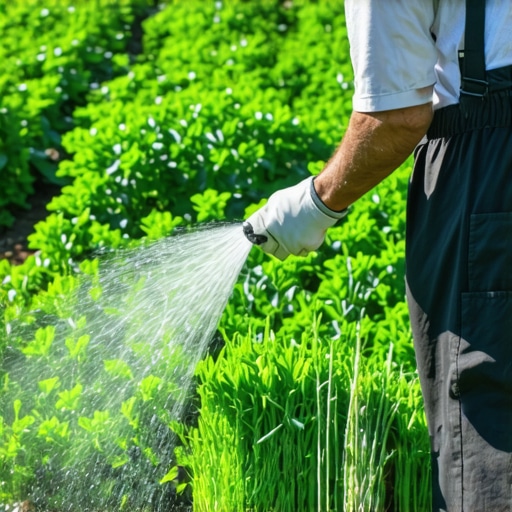
Stop 2026 Aphid Attacks: Professional Garlic Water Protocols for Landscaping
I always drill into my new crew members: if you don’t fix the soil grading and chemistry first, every plant you put in the ground is just expensive compost. I remember a job back in ’08 where a homeowner spent four figures on a specimen Japanese Maple, only to watch it get smothered by aphids in three weeks. They thought it was ‘bad luck.’ It wasn’t. They had a broken irrigation line that was drowning the roots, causing the plant to release stress signals that basically acted as a neon sign for every pest in the county. Aphids are the vultures of the plant world; they only show up when something is already dying or out of balance. If your landscaping is struggling, don’t blame the bugs—blame the maintenance logic.
Why Aphids Target Your 2026 Landscaping Early
Aphids target stressed plant tissue and nitrogen-heavy growth caused by excessive fertilization or improper irrigation cycles that weaken cell walls. These soft-bodied pests utilize a piercing-sucking mouthpart called a stylet to drain the phloem, leading to catastrophic leaf curl, chlorosis, and the transmission of systemic plant viruses across your yard cleanup zones.
When we talk about the 2026 season, we are looking at specific climate shifts that favor early emergence. If you performed a sod install late last fall, those young roots are especially vulnerable. The primary issue isn’t the bug itself; it’s the honeydew they secrete. This sticky waste product is a substrate for sooty mold, which blocks photosynthesis. It’s a physiological downward spiral.
“Plants with high soluble nitrogen levels in their foliage are significantly more susceptible to piercing-sucking insect infestations.” – University of California Integrated Pest Management (IPM) Manual
How much garlic spray do I need for a large yard?
For a standard 1/4 acre lot, you need approximately 5 gallons of diluted garlic solution to ensure total coverage of the leaf undersides. Do not just mist the tops. You must achieve a physical drench that contacts the insects directly. Most contractors fail here because they use cheap hand-pump sprayers that lack the 40-60 PSI required to penetrate the dense canopy of a mature shrub. Use a professional-grade backpack sprayer with a 100-mesh filter to prevent the garlic solids from clogging your nozzle.
The Forensic Autopsy of a Failed Pest Program
Most DIYers fail because they treat symptoms, not systems. Look at your soil. If you’ve been dumping high-nitrogen ‘turf food’ everywhere, you are forcing the plant to grow faster than its structural integrity can handle. This results in ‘soft’ growth. Aphids love soft growth. It is easy to pierce. In my 20 years, I’ve seen more damage done by over-fertilizing than by drought. It’s a chemical burn that starts from the inside out. Then there is the irrigation issue. If your spray heads are hitting the foliage of your roses or perennials every night, you are creating a high-humidity microclimate. That is an incubator for pests and fungus. Check your timers. Water the soil, not the leaves. Deep, infrequent watering—exactly 1 inch per week—is the rule. Anything else is just asking for a headache.
| Treatment Method | Active Mechanism | Persistence | Risk Level |
|---|---|---|---|
| Garlic Water Spray | Allicin Repellency | 3-5 Days | Zero (Organic) |
| Neem Oil | Hormonal Disruption | 7-10 Days | Medium (Heat Sensitive) |
| Imidacloprid | Systemic Neurotoxin | 3-6 Months | High (Pollinator Risk) |
| Ladybug Release | Direct Predation | Variable | Low (Flight Risk) |
The Professional Garlic Water Recipe: 2026 Modification
This isn’t your grandmother’s kitchen spray. This is a concentrated horticultural repellent. To make a batch that actually works, you need to extract the diallyl trisulfide effectively. Take two pounds of fresh garlic cloves—not the pre-peeled junk—and mince them into one gallon of water. Let it sit for 48 hours. This isn’t a suggestion; it’s a chemical requirement for the allicin to stabilize. After 48 hours, strain it through cheesecloth and add two tablespoons of a high-quality surfactant. In the field, we use castile soap. The surfactant is critical because it breaks the surface tension of the water, allowing the spray to ‘stick’ to the waxy cuticle of the leaf. Without it, your spray just beads up and rolls off, wasting your time and money.
What is the best time to spray for aphids?
Apply the spray at dawn or dusk when temperatures are below 80 degrees Fahrenheit. Spraying in the midday sun will cause a phytotoxic reaction—basically, the water droplets act as magnifying glasses and scorch the leaves. This is especially true for new sod install areas where the grass hasn’t fully established its heat tolerance. Professional landscaping requires timing, not just effort.
“A retaining wall doesn’t fail because of the stone; it fails because of the water trapped behind it.” – Hardscape Engineering Axiom
This principle applies to biology too: your plants don’t fail because of the bugs; they fail because of the environmental stressors you allowed to persist.
The 2026 Landscape Cleanup Checklist
- Inspect the root flare of all trees. If it’s buried under a ‘mulch volcano,’ pull it back. Root suffocation leads to aphid-attracting stress.
- Check irrigation emitters for clogs. Uneven watering creates ‘weak spots’ in the garden that aphids exploit.
- Perform a yard cleanup that focuses on removing deadwood and leaf litter where aphid eggs overwinter.
- Audit your fertilizer bag. If the first number (Nitrogen) is over 20, stop using it on ornamental beds.
- Calibrate your sprayer to 50 PSI for maximum leaf underside penetration.
Stop looking for a magic bullet in a bottle. Successful landscaping is about managing the microscopic reality of your soil and the hydraulic reality of your watering. Garlic water is a fantastic tool to repel the 2026 aphid surge, but if your plants are drowning in poorly graded clay or starving for minerals, no amount of garlic will save them. Do the work. Fix the soil. Watch the bugs disappear. It’s not magic. It’s engineering.