
The Forensic Autopsy of a Dying Lawn
New sod is a biological investment on life support. When you see a brown patch in a field of green, you are looking at a structural failure. It is not just a lack of water; it is a breakdown in the hydraulic connection between the nursery mat and your native subgrade. I have seen homeowners dump thousands of gallons on a dying lawn only to find the soil underneath is bone dry. The water is hitting a hydrophobic barrier and running off sideways. This is where the pitchfork becomes a precision engineering tool. We are not just poking holes. We are creating vertical conduits for life. I always drill into my new crew members: if you don’t fix the soil grading and the soil-to-root contact first, every piece of sod you put in the ground is just expensive compost waiting to happen. You can have the best irrigation system in the county, but if the water cannot bridge the gap between the organic mat of the sod and the mineral soil of the yard, the grass will starve in a flood.
Why New Sod Develops Localized Dry Spots
Dry spots in new sod occur when air pockets or localized hydrophobic soil conditions prevent moisture from reaching the root zone. This usually stems from improper site preparation or a textural interface conflict where the sod farm soil differs significantly from the local subgrade soil, causing water to deflect.
The science here involves hydraulic conductivity. When sod is cut at the farm, it loses 90 percent of its root mass. It is in a state of extreme shock. If your yard has heavy clay and the sod came from a sandy loam farm, the water will struggle to move between these two distinct textures. This is known as a perched water table effect. The water sits in the top layer, saturating the thatch, but never enters the clay. The roots, sensing no moisture below, refuse to dive deep. They stay shallow, get cooked by the sun, and the spot turns brown. You aren’t fighting a drought; you are fighting physics.
“Effective turfgrass establishment requires the elimination of air pockets and the maintenance of continuous moisture at the interface between the sod and the soil surface.” – Penn State Center for Turfgrass Science
How to fix brown spots on new sod?
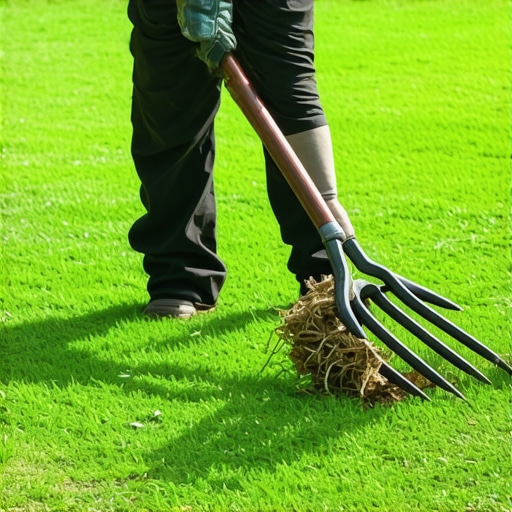
Identify if the spot is actually dry by performing a screwdriver test. Push a long screwdriver into the brown patch. If it meets heavy resistance or comes up bone dry despite your irrigation running, you have an infiltration problem. The pitchfork method involves inserting the tines 4 to 6 inches deep into the soil at a 45 degree angle and gently levering the handle back. This creates a cavity without destroying the surface canopy. This allows air and water to bypass the hydrophobic thatch layer. It is a manual aeration technique that breaks the surface tension and forces the water to go where it is needed most. Do not skip this. If you just keep watering the surface, you are inviting Pythium blight and other fungal pathogens to feast on the rotting thatch while the roots die of thirst below.
| Symptom | Probable Cause | Technical Solution |
|---|---|---|
| Uniform browning | Systemic Underwatering | Increase Zone Run Time |
| Isolated 6-inch circles | Air Pockets/Poor Contact | Pitchfork Venting and Tamping |
| Soggy but brown | Fungal Pathogen/Root Rot | Fungicide and Reduced Frequency |
| Dry soil under wet grass | Hydrophobic Interface | Wetting Agents and Pitchforking |
The Pitchfork Remediation Protocol
The professional remediation of a dry spot involves mechanical venting with a pitchfork followed by the application of a soil surfactant to break water surface tension. This process ensures that irrigation water moves vertically into the subgrade rather than horizontally across the thatch, promoting deep root architecture.
When I go out to a job site where the sod is failing, the first thing I check is the compaction. Often, the “mow-and-blow” crews have run heavy equipment over the yard while the soil was wet, tamping it down into a brick. No root can penetrate a soil with a bulk density higher than 1.6 grams per cubic centimeter. You need pore space. By using the pitchfork, you are manually reintroduced macro-pores into the soil profile. This is not a suggestion; it is a requirement for gas exchange. Roots need oxygen just as much as they need water. If the soil is waterlogged on top but dry underneath, the roots are essentially suffocating and dehydrating at the same time. It is a brutal way for a lawn to go out.
How much water does new sod need?
While the internet tells you to water every day, new sod actually needs deep, infrequent watering after the first fourteen days to force roots to chase the water down. During the first two weeks, keep the soil consistently moist but not a swamp. You are looking for approximately 1 inch of water per week, delivered in a way that penetrates at least 4 inches into the ground. A common mistake is five minutes of irrigation every morning. This only wets the top half inch. In the heat of the afternoon, that water evaporates, and the roots stay at the surface where they get scorched. You need to train your grass to be resilient. Use a catch-can test to measure your irrigation output. Place tuna cans around the yard and see how long it takes to fill them to the 1 inch mark. You might be surprised to find your “automated” system is only delivering a quarter inch.
“Irrigation frequency should be reduced gradually to encourage deeper rooting, which is the primary defense against environmental stress in turfgrass.” – Texas A&M AgriLife Extension
Step-By-Step: The Pitchfork Deep-Drip Method
- Identify the localized dry spot using a soil probe or screwdriver.
- Insert the pitchfork tines at the edge of the brown area, going 5 inches deep.
- Gently rock the fork to create a small underground void.
- Repeat every 3 inches across the entire affected patch.
- Apply a liquid soil surfactant or a drop of non-detergent soap to the area to break surface tension.
- Hand-water the spot immediately for 10 minutes to flush water into the new conduits.
- Tamp the area lightly with your foot to ensure the sod is touching the soil inside the vents.
This process works because it addresses the micro-climate of the yard. If you have a south-facing slope or a spot near a concrete sidewalk, the heat load is significantly higher. Concrete acts as a heat sink, baking the soil from the side. These areas will always dry out first. You cannot treat the whole lawn the same. Precision landscaping means managing the outliers. If you ignore these hot spots, they will become the entry point for crabgrass and spurge. Weeds are opportunistic; they love a stressed lawn. Keep the sod healthy, and the canopy will do the weed control for you. It is cheaper to buy a pitchfork and spend twenty minutes in the yard than it is to hire me to tear everything out and start over next spring. Don’t be the homeowner who lets thirty grand of sod turn into a hay field because they were too lazy to check the soil moisture.