
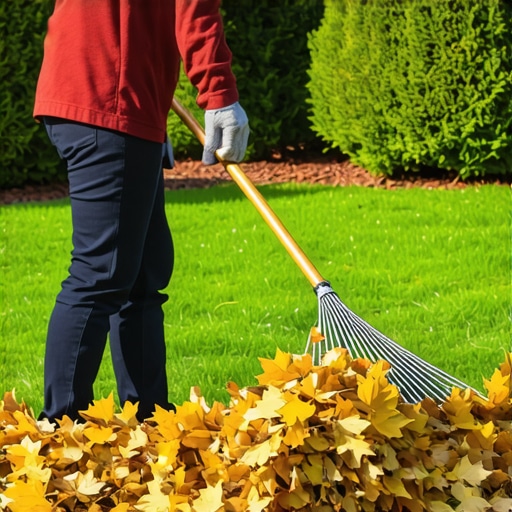
The Anatomy of a Failed Spring Start
A failed spring yard is almost always the result of a botched fall cleanup protocol. I always drill into my new crew members: if you don’t fix the soil grading first, every plant you put in the ground is just expensive compost. Most homeowners see leaves as a nuisance to be raked, but a veteran landscaper sees them as a biological ticking time bomb for snow mold and anaerobic soil conditions. When you leave a three-inch layer of un-mulched maple leaves on a Kentucky Bluegrass lawn, you aren’t just ‘feeding the birds’; you are creating a light-blocking, moisture-trapping mat that will suffocate your turfgrass crowns by mid-January. The squish of fungus-ridden turf under your boot in March is the sound of money being flushed away because of poor autumn management. If the soil pH isn’t balanced and the irrigation system isn’t evacuated properly, the freeze-thaw cycle will do more damage to your property than a decade of summer heat.
How to Properly Prepare Your Lawn for Winter
The best fall cleanup routine involves removing excess organic debris, performing a deep core aeration to alleviate soil compaction, and applying a late-season fertilizer with high potassium levels to strengthen cellular walls. This process ensures that turfgrass roots have the necessary pore space for gas exchange during the winter months.
“Soil pH is a measure of the acidity or alkalinity of the soil. A pH of 7.0 is neutral. Most turfgrasses grow best when the soil pH is between 6.0 and 7.0.” – Penn State Agricultural Extension
Why Core Aeration is Non-Negotiable
If you aren’t pulling 2.5-inch to 3-inch plugs out of your soil, you aren’t aerating; you’re just poking holes. Core aeration is the only way to break through a thatch layer that exceeds half an inch. Thatch is a tightly bound layer of dead and living stems and roots that accumulates between the green vegetation and the soil surface. Too much thatch prevents irrigation water and nutrients from reaching the rhizosphere. When we pull those cores, we allow oxygen to reach aerobic bacteria that break down that organic matter. It’s about gas exchange. Without it, your soil goes anaerobic. It smells like rotten eggs. It kills roots. Don’t skip it.
The Logistics of Irrigation Winterization
Winterizing an irrigation system requires a high-volume air compressor capable of delivering at least 50-100 CFM (cubic feet per minute) to ensure all water is purged from the lateral lines and mainline. Using a small pancake compressor is a recipe for a cracked backflow preventer.
“Water left in irrigation components can expand by 9% when freezing, exerting enough hydrostatic pressure to rupture PVC piping and brass valves.” – Irrigation Association Technical Manual
You must blow out the zones one by one. If you see a mist coming out of the heads, there is still liquid water in the low spots. Keep the air moving until it’s dry. A cracked PVB (Pressure Vacuum Breaker) will cost you $400 plus labor in the spring. Pay the $100 for a pro blowout now. It is cheap insurance.
How much air pressure is safe for irrigation blowouts?
To avoid damaging the internal plastic components of irrigation heads and solenoid valves, you must never exceed 50 PSI (pounds per square inch) for polyethylene pipe or 80 PSI for PVC pipe. High pressure generates friction heat. Heat melts seals. Keep the volume high and the pressure low. This is physics, not guesswork.
Nutrient Management: The N-P-K of Autumn
Fall is the most important time for fertilization, but not for the reason most people think. We aren’t looking for top growth. We are looking for root sequestration of carbohydrates. You want a fertilizer with a lower Nitrogen (N) count and a higher Potassium (K) count. Nitrogen promotes succulent growth, which is easily killed by the first hard frost. Potassium, however, regulates osmotic pressure within the plant cells, essentially acting as an antifreeze. If you use a high-nitrogen ‘winterizer’ too early, you’re just feeding the snow mold. Wait until the top growth has nearly stopped but the grass is still green. This is the ‘bridge’ period.
| Action Item | Optimal Timing | Key Metric |
|---|---|---|
| Core Aeration | Early Sept – Oct | 3-inch plug depth |
| Irrigation Blowout | Before first hard freeze | 50-80 PSI Max |
| Dormant Seeding | Late Nov – Dec | Soil temp < 40F |
| Leaf Mulching | Weekly until drop ends | < 0.5-inch debris layer |
Perennial and Shrub Care: Avoiding the Mulch Volcano
When cleaning up your landscaping beds, the biggest mistake is the mulch volcano. Do not pile mulch against the root flare of your trees. This traps moisture against the bark, leading to phytophthora and bark rot. In the fall, you should actually pull mulch back an inch from the trunk. You need to see the flare. For perennials, don’t be in a rush to cut everything to the ground. Some species, like purple coneflower or ornamental grasses, provide essential winter structure and seed heads for local fauna. Cut back the hostas because they turn into a slimy mess that harbors slug eggs, but leave the woody-stemmed plants until late winter. This protects the crown from extreme temperature swings.
When is the best time for a sod install in the fall?
You can install sod as long as the ground isn’t frozen, but the ideal window is at least four weeks before the first hard frost. This allows the root system to establish enough capillary action to draw moisture during dry winter spells. If you lay sod on frozen ground, the roots will desiccate and die. Sod needs soil contact and moisture. If the ground is 50 degrees, the roots are still moving. If it’s 32, they are dormant. Late September is usually the sweet spot for most northern climates.
The Fall Cleanup Checklist
- Inspect the Grading: Ensure soil slopes away from the foundation at a rate of 1 inch per foot for the first 6 feet.
- Calibrate the Mower: Lower the deck gradually over the last three mows to reach a final height of 2 inches to prevent matting.
- Soil Testing: Take samples now to determine lime or sulfur needs for pH adjustment.
- Gutter Clearance: Remove organic debris to prevent ice damming and foundation saturation.
- Tool Maintenance: Drain fuel from mowers or add stabilizer to prevent ethanol gumming in the carburetor.
Proper fall maintenance is a marathon, not a sprint. It’s about understanding the dormancy cycle of your specific USDA Hardiness Zone. If you treat the yard like a living, breathing organism instead of a chore list, you’ll have the thickest lawn on the block come April. Do the work now. Or pay me to fix it later. Your choice.