
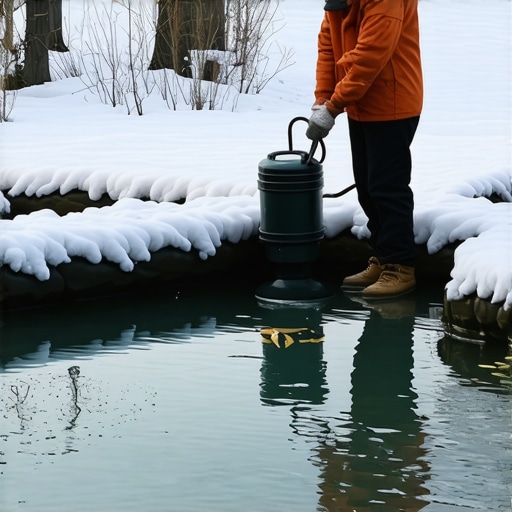
The Physics of Winter Survival: Why Most Pond Fish Die
To winterize your pond fish without moving them, you must maintain a 24-inch minimum depth, install an aerator for gas exchange, and terminate feeding once water temperatures hit 50°F. Managing the dissolved oxygen and preventing hydrogen sulfide buildup are the only ways to ensure survival during hard freezes. Most DIY attempts fail because they treat a pond like a swimming pool; it is actually a closed-loop biological reactor that becomes volatile when the thermometer drops.
I always drill into my new crew members: if you don’t fix the soil grading first, every plant you put in the ground is just expensive compost. The same logic applies to ponds. I’ve seen $30,000 Koi collections wiped out in a single night because a homeowner thought ‘breaking the ice’ with a sledgehammer was a good idea. It isn’t. The shockwaves from a hammer can rupture a fish’s swim bladder instantly. You are dealing with creatures in a state of torpor—their metabolism is at a near-standstill. Any mistake in the engineering of their winter environment is a death sentence. We aren’t just ‘keeping them cold’; we are managing the gas exchange of a dormant ecosystem.
The Science of the Thermocline
Water has a unique physical property: it is densest at 39.2°F (4°C). This means that in a pond of sufficient depth (typically 24 to 36 inches, depending on your USDA hardiness zone), the ‘warmest’ water sinks to the bottom. Your fish will congregate in this lower strata. If you keep your high-pressure waterfall running, you are effectively mixing that 39°F water with the 32°F air, super-cooling the entire water column and killing the fish. This is why we shut down external pumps and focus on surface-level aeration only.
“A pond’s biological load does not disappear in winter; it shifts from aerobic to anaerobic risk if oxygen levels are not mechanically maintained.” – Pond Management Standards Manual
Biological Management: The 50-Degree Rule
How much food does a dormant fish need? Zero. Once the water temperature reaches 50°F, the beneficial bacteria in a fish’s gut cease to function. Any food they consume will sit in their digestive tract and rot, leading to internal infections and septicemia. Stop feeding. Period. This is the hardest rule for homeowners to follow, but it is the most critical for survival. During your final yard cleanup, ensure no excess organic matter—leaves, twigs, or grass clippings—falls into the pond. This debris decomposes and releases methane and hydrogen sulfide, which will be trapped under the ice if you don’t have a gas exchange point.
| Water Temp (°F) | Fish Metabolic State | Required Action |
|---|---|---|
| Above 60°F | High Activity | Regular high-protein feeding. |
| 50°F – 60°F | Slowing | Switch to wheat-germ based cold-water food. |
| 40°F – 50°F | Entering Torpor | Stop all feeding. Monitor water pH. |
| Below 40°F | Dormancy | Ensure aeration and de-icer are active. |
Winterization Checklist for Pond Systems
- Clean the Pond Bottom: Use a pond vacuum to remove ‘muck’ (decomposing organic matter).
- Shutdown Waterfalls: Prevent super-cooling by turning off external pumps.
- Install an Aerator: Place the stone 6-12 inches below the surface, not at the bottom.
- Set the De-Icer: A floating heater only needs to keep a small hole open for gas exchange.
- Check the Irrigation: Ensure any auto-fill valves are blown out to prevent pipe bursts.
How do I keep a hole in the ice without a heater?
You don’t need to heat the whole pond; you only need to prevent a total freeze-over. A 100-watt floating de-icer combined with a high-output aerator is the standard. The aerator creates surface tension and bubbles that move the water, making it harder for ice crystals to form. If the pond freezes solid, the gases produced by decomposing organic matter have nowhere to go. They displace the oxygen. The fish suffocate. It’s a slow, silent process that most owners don’t realize has happened until the spring thaw.
The Role of Yard Cleanup in Pond Health
If you just finished a sod install or a massive landscaping overhaul, watch your runoff. Fertilizer salts and nitrogen from new sod can leach into the pond during late fall rains, causing a massive spike in ammonia. This is why we insist on proper grading. A pond should be the high point of its immediate surroundings or protected by a berm. During your fall yard cleanup, if you’re using blowers or rakes, keep the debris away from the water’s edge. One bag of oak leaves in a 1,000-gallon pond can crash the oxygen levels in weeks.
“Mechanical aeration is the single most important factor in overwintering aquatic life in closed systems.” – Agricultural Extension Office Bulletin
How much air do I need for my pond size?
A general rule of thumb is 1 CFM (cubic foot per minute) of air per 1,000 gallons of water. Don’t buy the cheap aquarium pumps. They don’t have the PSI to push air through a stone at depth if the temperature drops and the lines contract. Use a professional-grade linear piston pump. They are designed to run 24/7 in sub-zero temperatures. It will hum, but it won’t fail. Don’t skip this. Your fish are counting on that mechanical exchange until the spring irrigation season begins and you can restart your main filtration system.
The “Settling In” Period
Once the ice forms, leave the pond alone. Don’t walk on it. Don’t try to clear the snow off the whole surface (though clearing a small patch can help with light penetration for any submerged plants). The fish are in a delicate state. Any vibration or noise can stress their systems, causing them to burn through their fat reserves too quickly. In the spring, don’t rush to feed them. Wait until the water is consistently above 50°F. Patience is the hallmark of a professional horticulturist. It’s the difference between a thriving pond and a cleanup job.